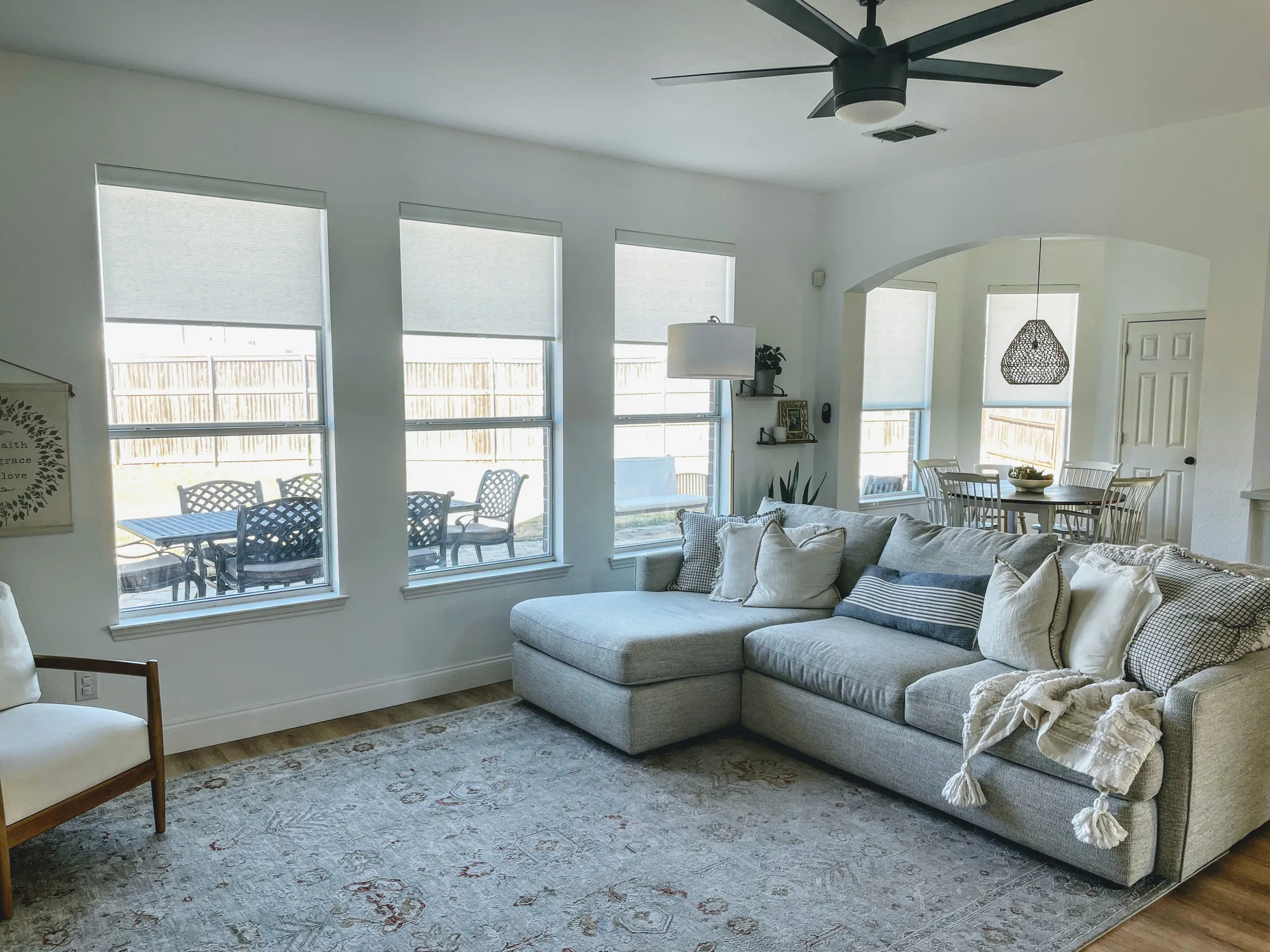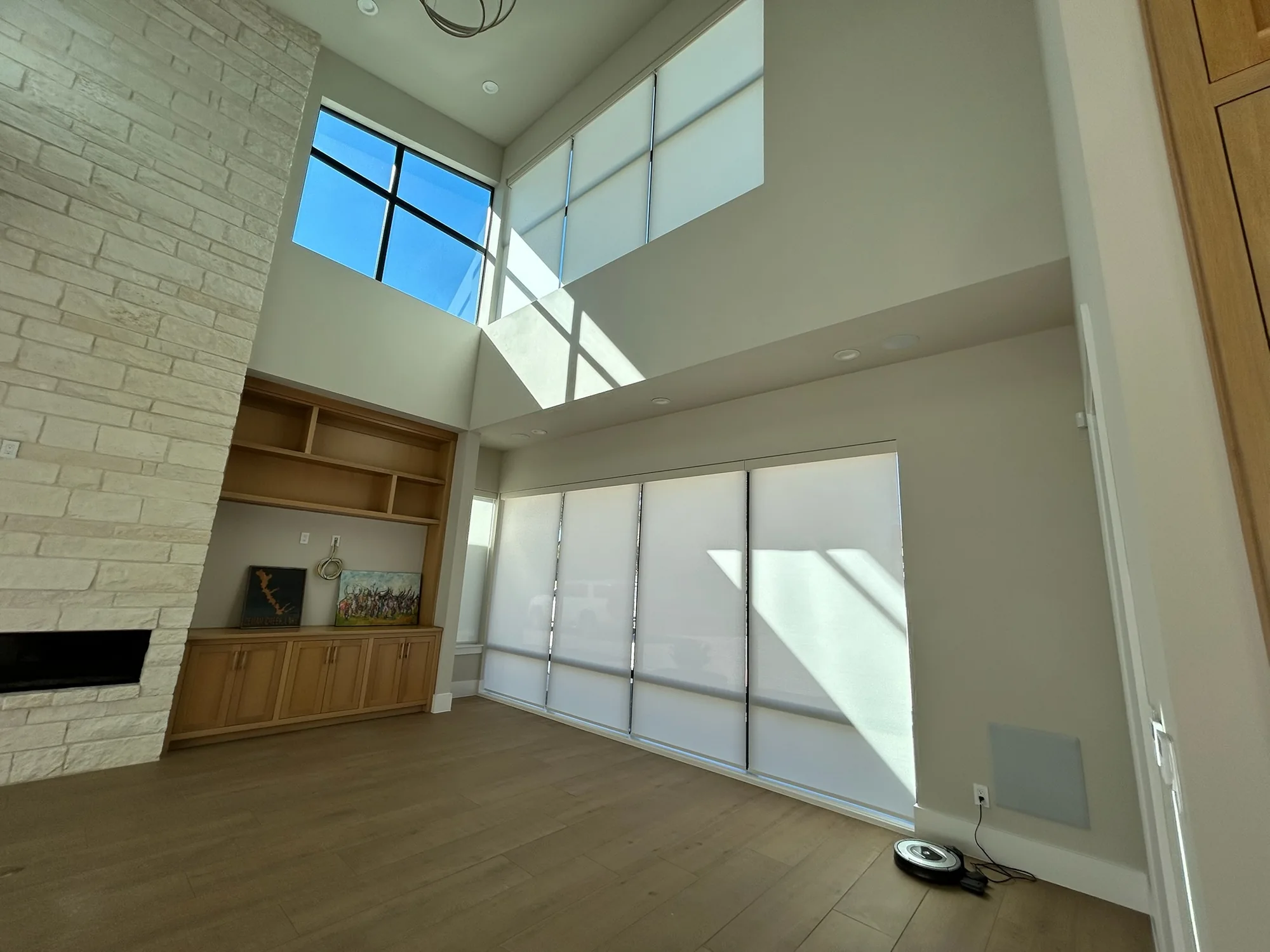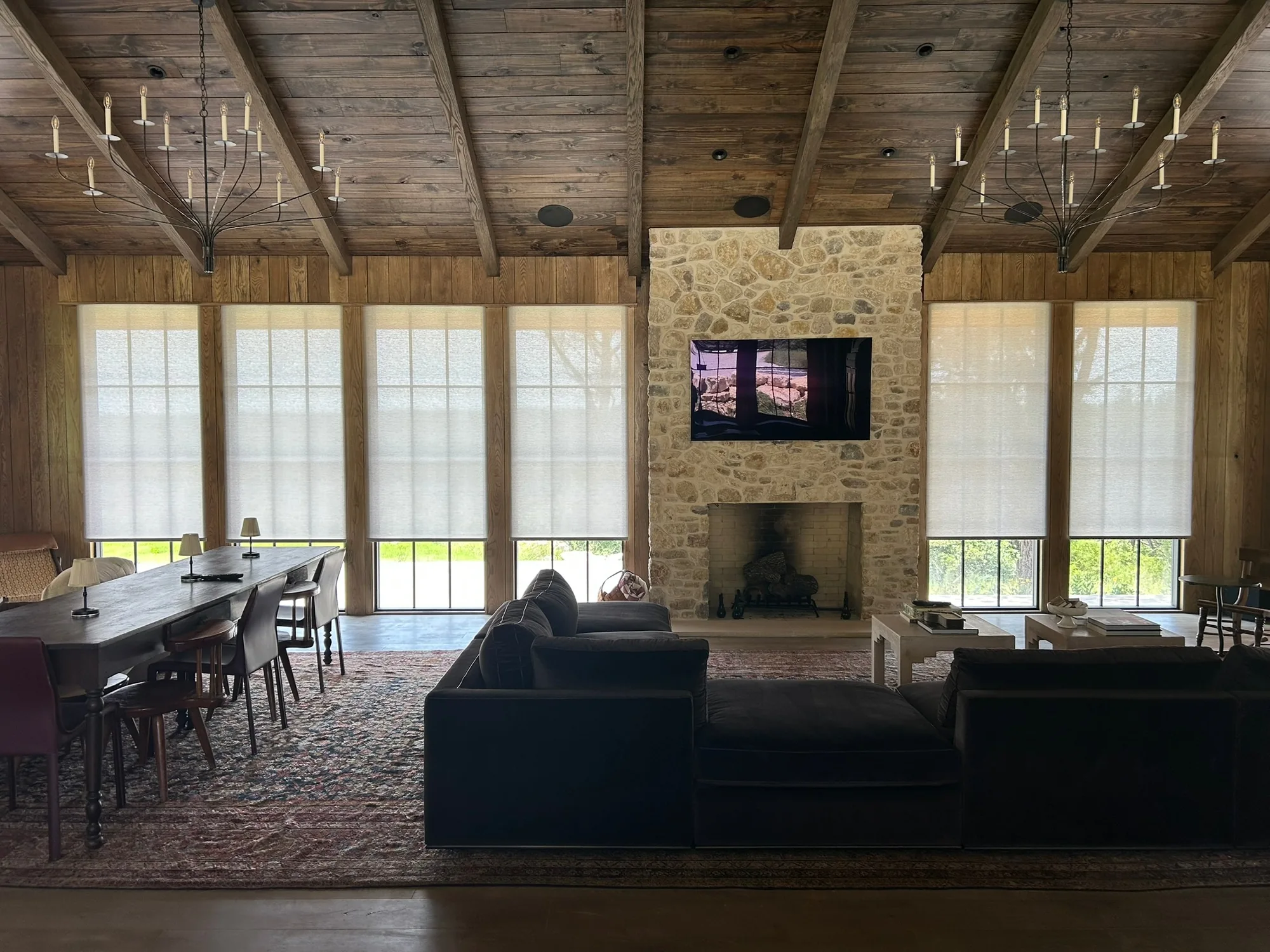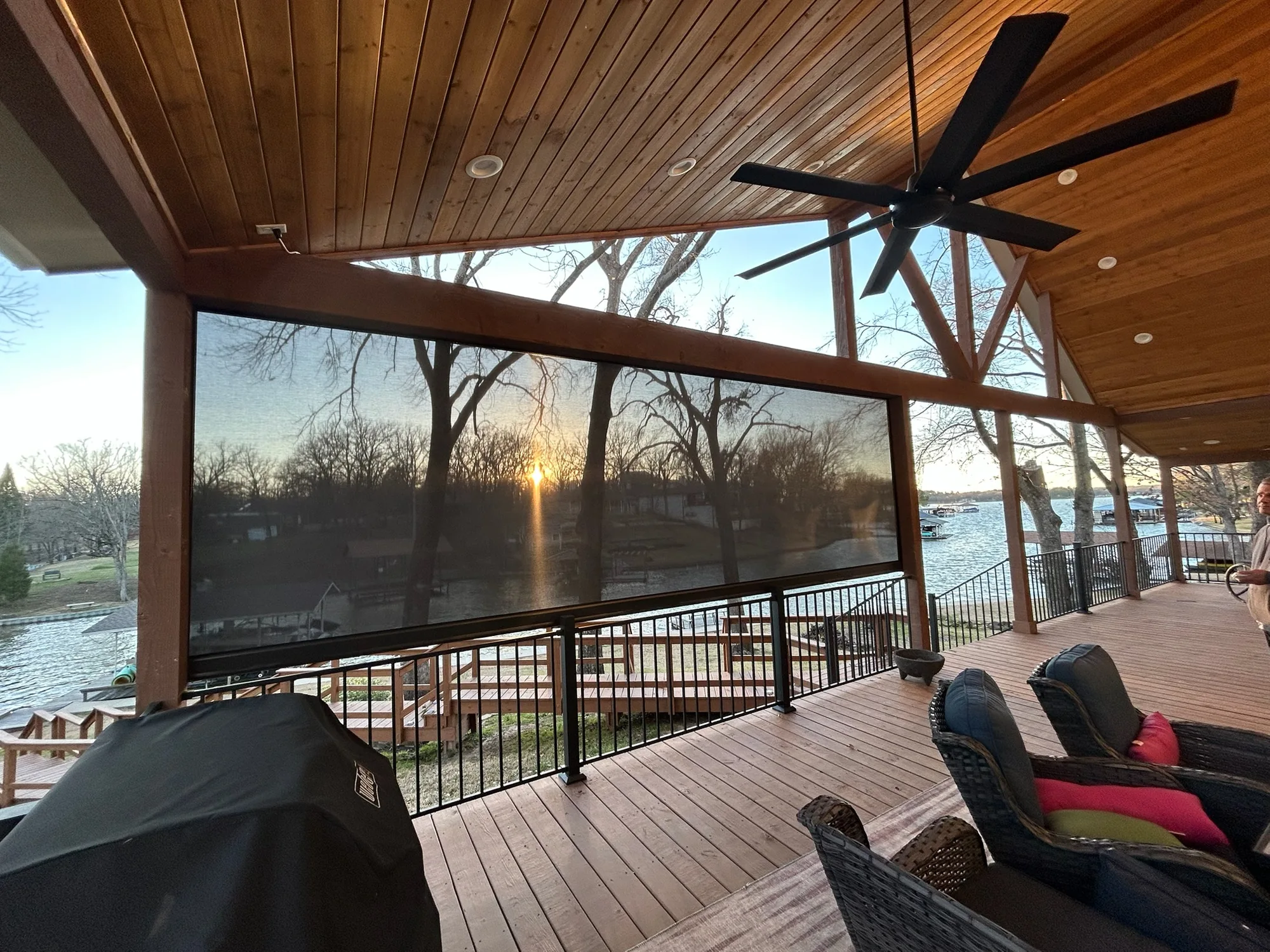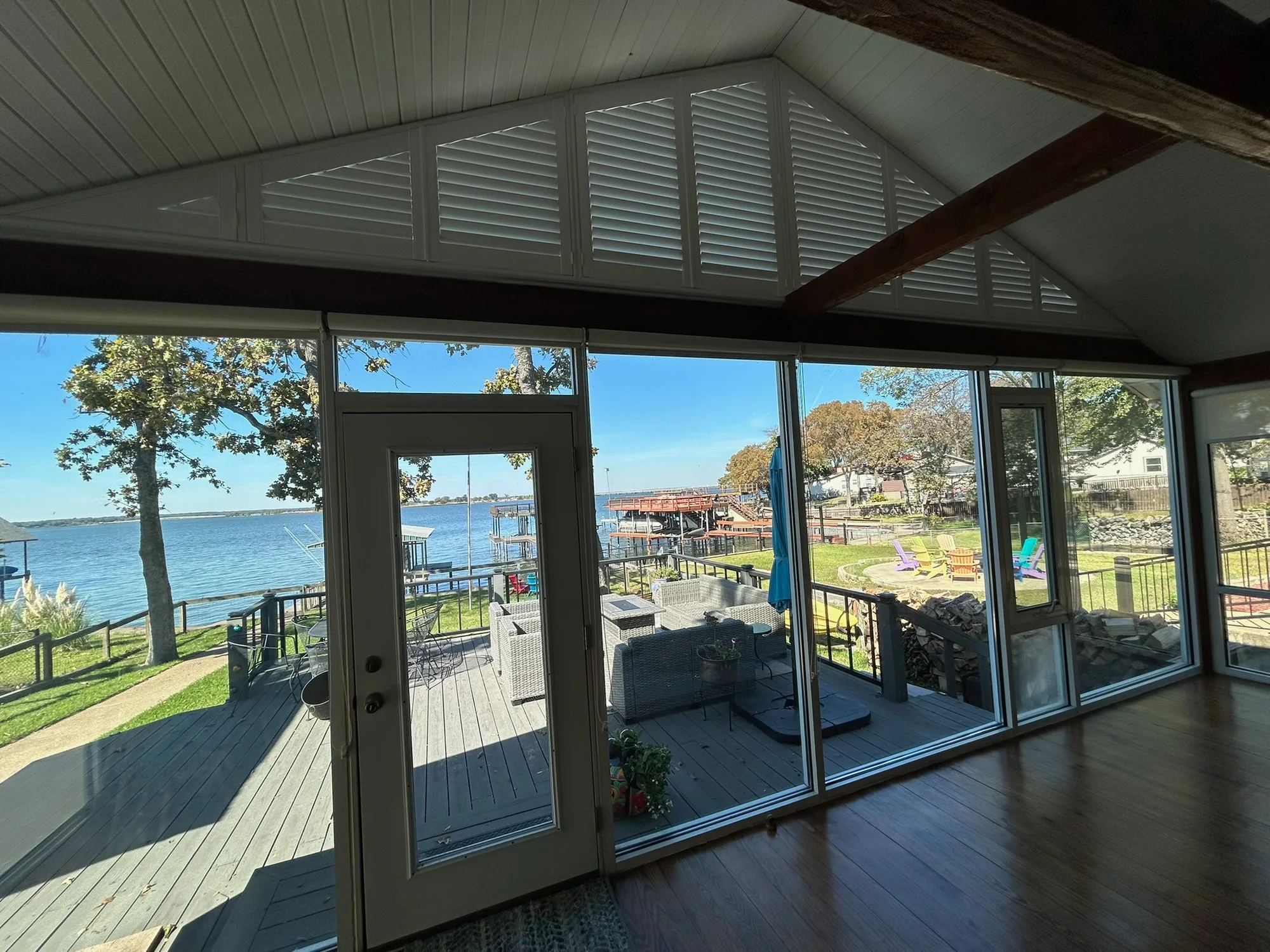
Short answer: large windows need the weight considered before the look. Wide treatments are heavy, sag if the headrail is not specified for the span, and are awkward to operate by hand, which is why motorization and splitting into panels come up so often.
The rest of this covers the options that actually work in that situation, what to decide before you order, the mistakes we get called out to fix, and how the Texas sun should change your choice.
What works, and why
Split the span into panels
Two or three treatments across one wide opening are easier to operate, cheaper to replace if one is damaged, and less likely to sag than a single very wide unit.
Motorize it
Above a certain width and height, a hand-operated treatment stops getting used. Motorization is what keeps a large window's shades actually working day to day.
Panel track for very wide openings
Sliding panels handle wide spans and patio doors without the weight problem a single roller has.
Cellular for the heat load
A large window is a large heat load. If the span faces west, insulation at the glass matters more than the style of the treatment.
What to decide before you order
- The exact span, since headrail specification changes with width
- Whether you can physically reach the top of the window
- How the treatment will stack when open, and how much glass that covers
- Whether the opening faces the afternoon sun
Material, and why it matters more than style
The format of a treatment is a look. The material is what decides whether it still works in three years. Getting this wrong is the most expensive mistake available, because a custom treatment is not returnable and a warped one gets replaced.
Real wood
Lightest, takes stain beautifully, and belongs in dry living areas. It moves with humidity, so it is the wrong answer near a shower or a sink.
Faux wood and composite
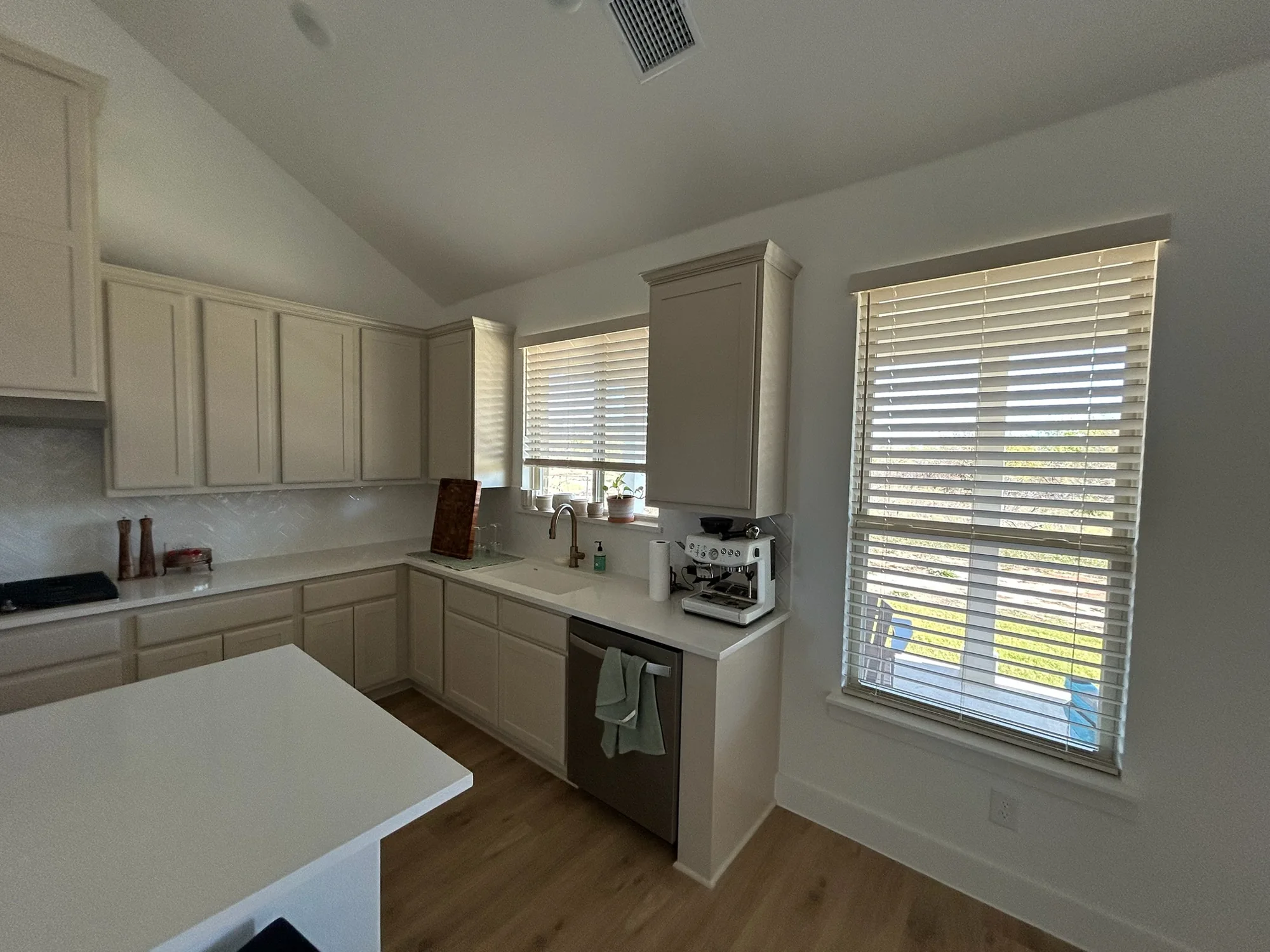
Handle moisture and hard sun without warping. Heavier, which matters on a wide span, but they are why most Texas kitchens and bathrooms end up with them.
Fabric shades
Softer and warmer in a room, and the only option where openness factor lets you tune view against shade. Choose a weave rated for sun on a hot wall.
Vinyl and aluminium
Cheapest, and they behave like it on a west facing window. Fine on a shaded north opening in a room nobody uses.
Light control, privacy and the night time problem
Daytime privacy and night time privacy are different problems, and a lot of disappointment comes from assuming one treatment solves both. A weave that gives perfect privacy at noon can go transparent once the lights are on inside.
- Decide per window whether you need light filtering, room darkening or blackout
- Check whether the window needs to work after dark, not just during the day
- Remember that any inside mount leaks light at the edges, by design
- Layering a shade under a drape solves most cases that one product cannot
Mistakes we get called out to fix
- A single treatment across a span it was never rated for, which sags
- Hand operation on a window nobody can comfortably reach
- Ignoring stack height, so a third of the view is covered when the shade is up
- Choosing on looks alone for a west facing wall of glass
The Texas factor
West and south facing glass takes the worst of the afternoon here, and it is the single thing that should drive the specification. A treatment that is perfect on a north window can fade, warp or simply fail to do its job on a west wall.
- Check which way each window faces before choosing material
- Moisture rules bathrooms and kitchens: faux wood or composite, not real wood
- Anything on the hot side should be specified for sun, not chosen on looks
- Shading the outside of the glass beats shading the inside, every time
How we would approach it
At the consultation we look at which way the window faces, what the room is used for, how the opening is built and whether it is square and deep enough for the mount you want. Then we measure every opening ourselves and quote from those measurements.
- Samples brought to your home so you see them in your own light
- Every opening measured on site rather than estimated
- A written quote based on those measurements
- Installation by the same team that measured
- Remade at no cost if it does not match the approved measurements
Let us measure it
The consultation is free, we bring samples you can hold against your own light, and we measure every opening on site. You get a written quote from those measurements.