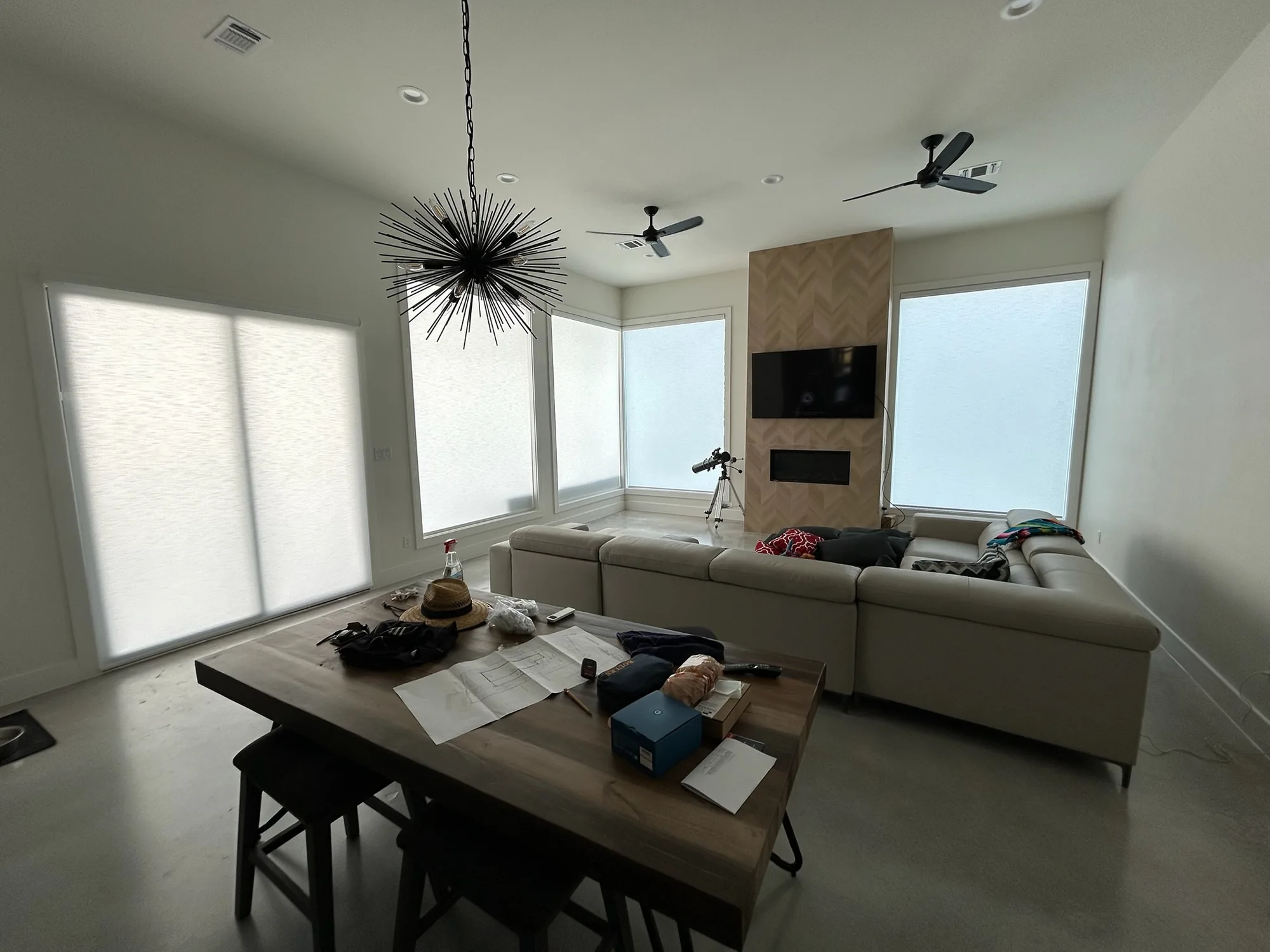
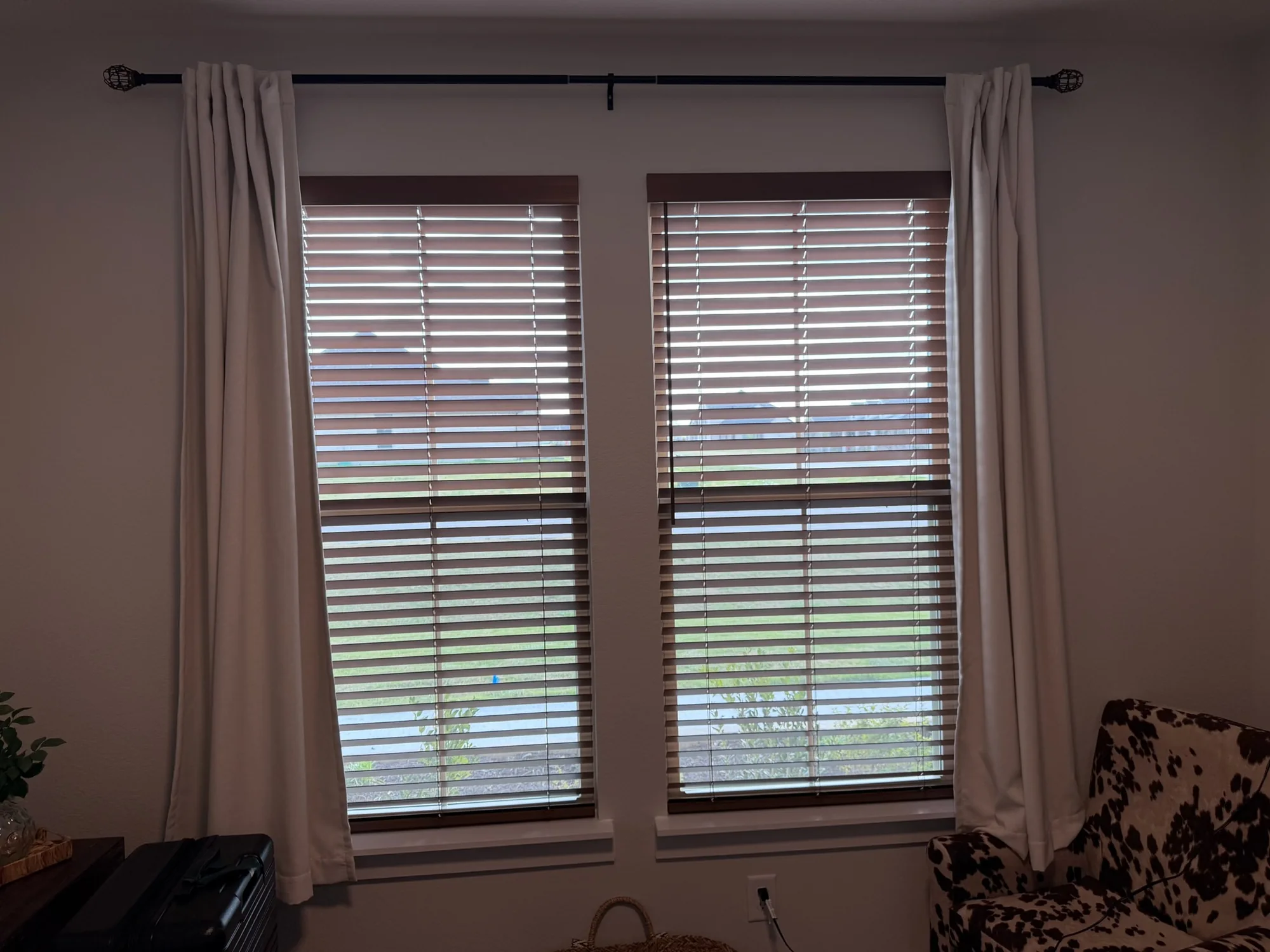
Wood blinds come in two families that look nearly identical on the window and behave very differently over the years. Choosing between faux wood and real wood is mostly a matter of matching the material to the room, and a whole-home order usually ends up with some of each.
Where faux wood wins
Faux wood blinds are composite, and composite does not care about humidity. Kitchens over a steaming sink, bathrooms, laundry rooms and any window that sweats in a Texas August are faux wood territory. The slats will not warp, crack or peel in moisture that would punish real wood, and the finish wipes clean. For white blinds, most homeowners cannot tell faux from painted wood at any distance.
Where real wood earns its keep
Real wood is significantly lighter than composite, which matters more than people expect. On wide windows, a lighter blind lifts easier and puts less strain on the mechanism, so large living room and bedroom windows favor real wood. It is also the only way to get a true stain finish: a stained real wood blind can match your floors, cabinets or trim in a way paint cannot fake.
The quick decision table
- Bathrooms, kitchens, laundry: faux wood, every time
- Wide windows where weight strains the lift: real wood
- Stained finishes to match woodwork: real wood, the only option
- White or painted looks on standard windows: either, so let budget and room moisture decide
- Kids' rooms and rentals: faux wood shrugs off abuse
What a consultation adds to the choice
Slat width, valance style and mount depth change how either material reads on the window, and those calls are easier with samples in hand at your actual window. Holding a stained slat against your floor beats guessing from a photo, and measuring the frame depth on site settles which mounts are even possible. Seeing both materials at your own windows makes the choice much easier.
Slat width and the look of the window
Wider slats mean fewer lines across the window and a clearer view when the blind is open. They suit larger windows and rooms where the blind should read as a design element. Narrower slats suit small windows and shallow frames, where a wide slat can look oversized or bump the glass when tilted. The sample slats at the consultation make this choice quickly.
Keeping a mixed house consistent
Most whole-home orders end up with faux wood in kitchens and baths and real wood in living areas and bedrooms. Choosing the same white across both keeps every window matching from the street. Inside, the difference between the two materials is hard to spot once they are hanging.
Cleaning each one
Faux wood wipes clean with a damp cloth and mild soap. Real wood prefers a dry or barely damp cloth and a duster; standing water can spot or raise the grain. For both, close the slats flat, wipe one side, then tilt them the other way and wipe the other.