The direction a window faces says more about its sun problem than the room it is in. To put numbers on that, we calculated how much direct sunlight reaches a vertical window facing each direction in Dallas-Fort Worth, Austin and Sherman, on a clear day at the summer solstice, the fall equinox and the winter solstice.
Direct sun on a window in Dallas-Fort Worth
| Window faces | June 21 | Sept. 21 | Dec. 21 |
|---|---|---|---|
| North | 0.81 | 0.00 | 0.00 |
| East | 3.00 | 2.39 | 1.28 |
| South | 0.63 | 3.39 | 4.41 |
| West | 3.00 | 2.39 | 1.28 |
Figures are kilowatt-hours of direct sunlight per square meter of glass per day, on a clear day.
What the numbers show
West windows take about five times the direct summer sun of south windows. In June the midday sun over DFW climbs to about 81 degrees above the horizon, nearly overhead, so it barely reaches into south-facing glass. Afternoon sun comes in low from the west and strikes west glass almost head-on.
North windows get more direct sun than south windows in midsummer. From late spring through summer, the sun rises and sets north of due east and due west. North glass catches low sun early in the morning and late in the evening. On June 21 it takes 0.81 kWh per square meter, against 0.63 for south glass.
South windows get their most sun in winter. In December the sun stays low in the southern sky all day, and south glass takes 4.41 kWh per square meter, more than any wall at any other point in the year.
East and west windows take the same amount of direct sun in this model, because the sun's path is symmetrical around noon. The difference is timing. East sun arrives in the cool of the morning. West sun lands in the afternoon, when the air outside is already at its hottest.
Austin and Sherman
| City | West window, June 21 | South window, June 21 | South window, Dec. 21 |
|---|---|---|---|
| Dallas-Fort Worth | 3.00 | 0.63 | 4.41 |
| Austin | 2.95 | 0.41 | 4.49 |
| Sherman | 3.02 | 0.71 | 4.38 |
The pattern holds across the state, and the summer gap grows the farther south you go. In Austin, a west window takes about seven times the direct June sun of a south window. In Sherman, near the Oklahoma line, it is about four times.
What we install on each side
North. Little direct sun for most of the year, so the choice comes down to privacy and style. Shutters, roman shades and woven wood shades all work. North-facing bedrooms still need a lining or room-darkening fabric for privacy once the lights are on.
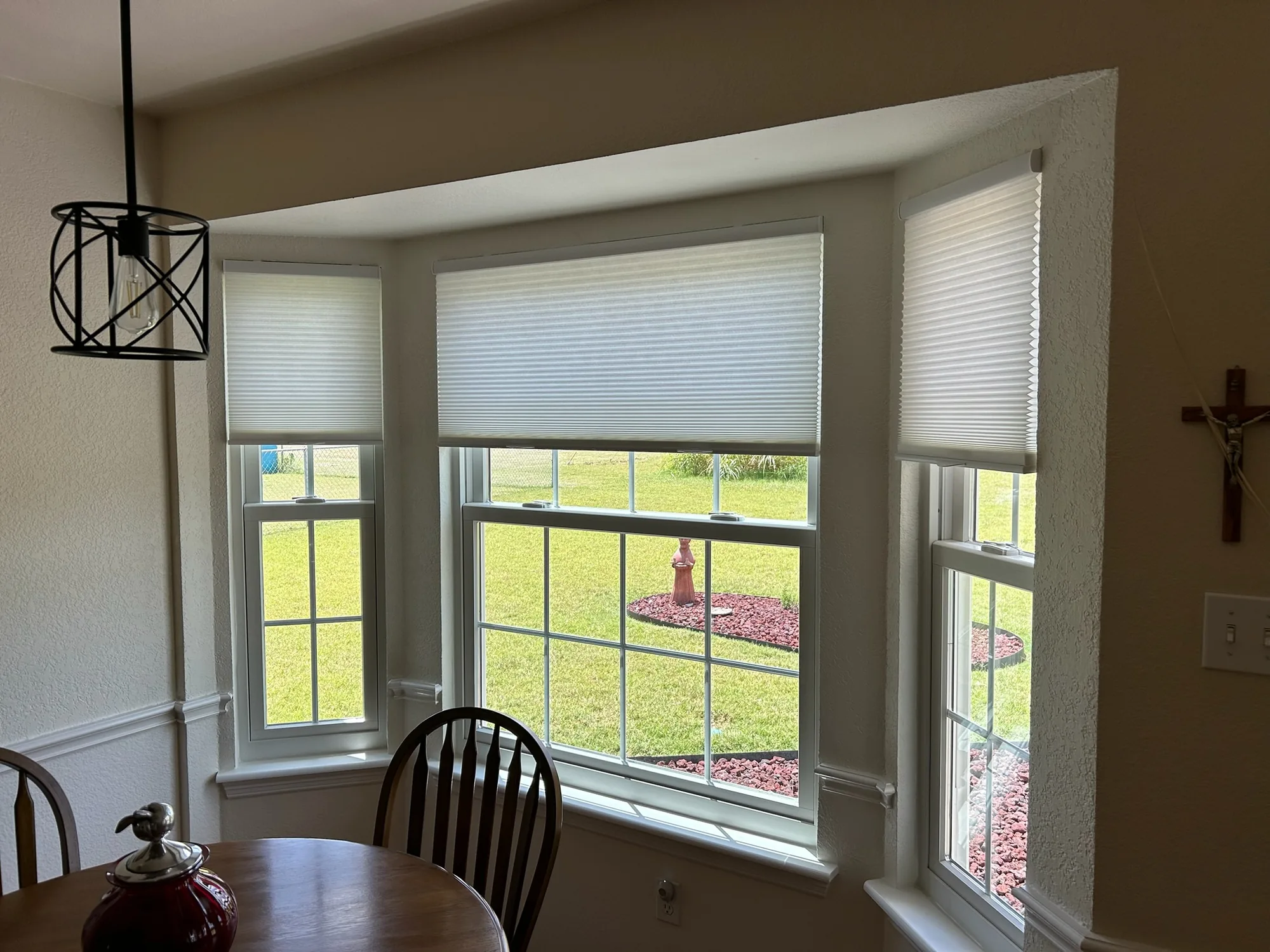
South. Strong sun in winter, little in summer. Plantation shutters let you tilt the louvers to send light toward the ceiling, and cellular shades insulate the glass in both seasons.
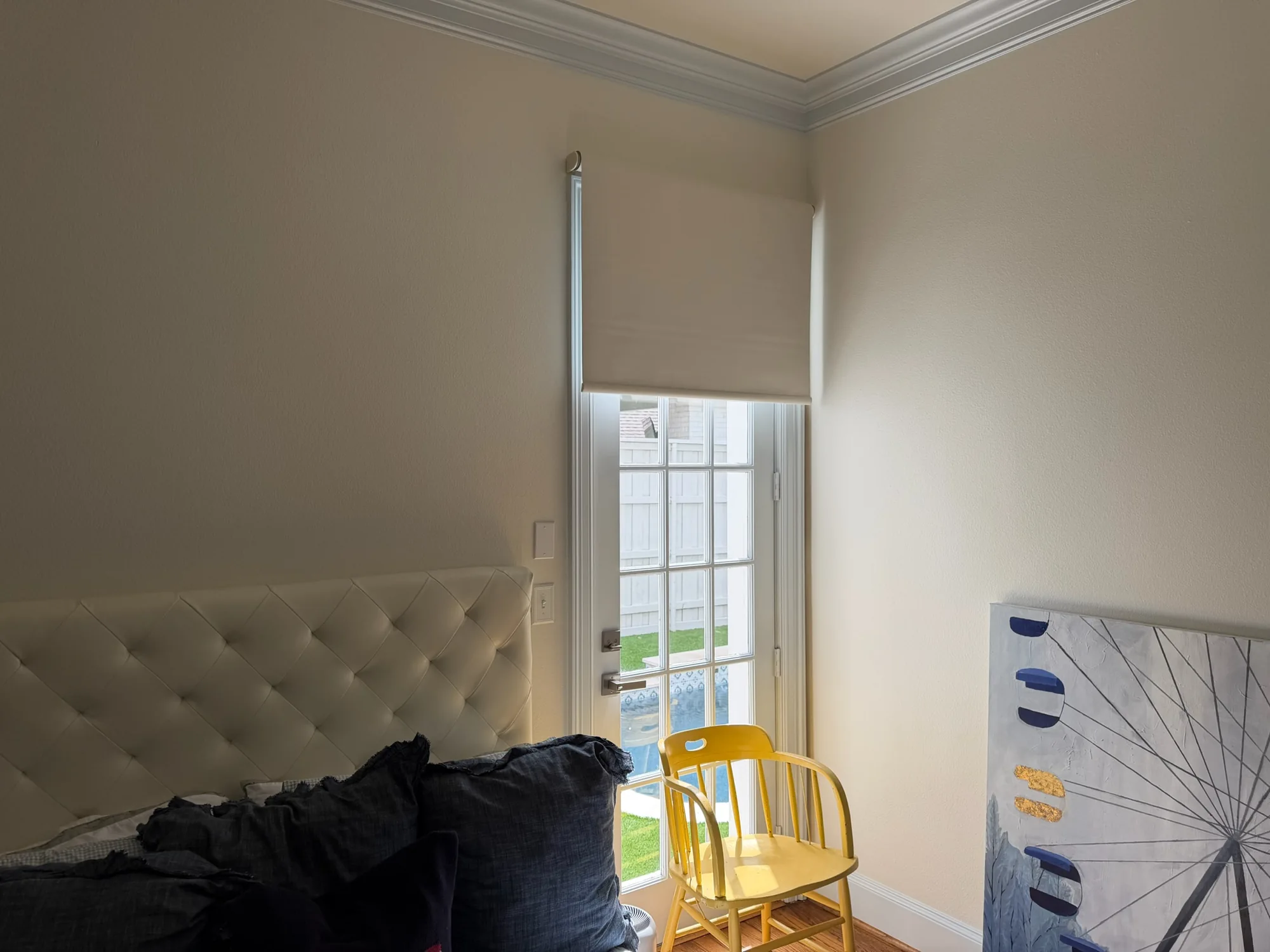
East. Direct morning sun that ends by midday. In bedrooms, room-darkening or blackout shades keep sunrise out. In kitchens and breakfast rooms, light-filtering shades cut glare and keep the room bright.
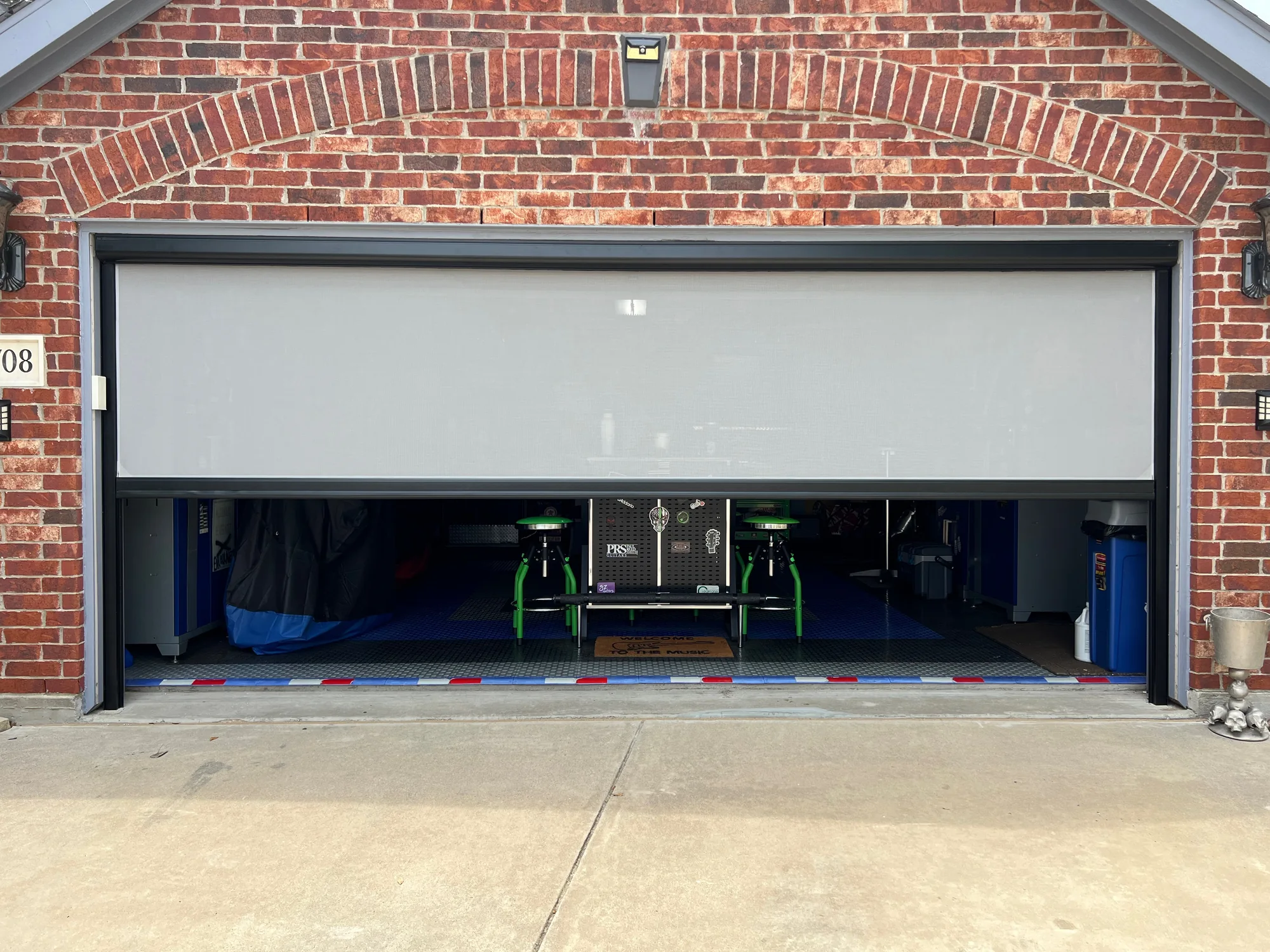
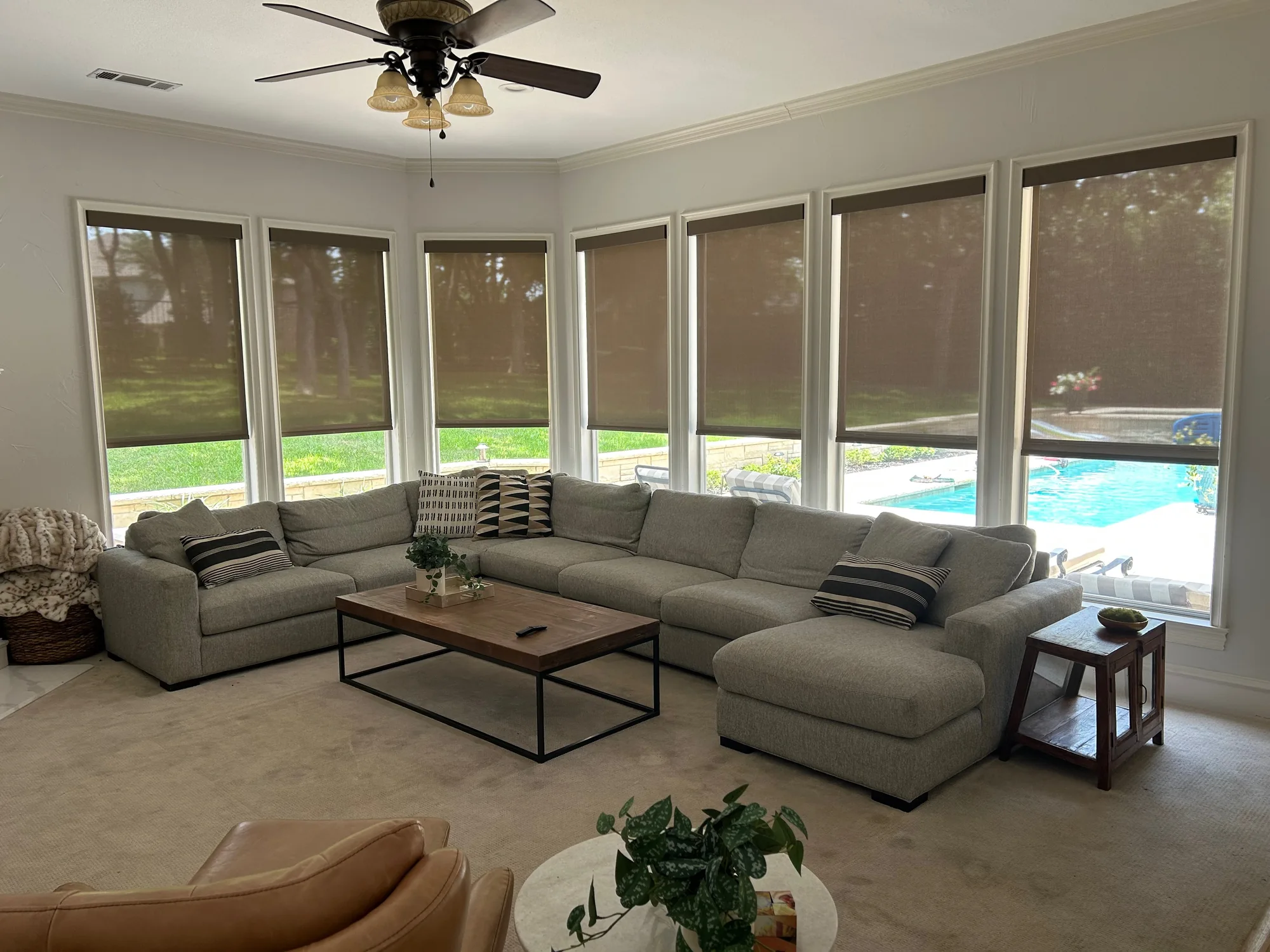
West. The hardest exposure in Texas. Solar shades block heat and glare while keeping the view. Cellular shades insulate when the view matters less. On large west-facing glass and patios, exterior shades stop the sun before it reaches the window. Motorized shades on a schedule can lower themselves every afternoon.
How we calculated this
We computed the sun's position every minute from sunrise to sunset for each city's latitude, estimated clear-sky direct sunlight with the standard Meinel air-mass model, and multiplied it by the angle at which the sun strikes a vertical window. The figures cover direct sunlight only and leave out diffuse light from the sky and light reflected off the ground. They are useful for comparing directions. Real days have clouds, and trees, overhangs and neighboring houses shade many windows.