Short answer: fading is cumulative and mostly preventable. UV and heat do the damage, glass does not stop enough of either, and the right window treatment protects the room without going dark.
Why Texas rooms fade faster
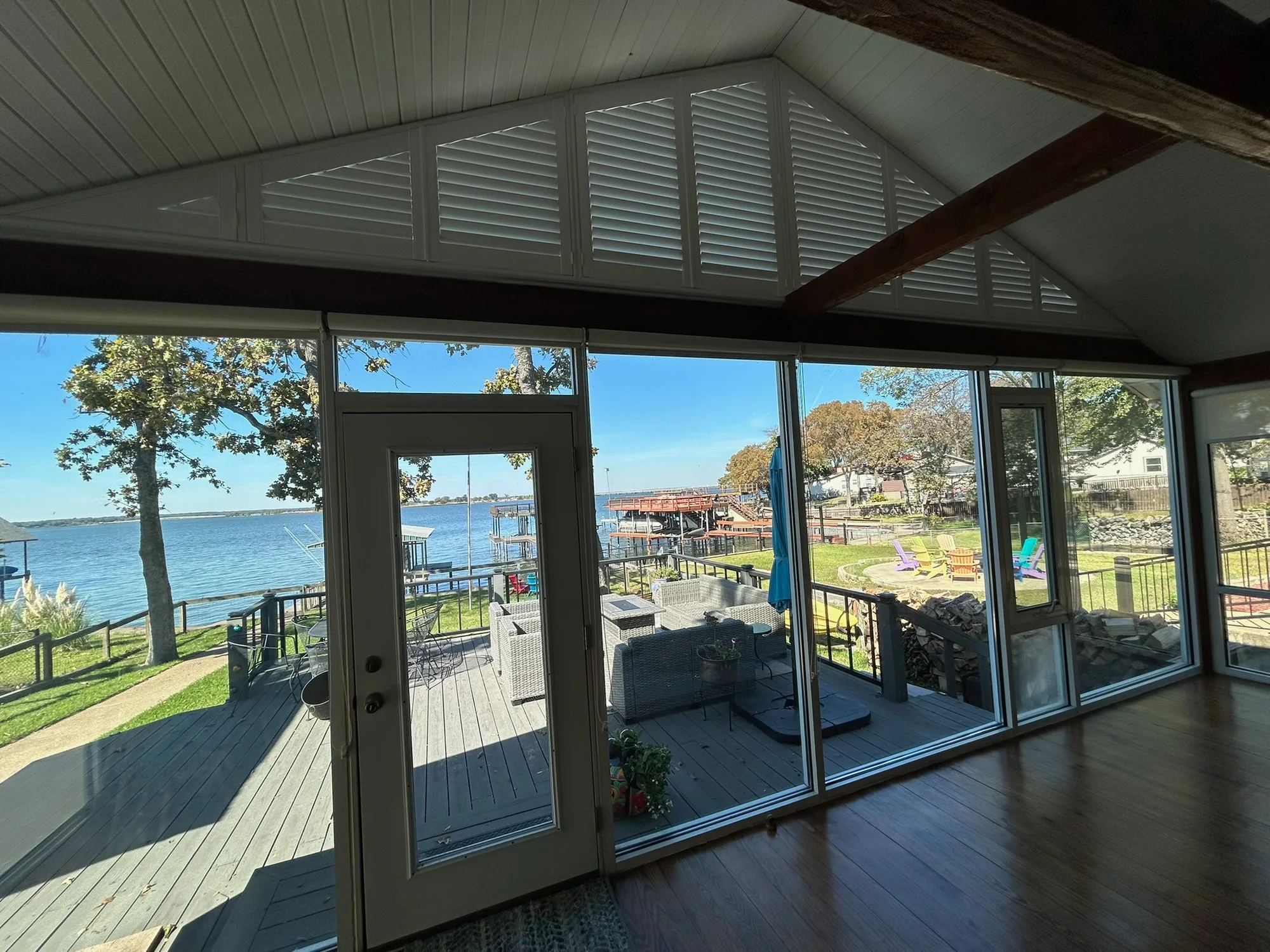
Fading is a dose: hours of exposure multiplied by intensity. A west-facing Texas room takes a long, hard afternoon dose almost every day of the year, which is why the rug near the patio door and the arm of the sofa by the window go first. Standard glass blocks some UV and very little of the visible light and heat that also fade dyes.
Solar screen fabric cuts the dose and keeps the view
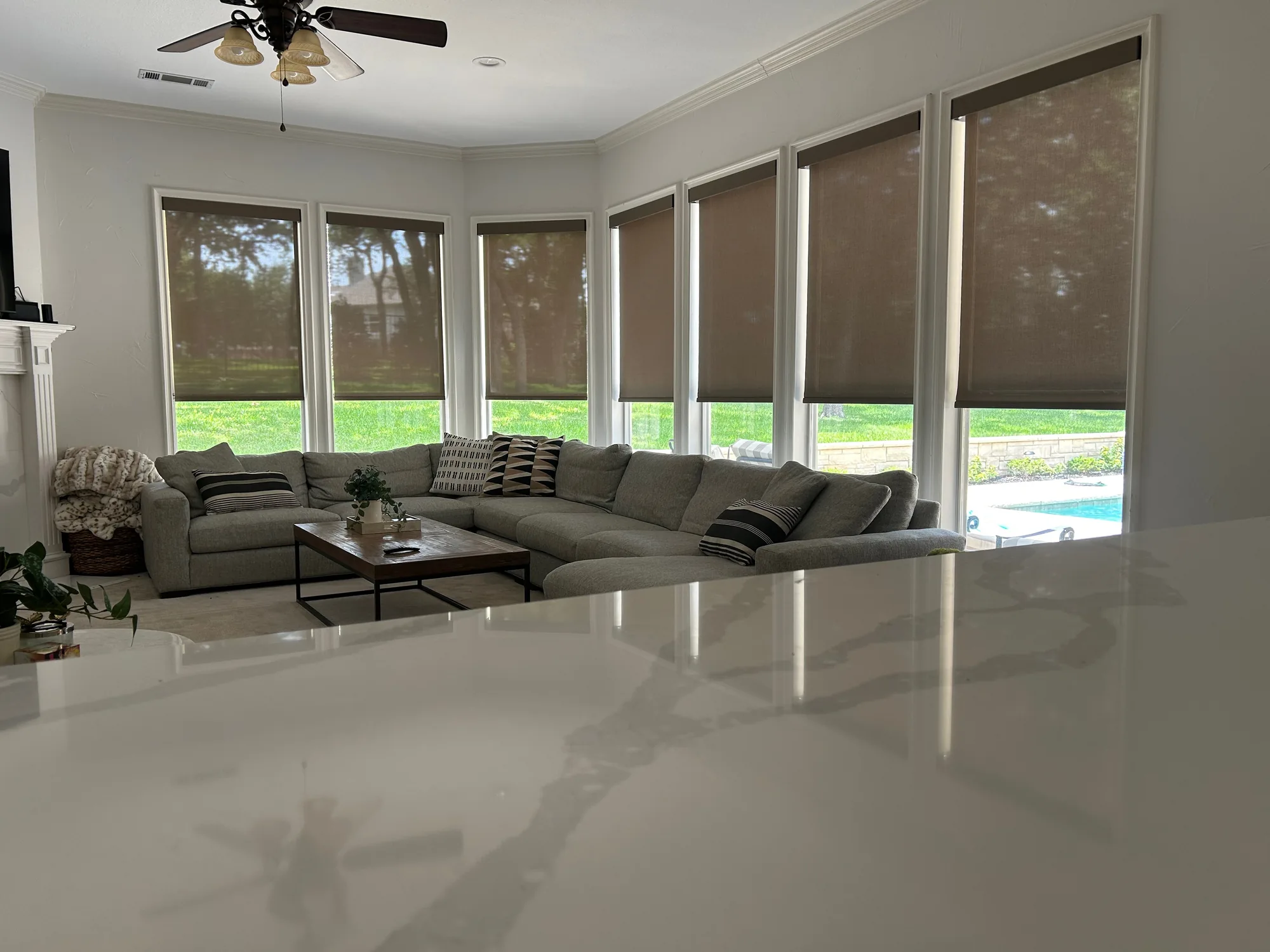
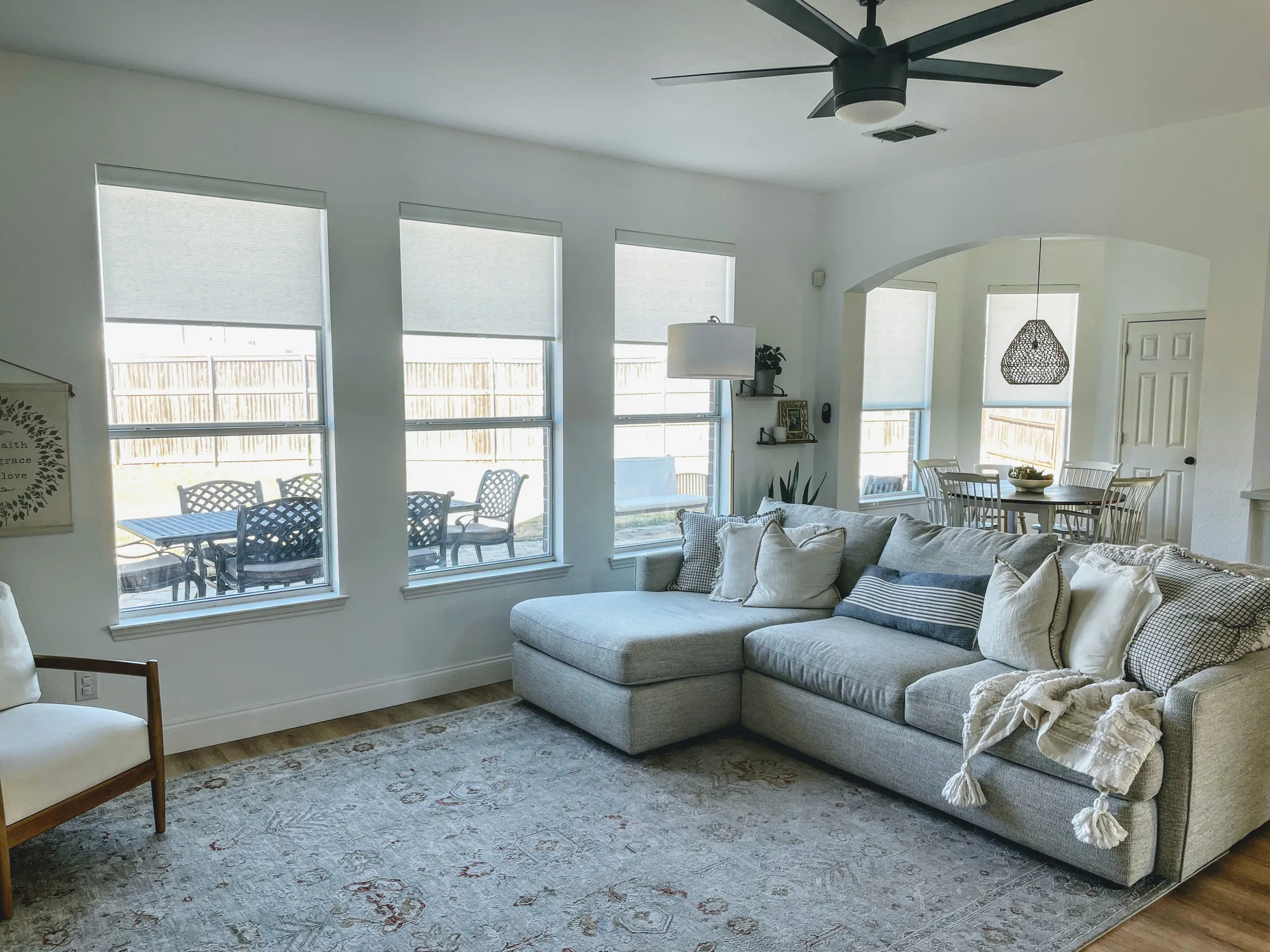
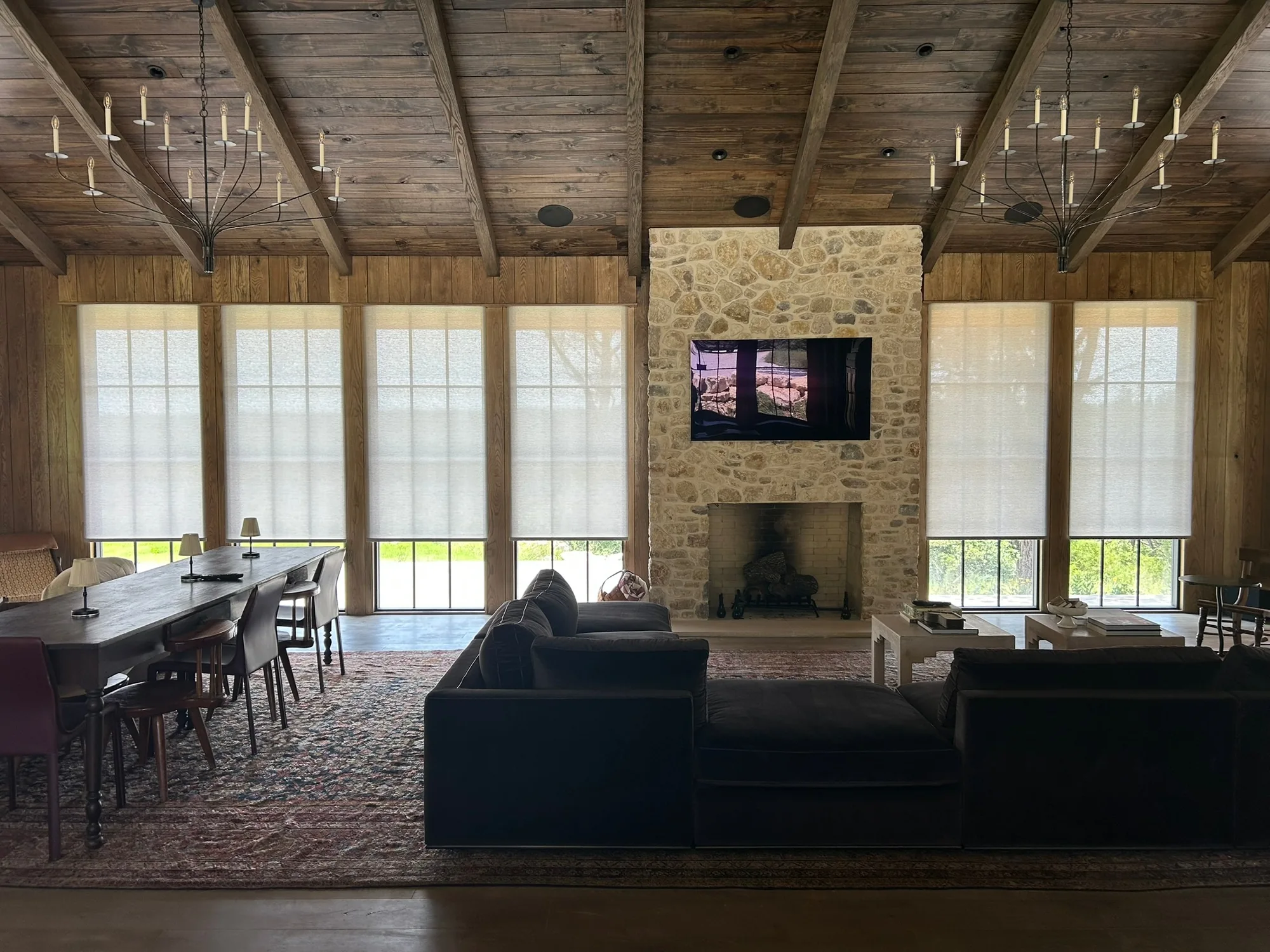
An open-weave solar fabric filters UV and knocks down intensity while the yard stays visible. The weave is the dial: tighter blocks more, looser sees more. For a living room with furniture worth protecting, this is usually the answer, because a room nobody darkens is a room the protection actually stays down in.
Cellular shades protect the things heat ruins
Heat dries and cracks leather and warps veneers. Honeycomb shades trap air in their cells and cut the heat transfer at the glass, which protects the piano against the window in a way a thin fabric cannot.
Exterior shades stop the dose outside
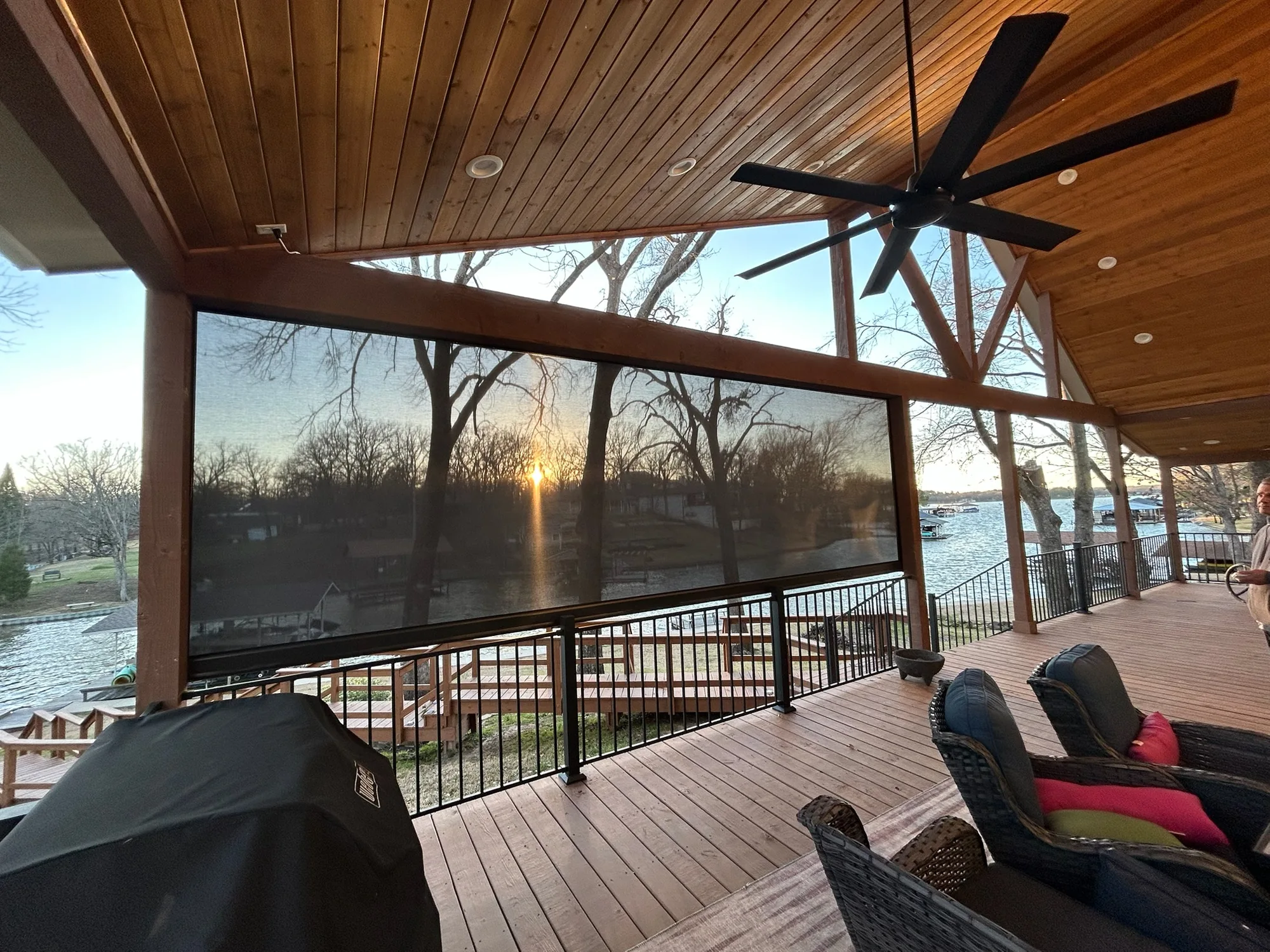
The strongest protection never lets the light reach the glass. An exterior shade on the west elevation cuts what enters the room to a fraction, and on a covered patio it protects the outdoor furniture too, which fades faster than anything inside.
Automation protects the hours you are not home
Most fading happens on weekday afternoons when nobody is there to lower anything. Motorized shades on a schedule or a sun sensor take the dose out of the day automatically, then open the room back up for the evening.
Protection you do not have to think about
The consultation is free and happens at your windows, in the light doing the damage, with samples you can hold against it. Quotes are written, installation is included, and every treatment carries the manufacturer's limited lifetime warranty on factory defects.