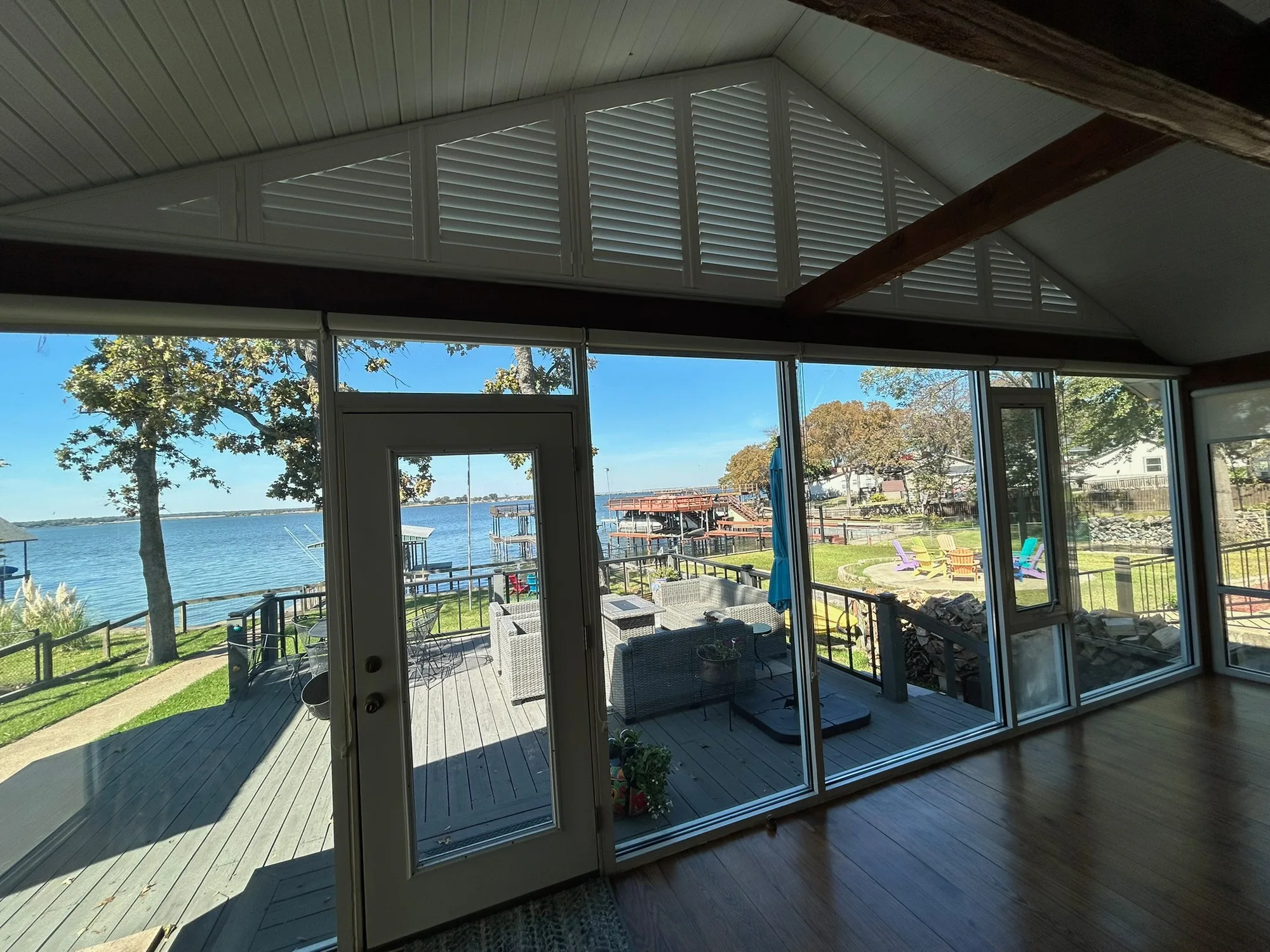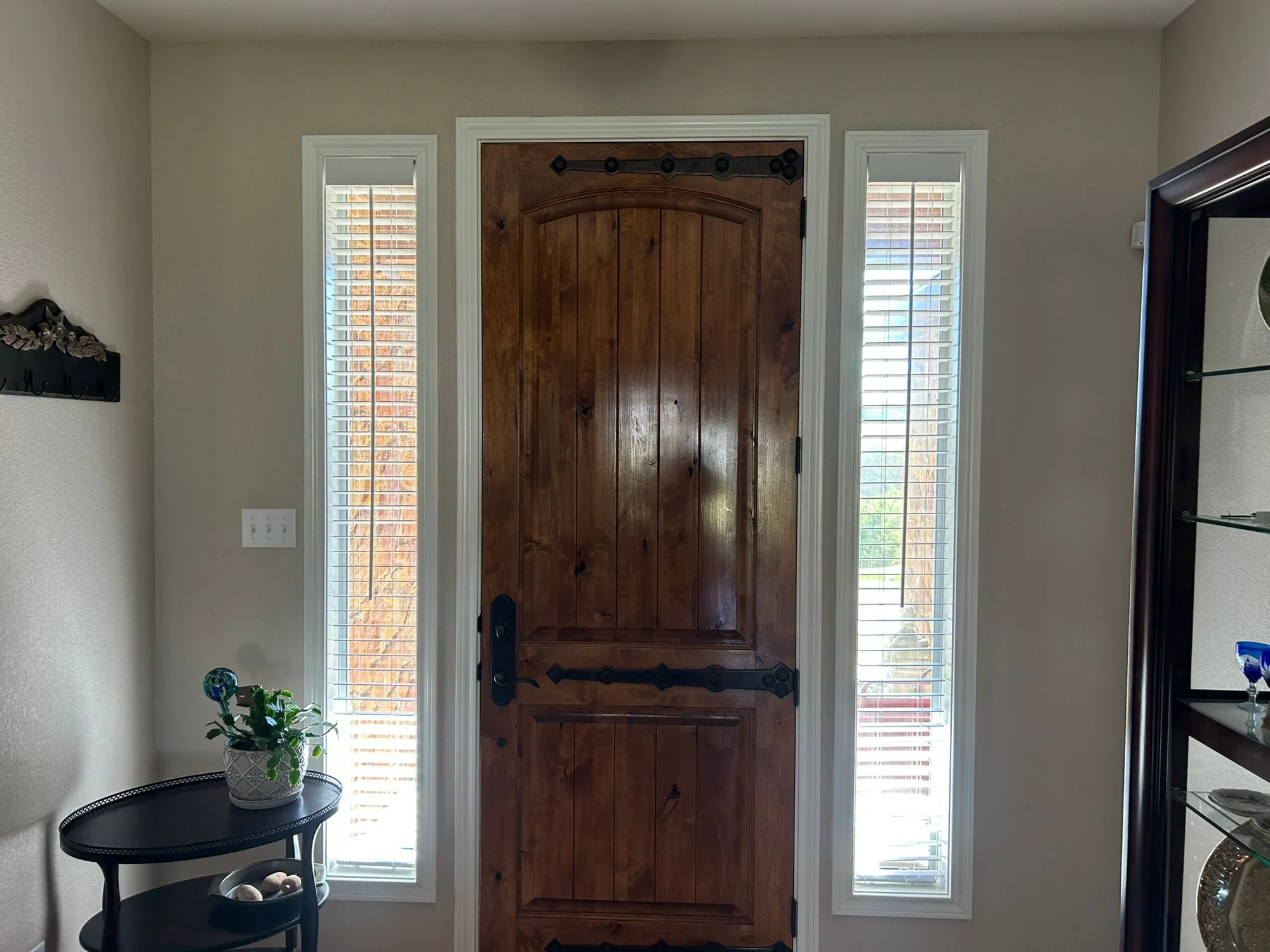
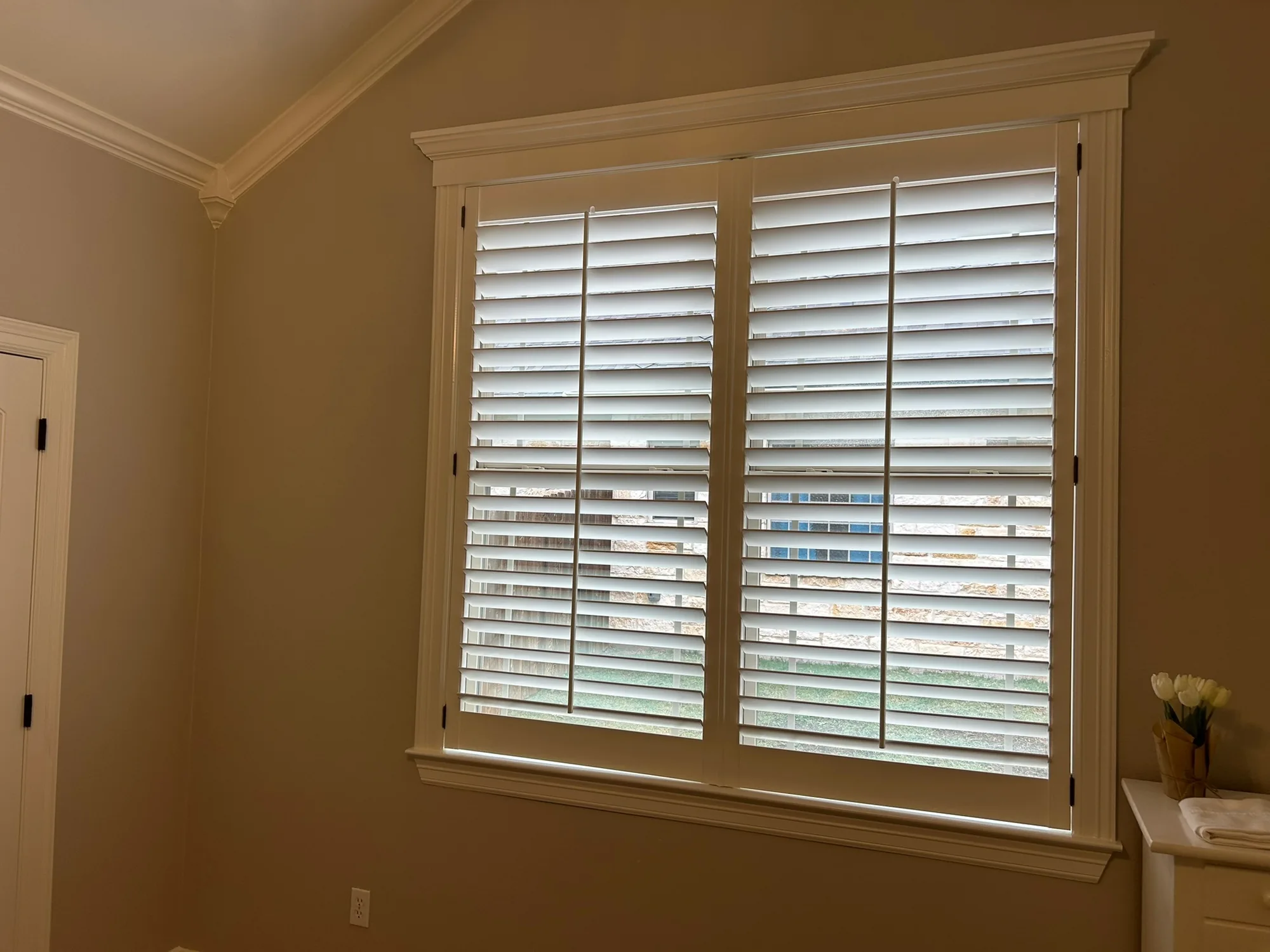
Once a home decides on plantation shutters, one fork remains: painted or stained? Both are timeless, and rooms usually lean clearly one way once you know what each finish does.
Painted finishes: light and architecture
White and off-white shutters read as architecture: they join the trim, bounce light deeper into the room, and disappear into the house's bones. In homes where baseboards and casings are painted, matching shutters extend that woodwork up the wall. It also works with any future paint color.
Stained finishes: warmth and furniture
Stain grades read as furniture: the wood grain shows, and the window becomes a warm feature rather than quiet trim. Stains suit studies, dens and homes with stained doors and floors that deserve echoing. Real wood shutters take stain best, because the grain shows through.
Mixing finishes without chaos
- Keep one finish per sightline: rooms that view each other should agree
- Public rooms painted, private studies stained is a classic split
- Front-of-house windows in one finish keeps the curb view composed
Finish samples look different under store lighting than at home, so hold them at your window, beside your trim, at the time of day the room gets used. That is why we bring samples to your home.
How Texas light changes a finish
West and south windows take hard, warm afternoon light, and warm light pushes colors warm. A bright white that looked clean in the sample can read slightly cream beside a cooler trim white at five o'clock, and a mid-tone stain can look redder on the window than it did on the table. North-facing rooms get cooler, flatter light all day, which makes whites look grayer and stains look darker.
None of that is a reason to avoid either finish. It is the reason to judge a sample on the window it is going on, at the hour the room gets used.
Matching white to white
Most homes already have several whites: ceilings, trim, cabinets and doors. Shutters look best when they match the trim they sit inside, so the useful question is which white your trim is, more than which white you like. Hold the sample flat against the window casing. If it is close but not exact, the difference shows most along the line where the shutter frame meets the trim.
Living with each finish
Both finishes clean the same way: a soft cloth or duster across the louvers, and a barely damp cloth for marks. Skip ammonia and abrasive cleaners, which can dull either surface.
In kitchens, kids' rooms and full bathrooms, painted faux wood is the low-maintenance pick because it handles moisture and frequent wiping. Stain needs real wood, so stained shutters belong in the drier rooms: living rooms, studies and bedrooms.