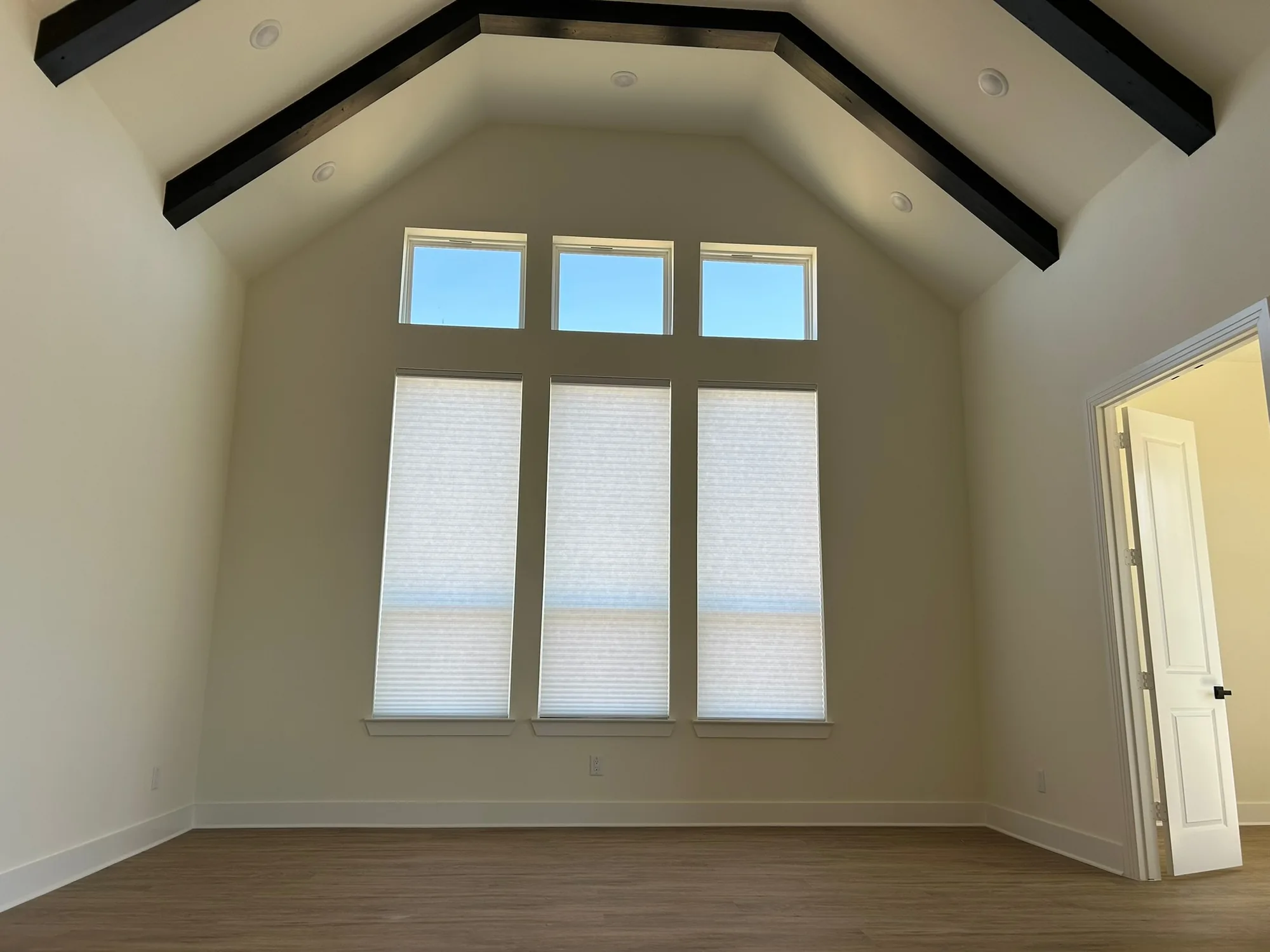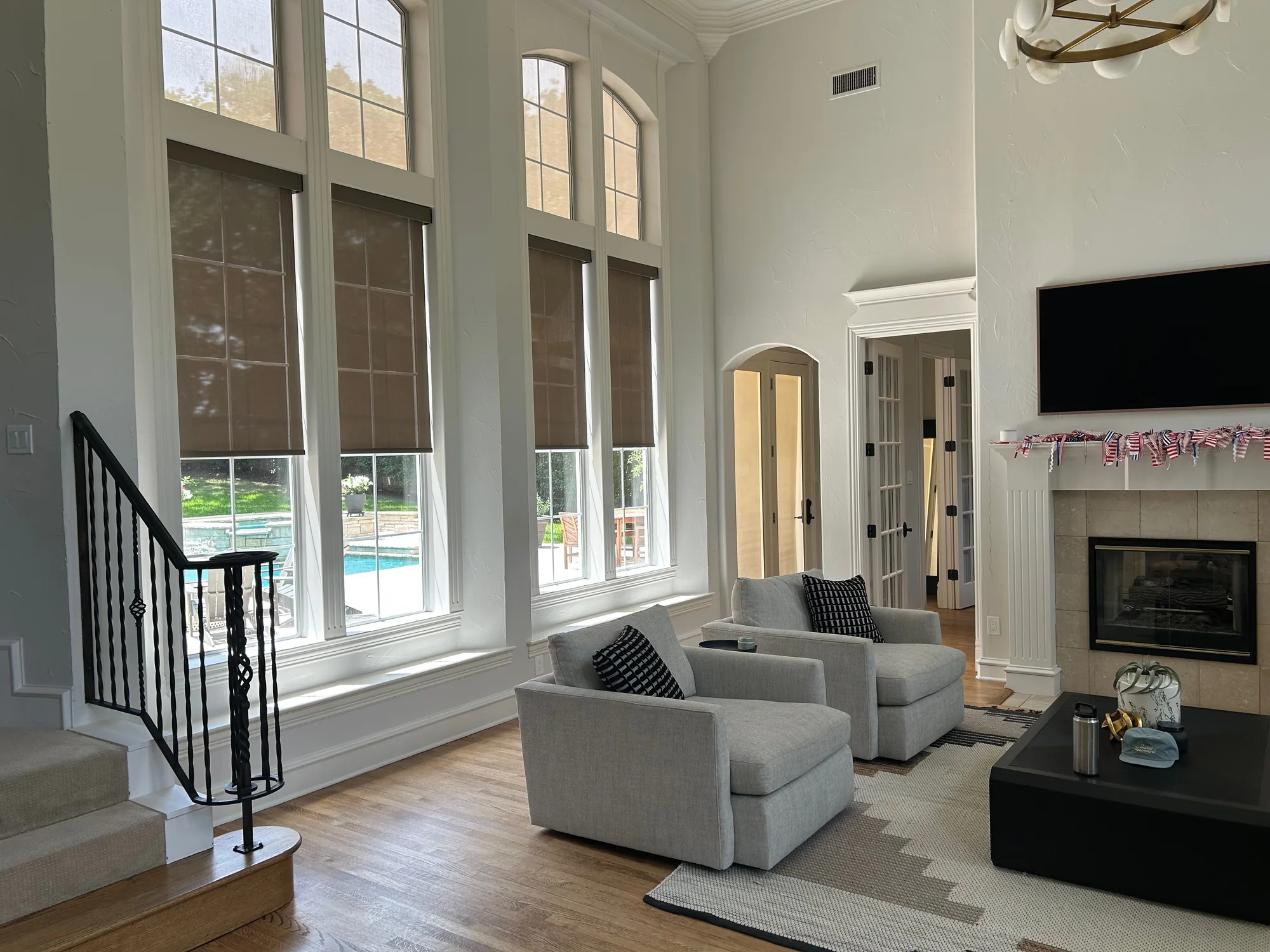
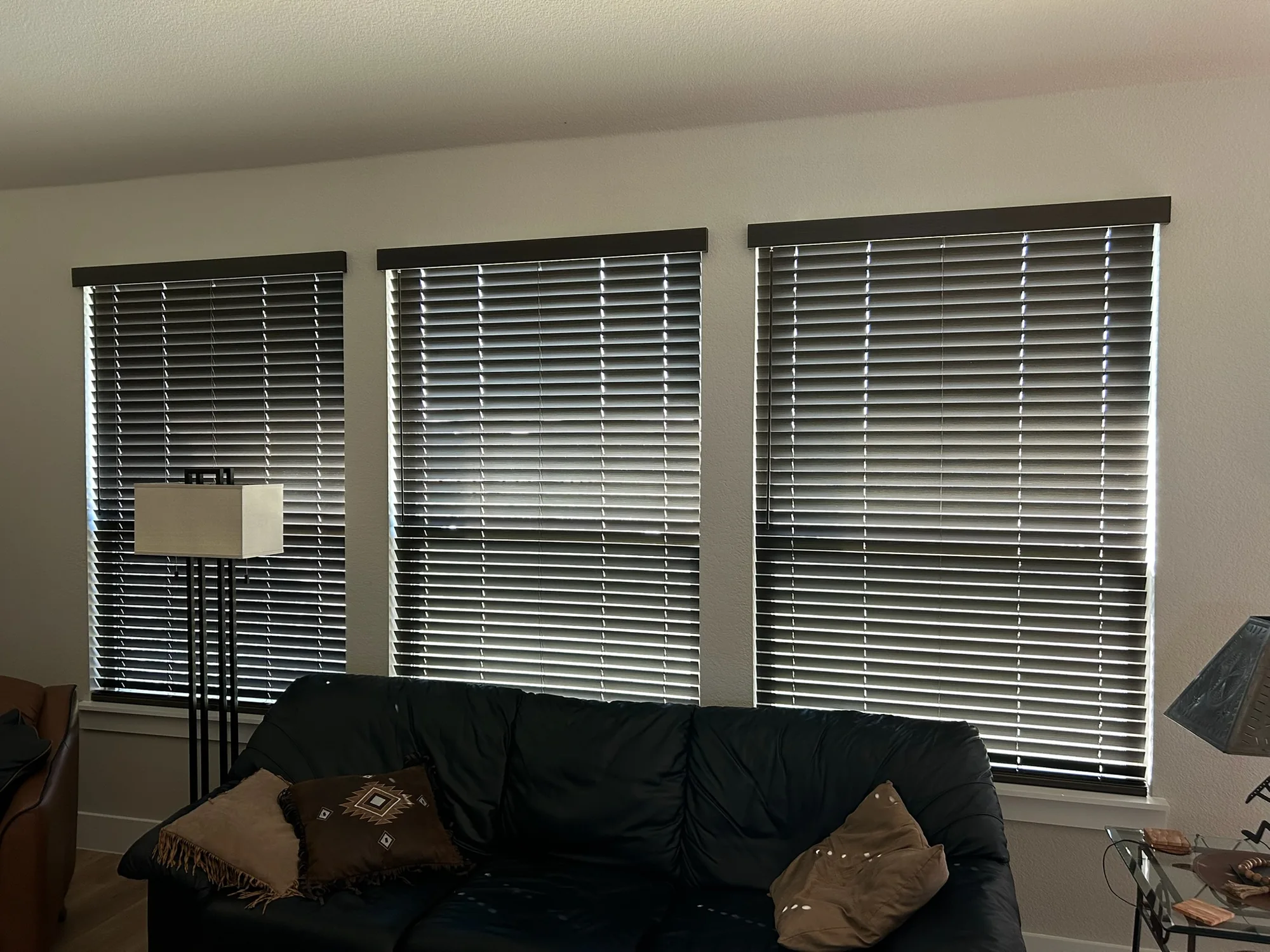
After enough consultations, the same mistakes show up in house after house. None of them come from carelessness; they come from reasonable guesses about an unforgiving product. Here are the nine we fix most, so you can skip straight past them.
The measuring mistakes
- Measuring once, in one spot: Texas frames settle, and a window can differ half an inch top to bottom
- Assuming all windows in a room match: production homes vary opening to opening
- Ordering to the glass instead of the opening, which strands the shade in the frame
The choosing mistakes
- Buying blackout fabric and expecting a blackout room: edge gaps, not fabric, decide darkness
- Putting real wood where steam lives, when faux wood exists precisely for those rooms
- Choosing by swatch under showroom light instead of holding samples at the actual window
- Treating every window alike when exposures differ: the west wall needs more than the north wall
The finishing mistakes
- Corded lifts in kids' rooms, when cordless is the modern standard for safety
- Skipping the mount decision: inside versus outside mount changes fit, light gaps and how large the window reads
Every one of these disappears when the measuring and choosing happen at your windows with someone who does this daily. That is the entire argument for the free in-home consultation: the mistakes cost more than the visit, and the visit costs nothing.
The planning mistakes
- Buying room by room over several years, so nothing matches from the street
- Mixing finishes across one sightline, when rooms that look into each other should agree
- Waiting until after the walls are closed to think about motorizing tall windows
- Ordering exterior shades before checking HOA rules (see exterior shades and HOA rules)
The care mistakes
- Scrubbing fabric shades with water, which leaves rings; blot instead
- Using ammonia or abrasive cleaners on shutters and blinds, which dulls the finish
- Pulling a cordless shade from one corner instead of the center of the bottom rail, so it hangs crooked
- Ignoring a motorized shade that has started moving slowly, which usually just means it needs a charge
A ten-minute way to avoid most of them
Our design checklist walks through each room's light, privacy and use in about ten minutes, and gives you a plan to bring to the consultation.