
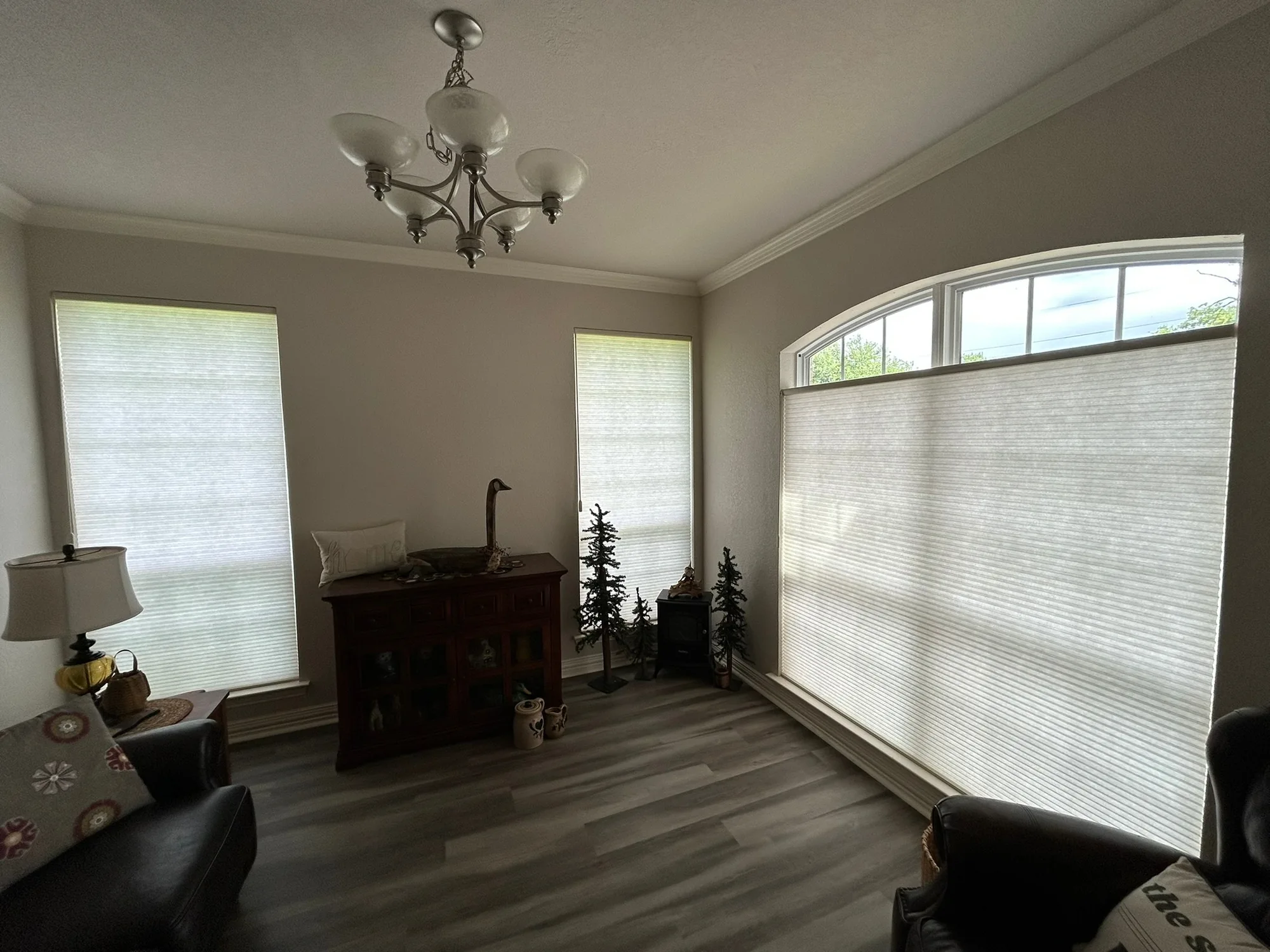
A sunroom is the best seat in the house for eight months and a greenhouse for the other four. All that glass concentrates everything Texas sun does: heat, glare and fading, multiplied by every pane. The right shades keep the room on the calendar year-round.
Cellular shades: the insulation play
Honeycomb cells trap air against the glass, which matters double in a room that is mostly glass. Light-filtering cellular fabric keeps the brightness that makes a sunroom worth having while blunting the heat load, and top-down bottom-up options preserve the treetop views.
Solar shades: the view play
If the sunroom looks at something worth seeing, solar fabric in a 3% to 5% openness cuts glare and UV while keeping the view alive. Dark weaves see through best. This is the choice for sunrooms that work as reading rooms and offices.
Woven woods: the porch-feel play
Natural weaves suit sunrooms stylistically like nothing else, filtering light into something that flatters plants and people alike. Use them where the mood matters most and pair with liners where the western exposure demands more.
Think in banks, not windows
Sunrooms have many openings that want to move together. Motorization with grouped control turns eight shades into one gesture, and a schedule can track the sun around the room. Measuring all the openings as one project also keeps fabrics matched from a single run.