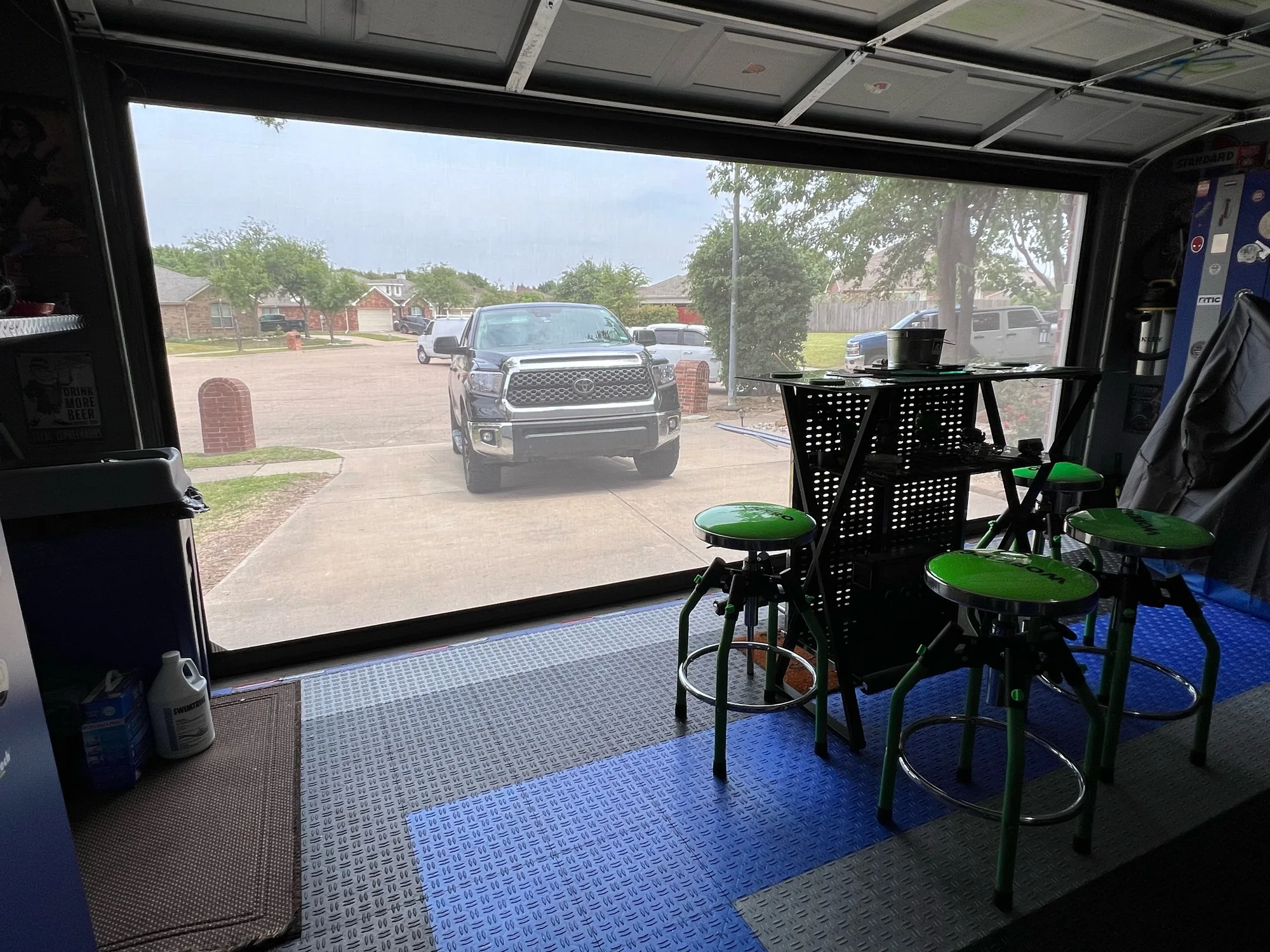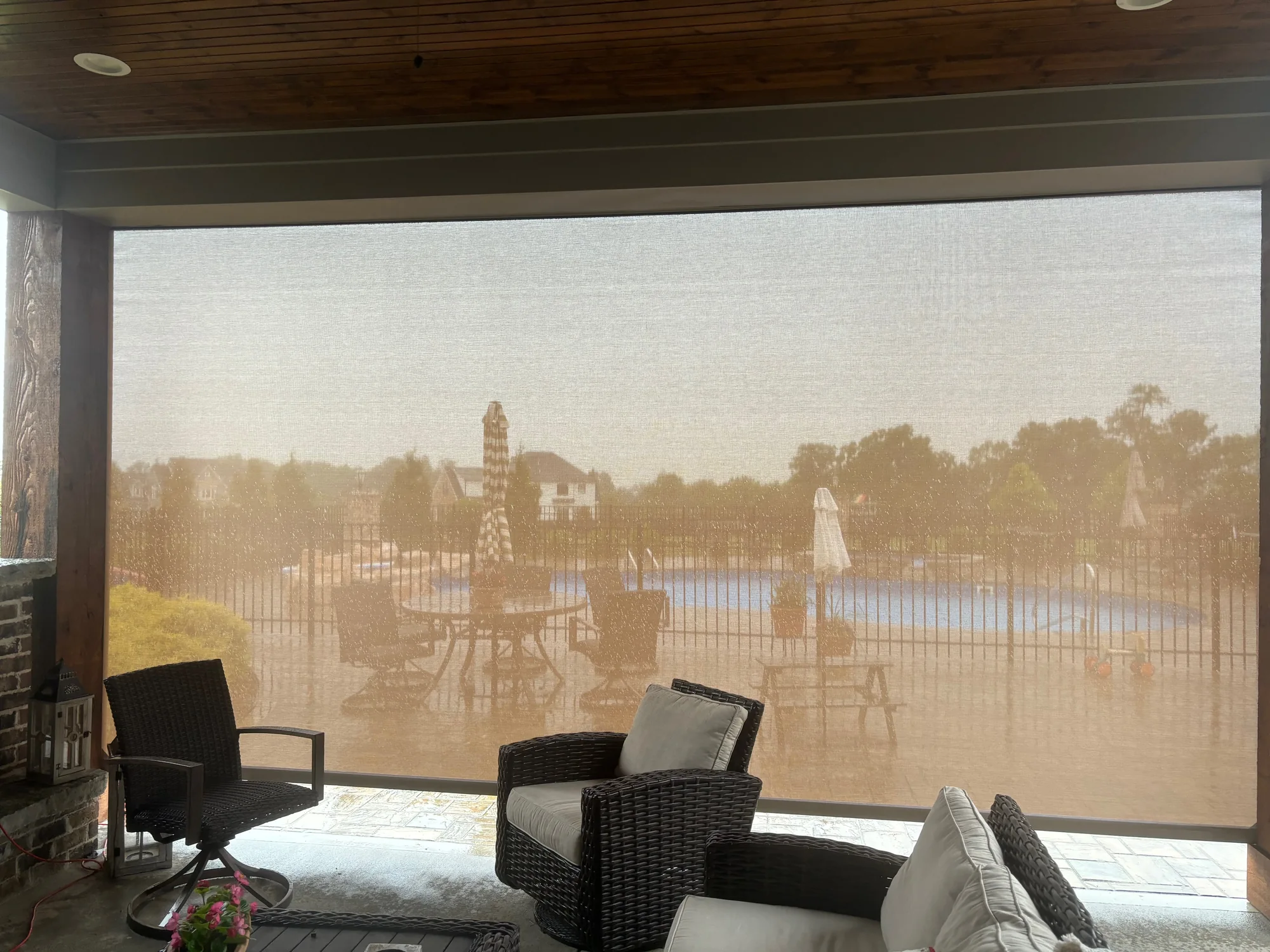
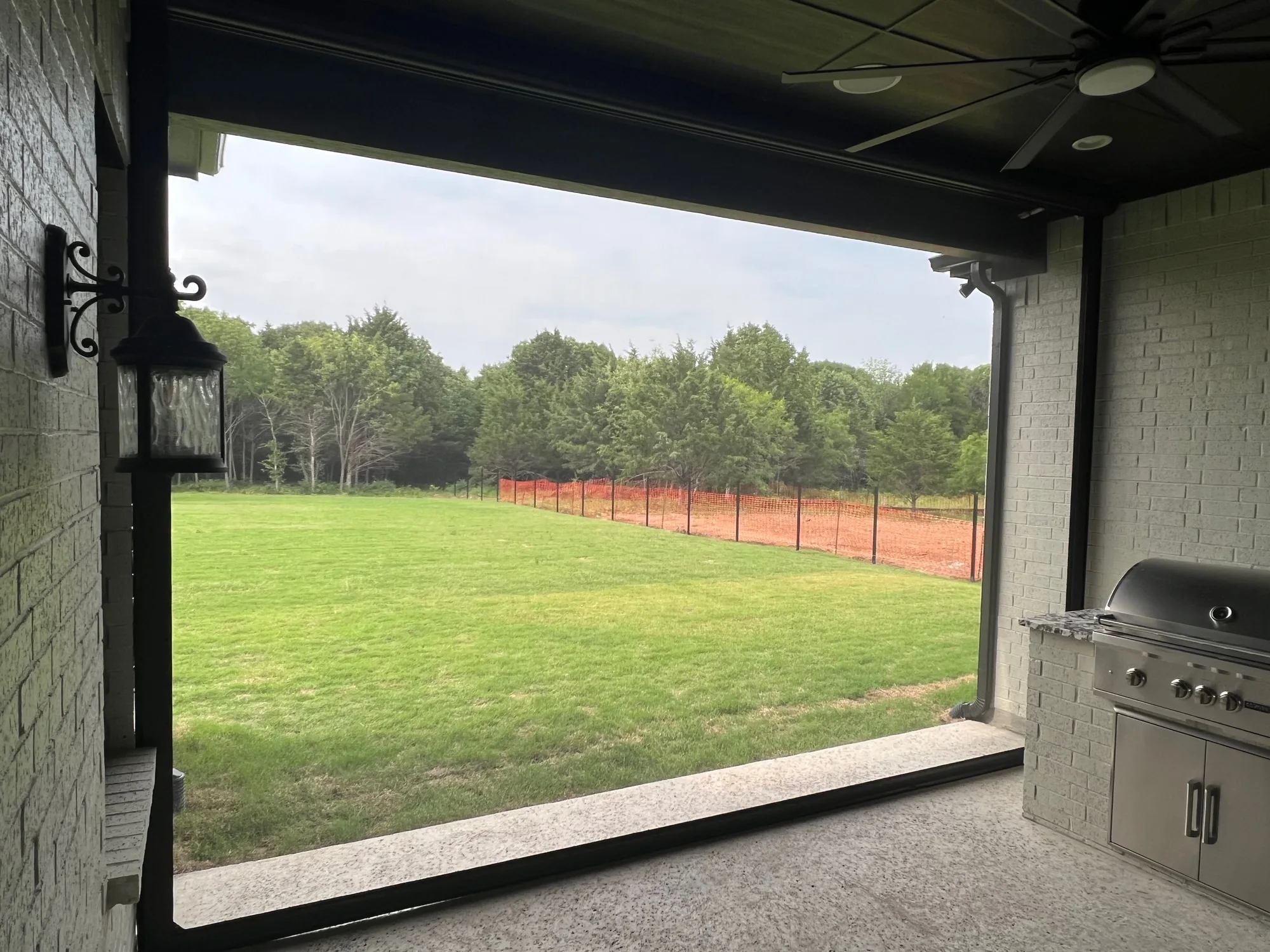
Every Texas patio owner eventually tries to buy back August: fans, misters, shades, or all three. Each attacks different physics, and ordering them correctly is the difference between a patio that works and a pile of gadgets.
Shade first: stop the radiant load
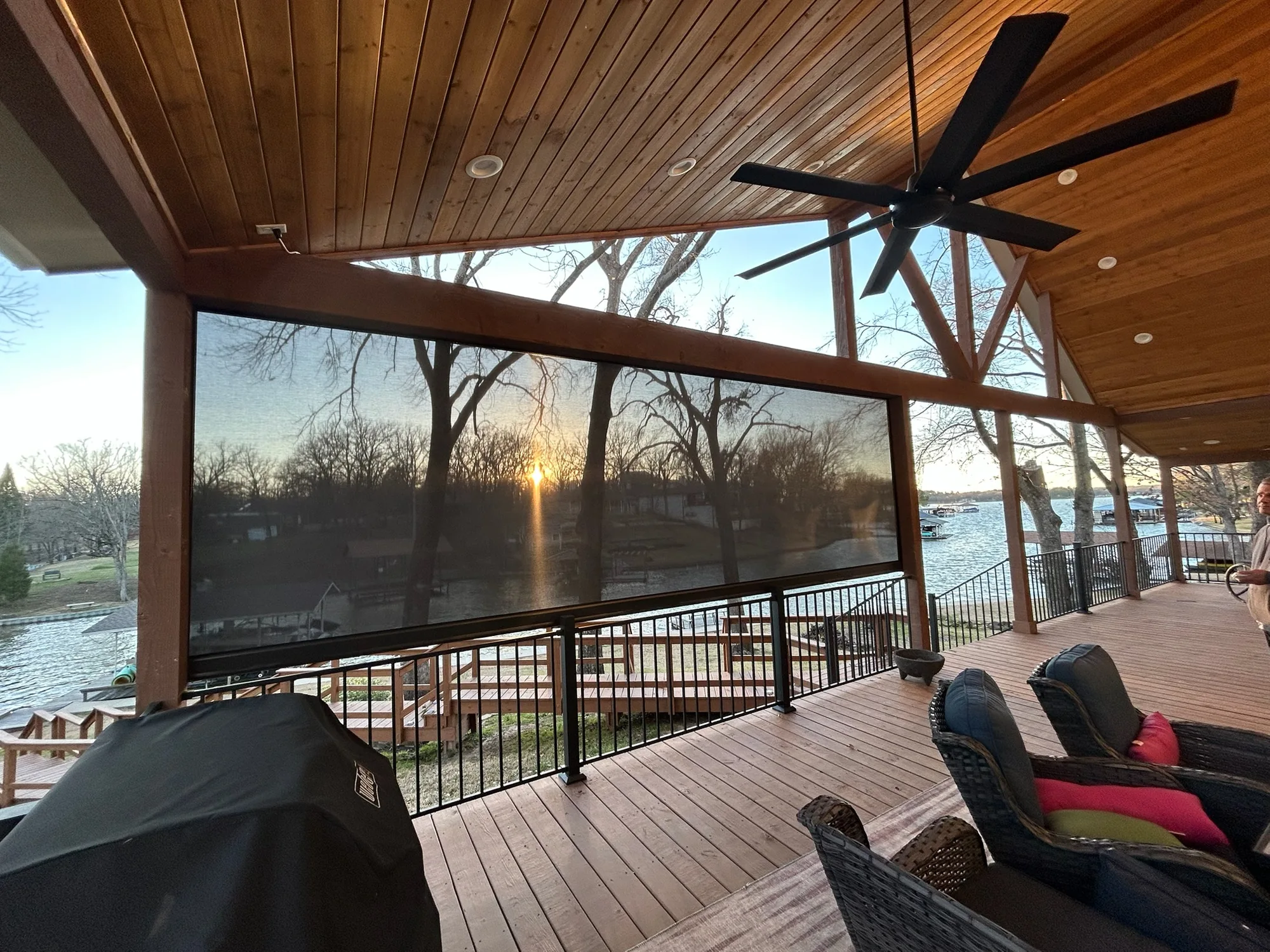
The heat that makes a patio unusable is mostly radiant: sun striking surfaces and skin. Exterior shades stop it before it lands, dropping the felt temperature dramatically and keeping deck boards and furniture touchable. No amount of air movement compensates for standing in direct sun, which is why shading is the foundation, not an option.
Fans second: make the air work
Moving air accelerates evaporation off skin, which reads as cooling even when the air is warm. Under shade, a good fan extends comfort by several felt degrees. Without shade, a fan in full sun is a convection oven with a breeze.
Misters third: the humidity gamble
Evaporative cooling works best in dry air, and Texas humidity varies by region and week. West Texas misters work wonders; a muggy August afternoon in DFW blunts them. They also wet surfaces and mineral-spot glass, so they suit defined zones more than whole patios.
The order of operations
- Motorized exterior shades on the sun-facing sides: the foundation
- Ceiling or wall fans under the shaded zone: the multiplier
- Misters, if your microclimate is dry enough: the bonus round
Shades are the step we build: measured to the opening, wind-resilient, and deployed by remote or sun sensor exactly when the afternoon demands it.