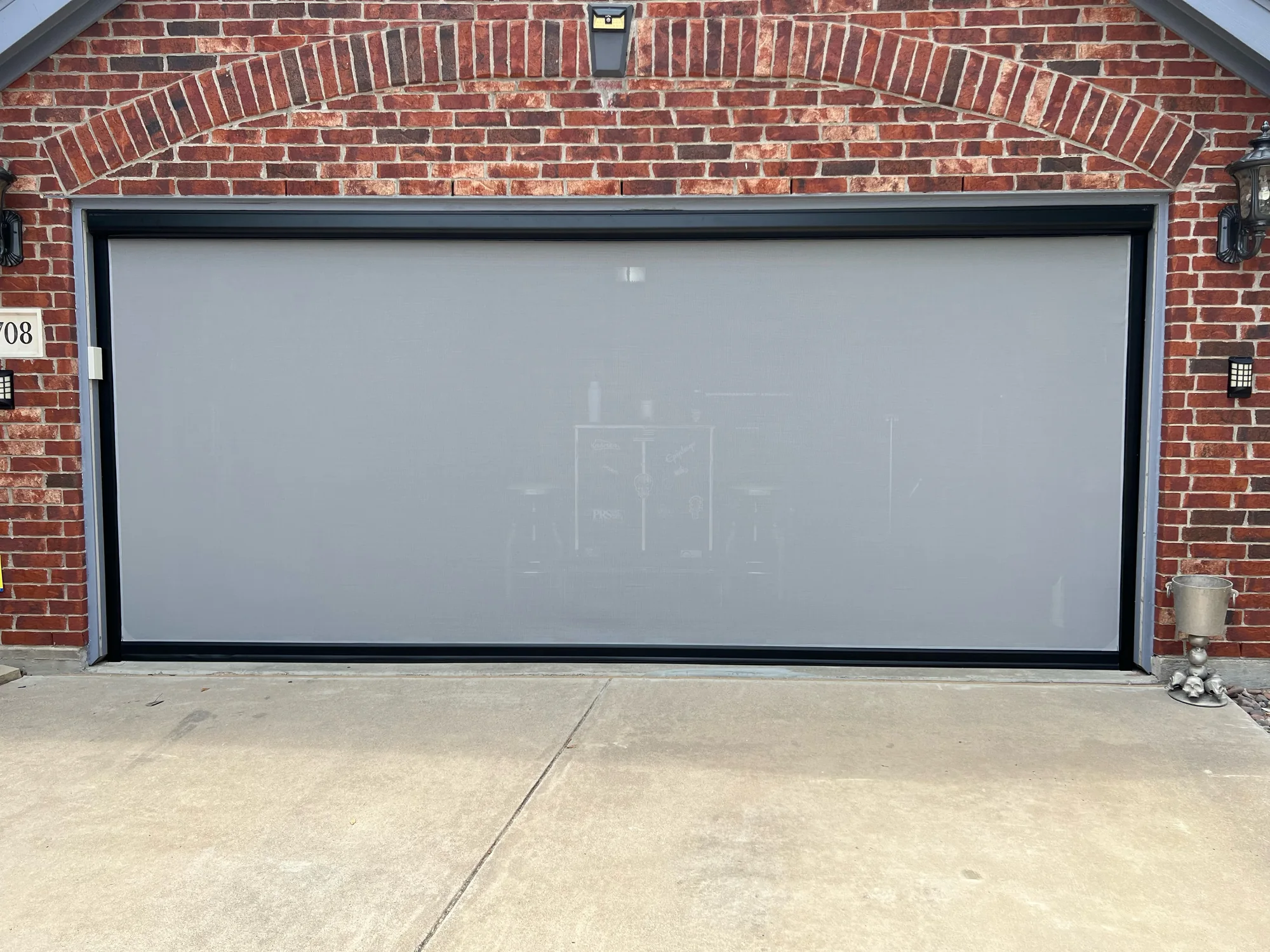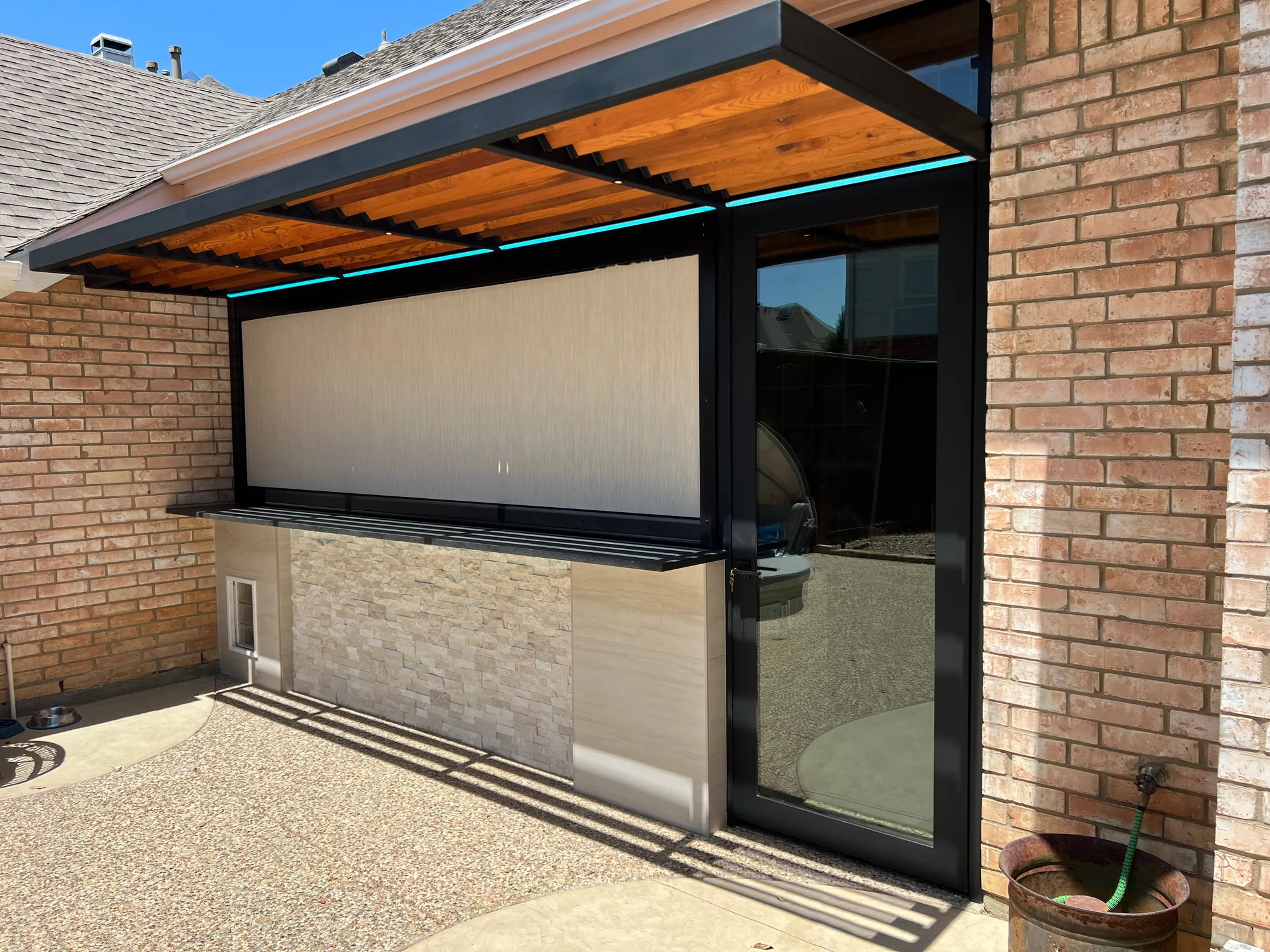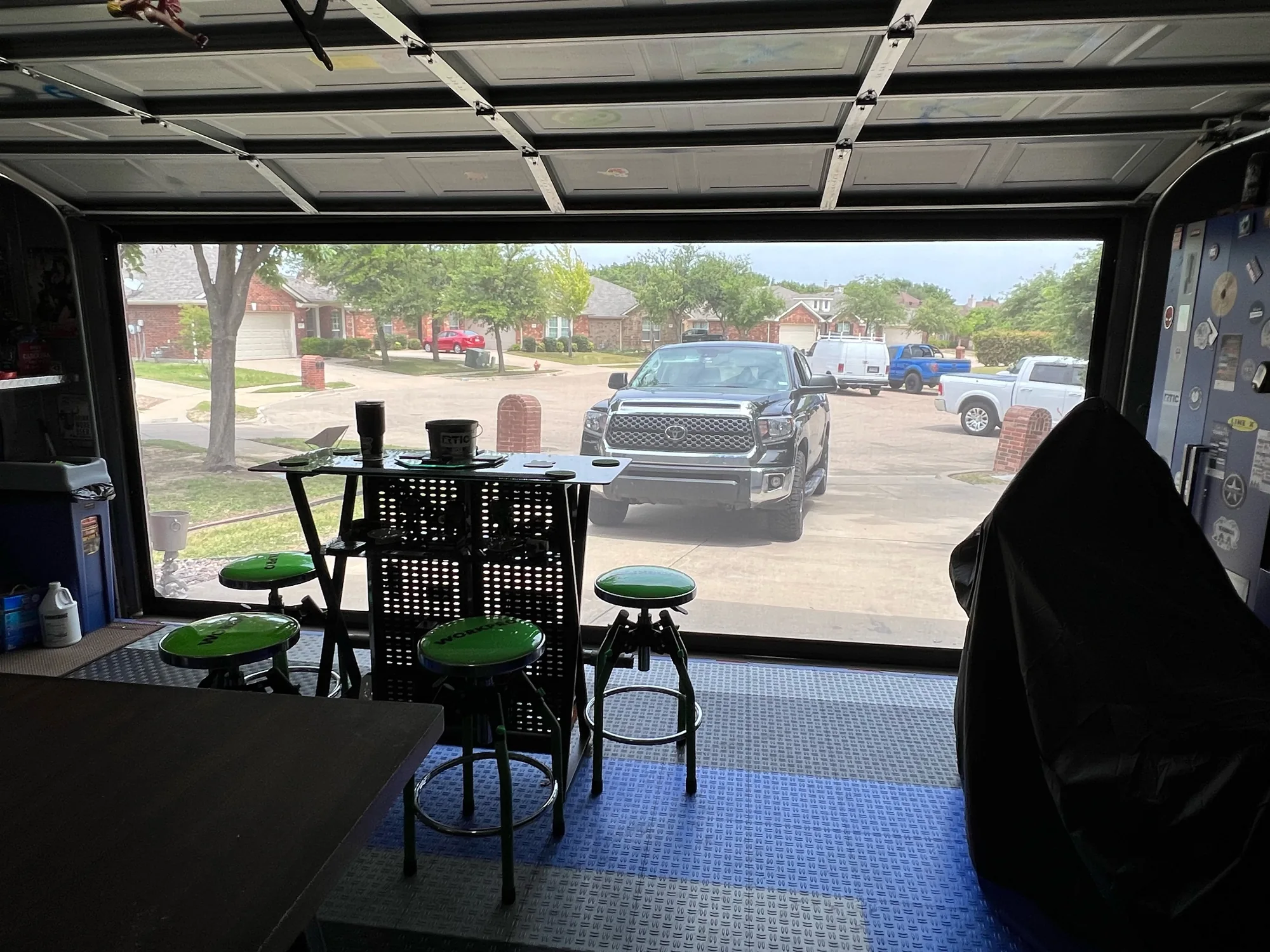
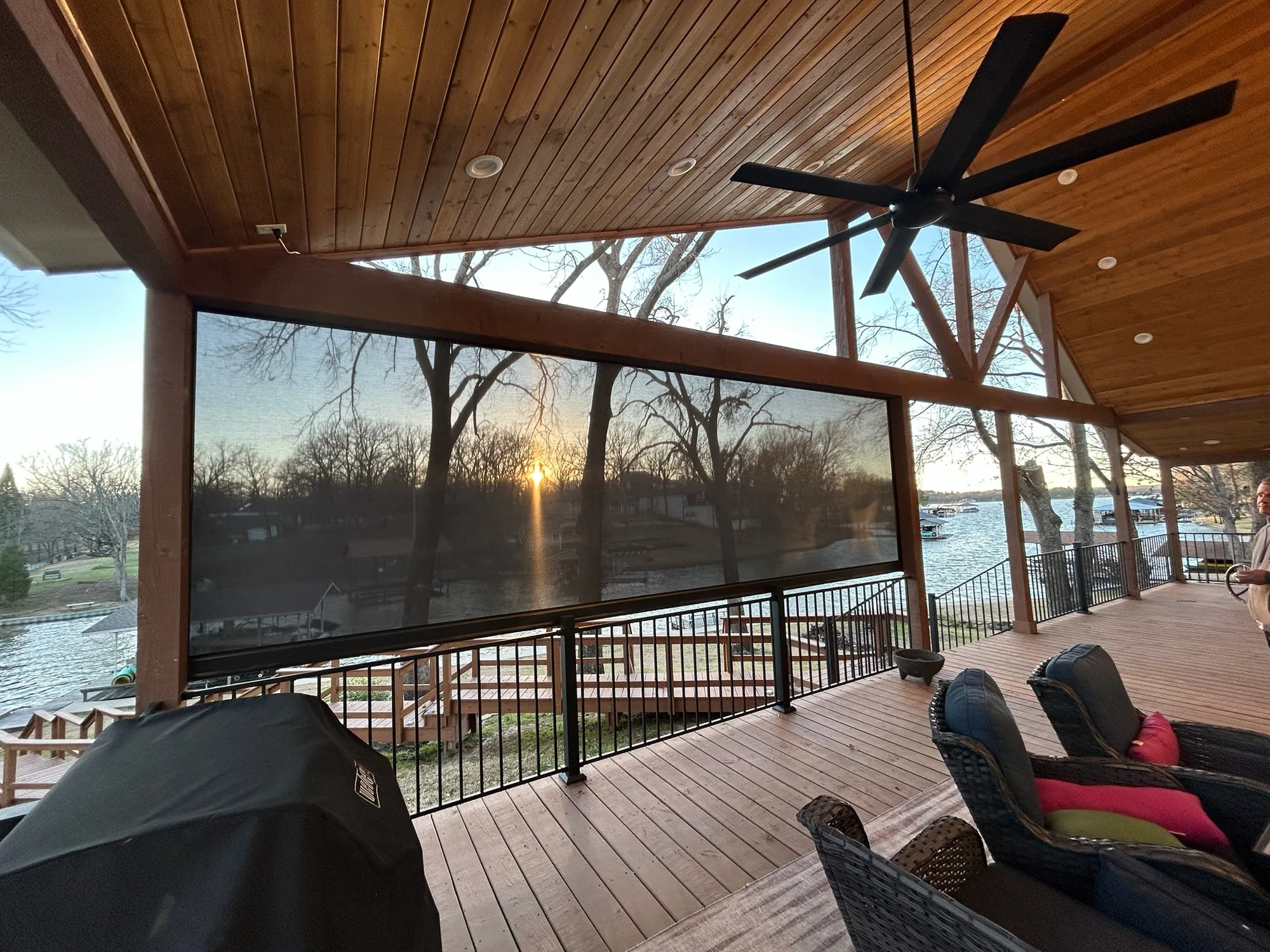
Short answer: for most Texas porches, the best outdoor shades are exterior solar screen shades on the west and south openings, track-guided if the porch catches wind and motorized if the openings are wide. They stop the low afternoon sun that slides in under the porch roof, keep the view, and roll up out of the weather when you are not using them.
Why a covered porch still gets hot
A porch roof blocks the high midday sun. By mid-afternoon the sun is low enough to shine sideways under the edge of the roof, straight onto the chairs, the table and the people in them. In a DFW, Waco or Austin summer, that is also the hottest part of the day, so the porch is least usable exactly when you get home.
A porch shade is a vertical panel of outdoor fabric hanging from the top of the opening. It catches that sideways sun before it reaches the seating area, the same way shading a window from outside stops heat before it gets into the room.
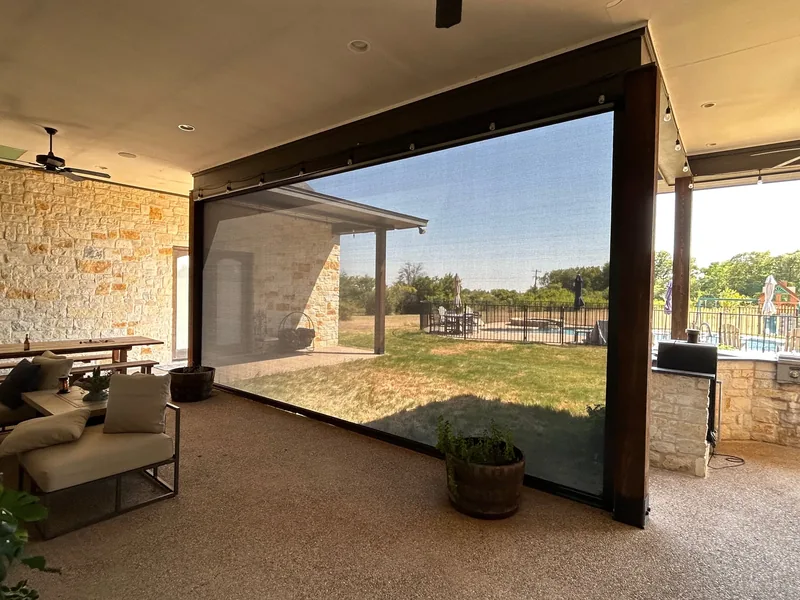
Types of outdoor porch shades
- Store-bought roll-up shades: bamboo, reed or PVC panels in standard sizes, raised with a cord or by hand. Inexpensive and easy to hang, but sized to a label rather than your opening, and they swing freely in wind.
- Outdoor curtains: fabric panels on a rod or cable. Soft and decorative, with gaps at the edges and plenty of movement in a breeze.
- Awnings: a sloped cover that projects out from the house. Good overhead shade, but little help against the low, sideways afternoon sun a porch actually struggles with.
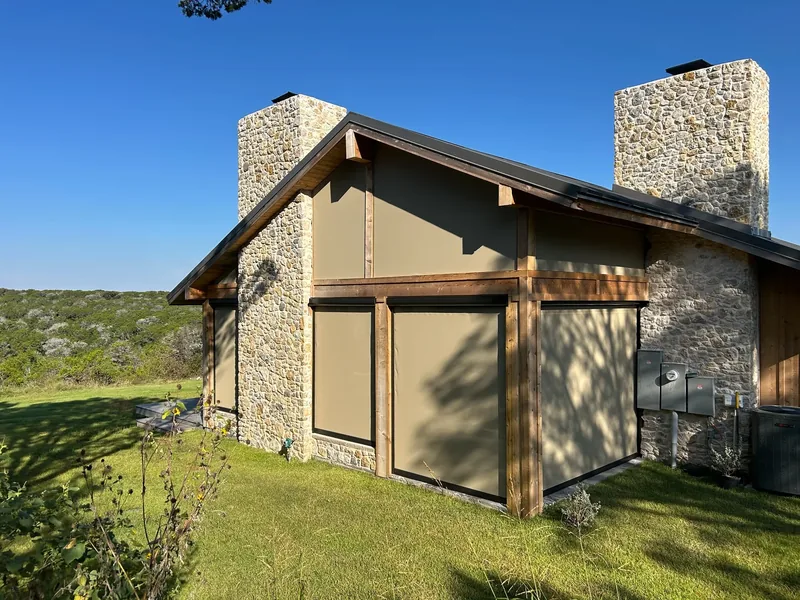
- Custom exterior solar screen shades: a vertical screen fabric built to each opening, on a roller with a housing at the top. This is what we install, manual or motorized, with track-guided options for windy sites.
Exterior solar screen shades suit most Texas porches because they work on the vertical, low-sun problem, keep the view through the weave, and retract into their housing when the porch is open.
Which sides to shade first
- West: almost always first. It takes the late-day sun that makes a porch hard to use from about four o'clock on in summer.
- South: usually second. The roof blocks much of the high summer sun here, but spring and fall sun comes in lower and reaches further under the roof.
- East: morning sun. Comfortable on most porches, worth shading if you eat breakfast out there or it faces a close neighbor.
- North: rarely needs sun control. Shade it for privacy or wind, if at all.
Many porches only need two of their open sides shaded. Shading every opening costs more and closes the porch in more than most people want, so start with the sides that drive the heat.
Front porch vs back porch shades
A back porch is usually about afternoon heat, the view of the yard or pool, and evenings outside. Weave openness and the west side matter most, and bugs come up more often.
A front porch is about privacy from the street, glare at the front door, and how the house looks from the curb. Here the fabric and housing colors matter as much as the weave, and in many Texas neighborhoods the HOA will review the change. Retractable shades tend to be easier to approve, because the house looks unchanged whenever they are rolled up. A request with the product photo, colors, mounting location and dimensions moves fastest; see exterior shades and HOA rules.
How open should the weave be?
Outdoor shade fabric is rated by openness: the share of the weave that is open space. A tighter weave blocks more sun and heat and gives more daytime privacy, with a softer view. A more open weave keeps more of the view and the breeze and still cuts glare. West-facing porches usually want a tighter weave than north-facing ones.
Color changes the view too. From the shaded side, darker fabrics are easier to see through because they bounce less light back toward your eyes, while lighter fabrics glow in direct sun.
After dark the situation reverses: with the porch lights on, people outside can see in through any screen weave. If the porch faces a street or a close neighbor, plan for that. Our guide to patio shade openness goes deeper on picking the number.
Retractable, track-guided and motorized: what the terms mean
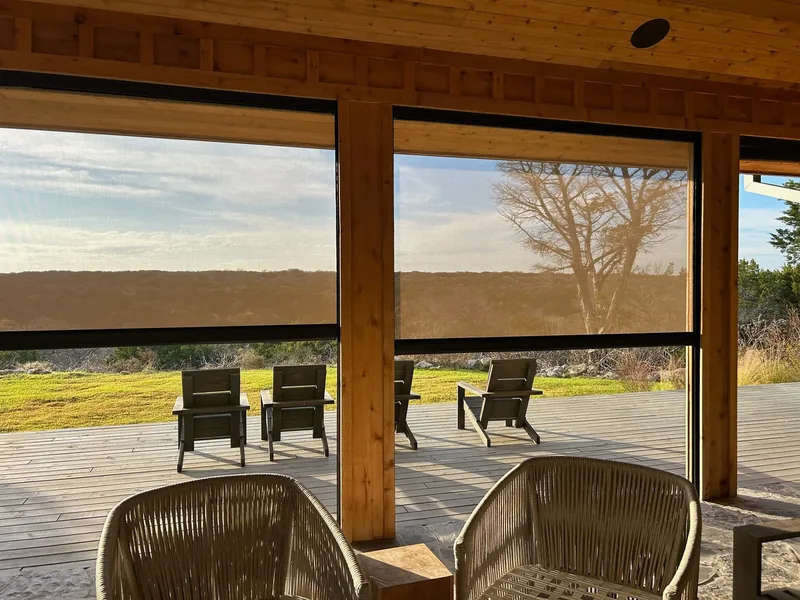
- Retractable: the shade rolls up into a housing at the top of the opening when you are not using it, so the fabric spends storms rolled up and protected.
- Track-guided: the fabric's edges run inside side channels. Wind pushes against a panel held at both sides, and the channels close the edge gaps where light and insects get past a free-hanging shade.
- Motorized: remote, wall switch, app or schedule control. Shades on wide porch openings are heavy, and a motor makes raising them a one-second job when the weather turns.
- Manual: a sensible choice for smaller openings that are easy to reach.
Raise exterior shades in high wind, whatever the system. Motorized versions can use a wind sensor that raises the shade when gusts pick up, whether or not anyone is home. More in patio shades and Texas wind.
Bugs, rain, cleaning and lifespan
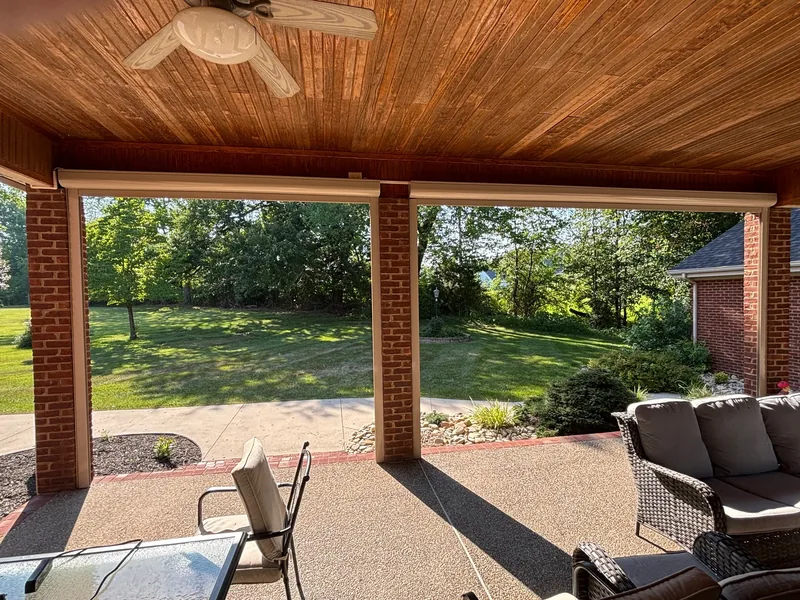
Bugs: deployed shades cut down on insects, and track-guided systems keep out more because the edges are closed. A screened room is still the stronger answer for heavy mosquitoes at dusk, and some homes use both. We compare them in screened porch vs motorized patio shades.
Rain: screen weave is open, so wind-driven rain blows through it. Shades cut the sun and wind on a porch; a roof keeps it dry. If a shade gets wet, let it dry in the down position before rolling it up.
Cleaning: rinse the fabric with a hose now and then and use mild soap and water for spots. Skip pressure washers and harsh cleaners.
Lifespan: how long a porch shade lasts depends mostly on how it is used in weather. Shades rolled up in storms and high wind last far longer than shades left down to flap.
How porch shades mount
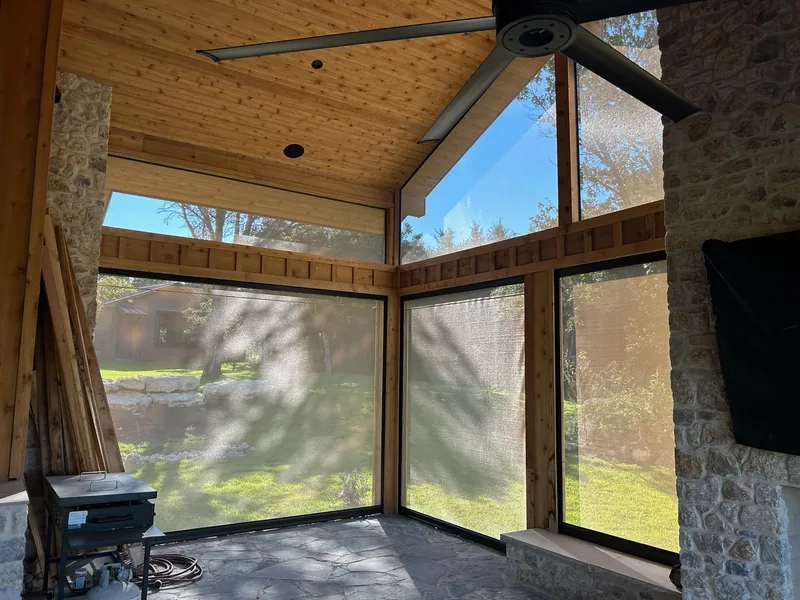
Shades mount to the porch structure: the beam or header across the top of each opening, plus the posts or columns at the sides for track-guided systems. Real porch openings are rarely square. Posts lean, headers settle, and two openings on the same porch can measure differently. That is why every exterior shade we install is measured on site, opening by opening, with hardware chosen for the span.
What to have ready for the consultation
- Which sides get the afternoon sun, and the hours you actually use the porch
- Whether there is power near the porch, which decides between battery, solar and hardwired motors
- Your HOA's architectural guidelines, if you have them
- How open you want the porch to feel with the shades down
The consultation is free, and the team that measures is the team that installs. You get a written quote with installation included. If a shade does not fit the approved measurements, we remake it at no cost, and the four-year service guarantee and the manufacturer's limited lifetime warranty apply outdoors the same as inside. Our teams cover DFW, North Texas, Dallas, Waco, Austin and Cedar Creek Lake; find yours on the service areas page.