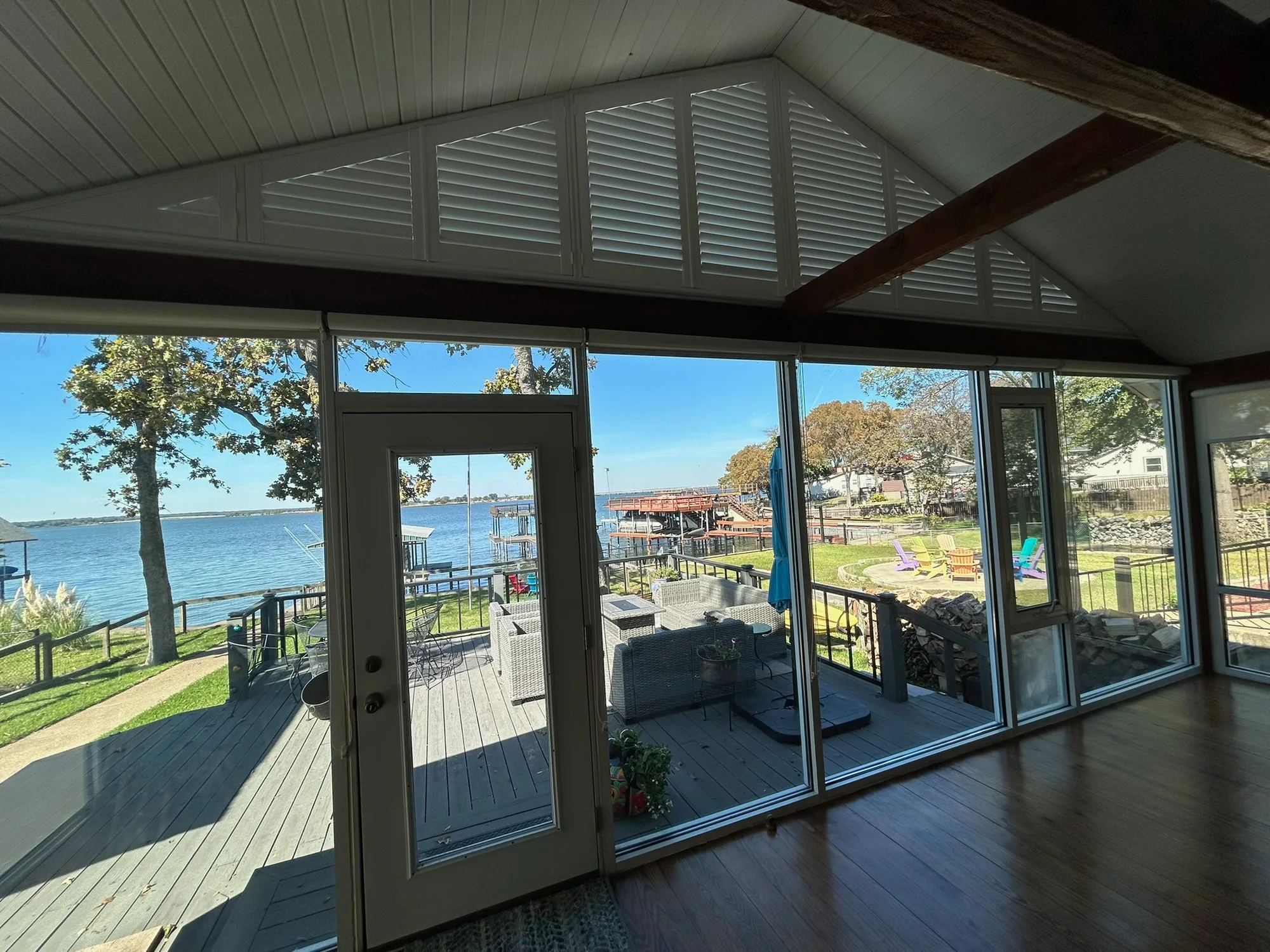
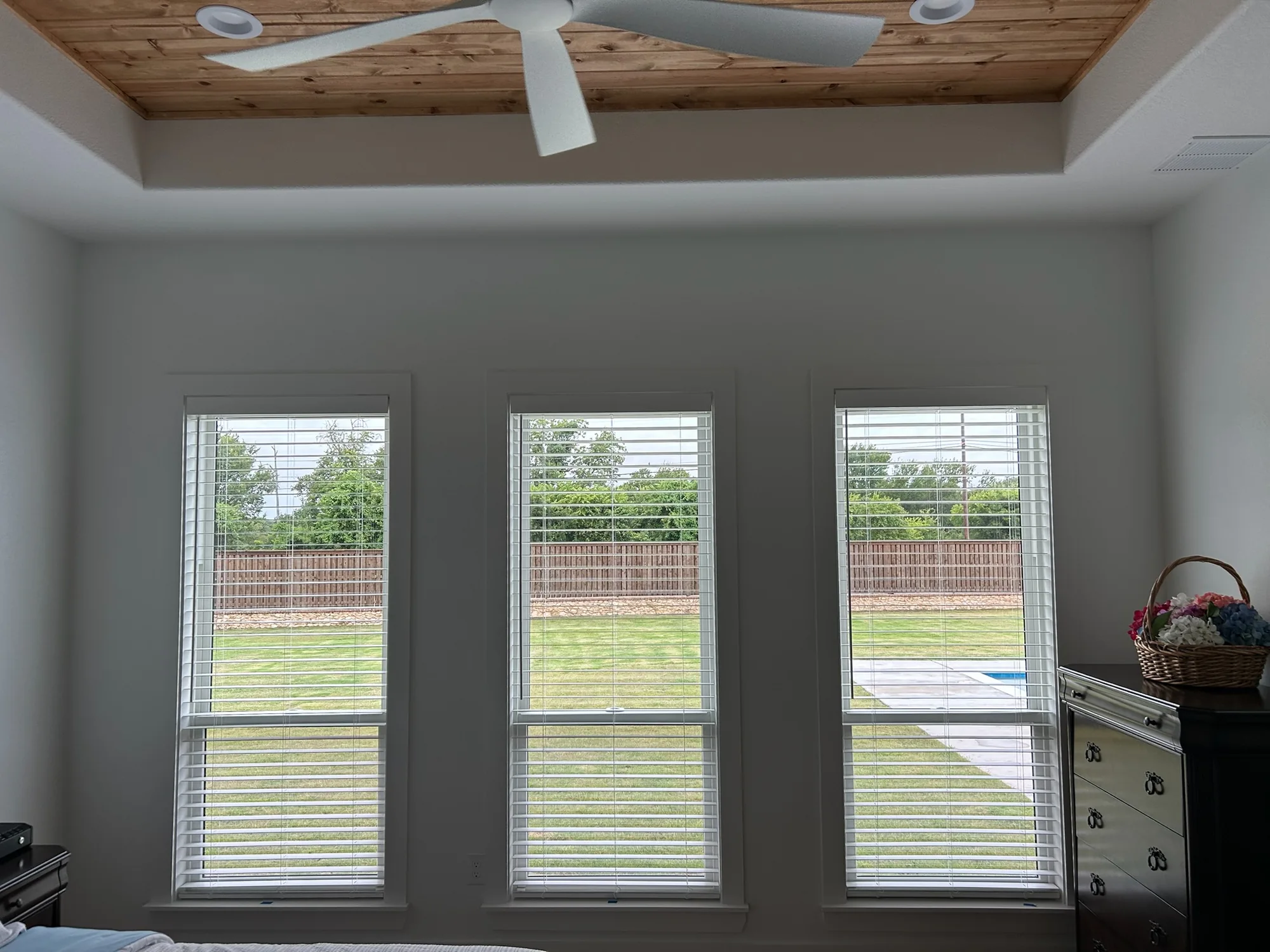
Short answer: horizontal blinds are slats that run side to side and tilt on a cord or wand. They are the default for a standard window, and they suit any opening taller than it is wide.
What horizontal means and why it matters
The slats sit level and stack upward when you raise them. That direction is not cosmetic: it decides which openings the treatment fits. Horizontal blinds work on windows taller than they are wide, which is nearly every window in a house. Verticals exist for the opposite case.
Slat sizes and what they change
Slat width changes three things at once. Wider slats mean fewer of them, so you see more of the view when they are open and the stack at the top is deeper. Narrower slats close tighter and suit a shallow opening. There is no correct size, only a trade between view and stack depth.
Materials
Real wood is lightest and shows grain. Faux wood tolerates moisture and weighs more. Composite splits the difference. Aluminium fits shallow openings where the others will not. The room decides this more than taste does: anywhere that gets steam rules out real wood.
Inside mount or outside mount
Inside mount sits within the opening and shows the trim, which looks tidier. It needs enough depth, and it needs the opening to be reasonably square, because a rigid slat cannot hide a gap. Outside mount covers the whole opening and the trim around it, which hides an out-of-true frame and blocks more light at the edges.
Cord, wand or motor
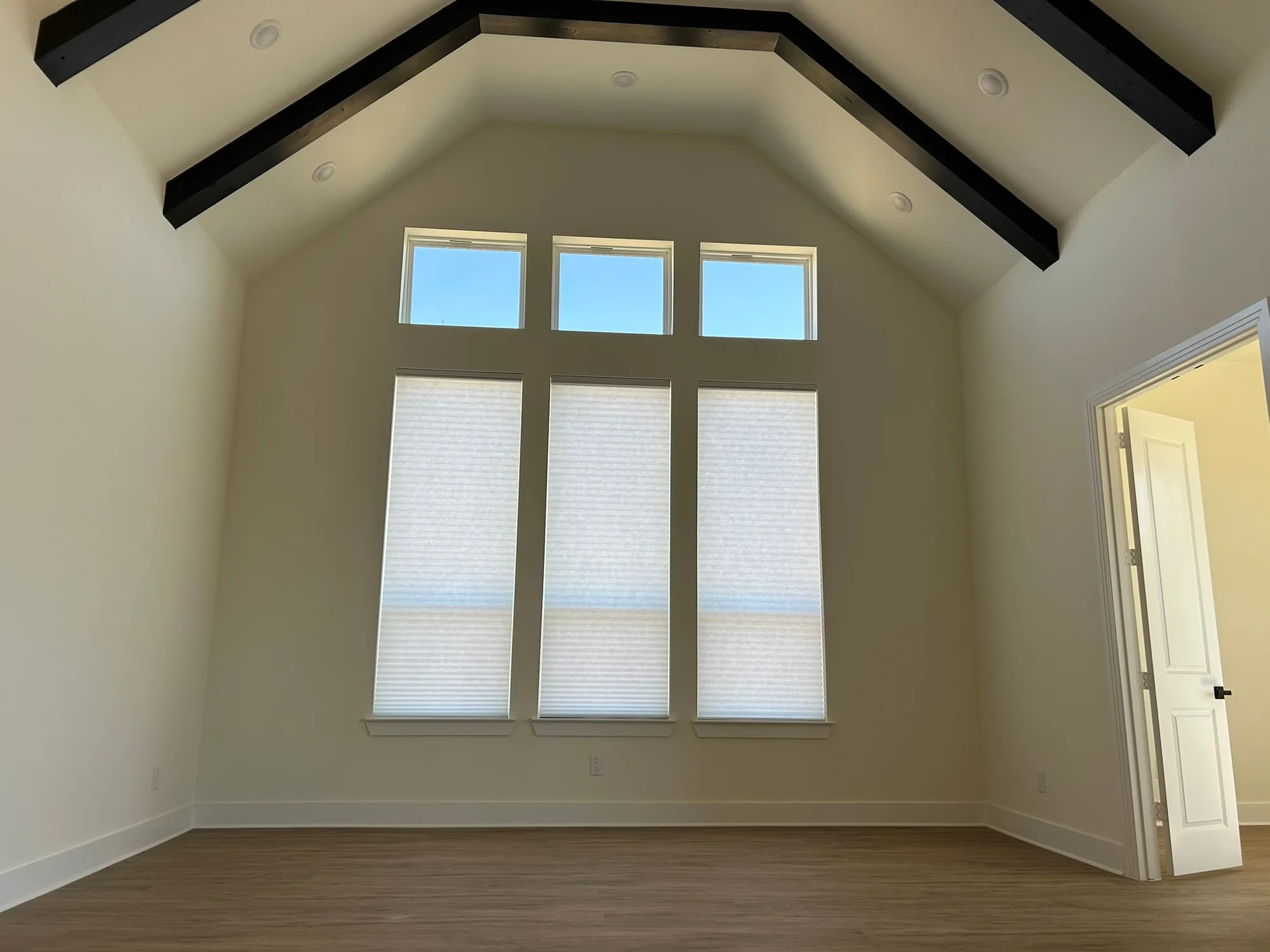
A cord is the traditional lift. A wand tilts without a loop, which matters in a house with children or pets. A motor removes the pull entirely and is the practical answer on a window high enough that you would need a ladder.
Where horizontal blinds are the wrong call
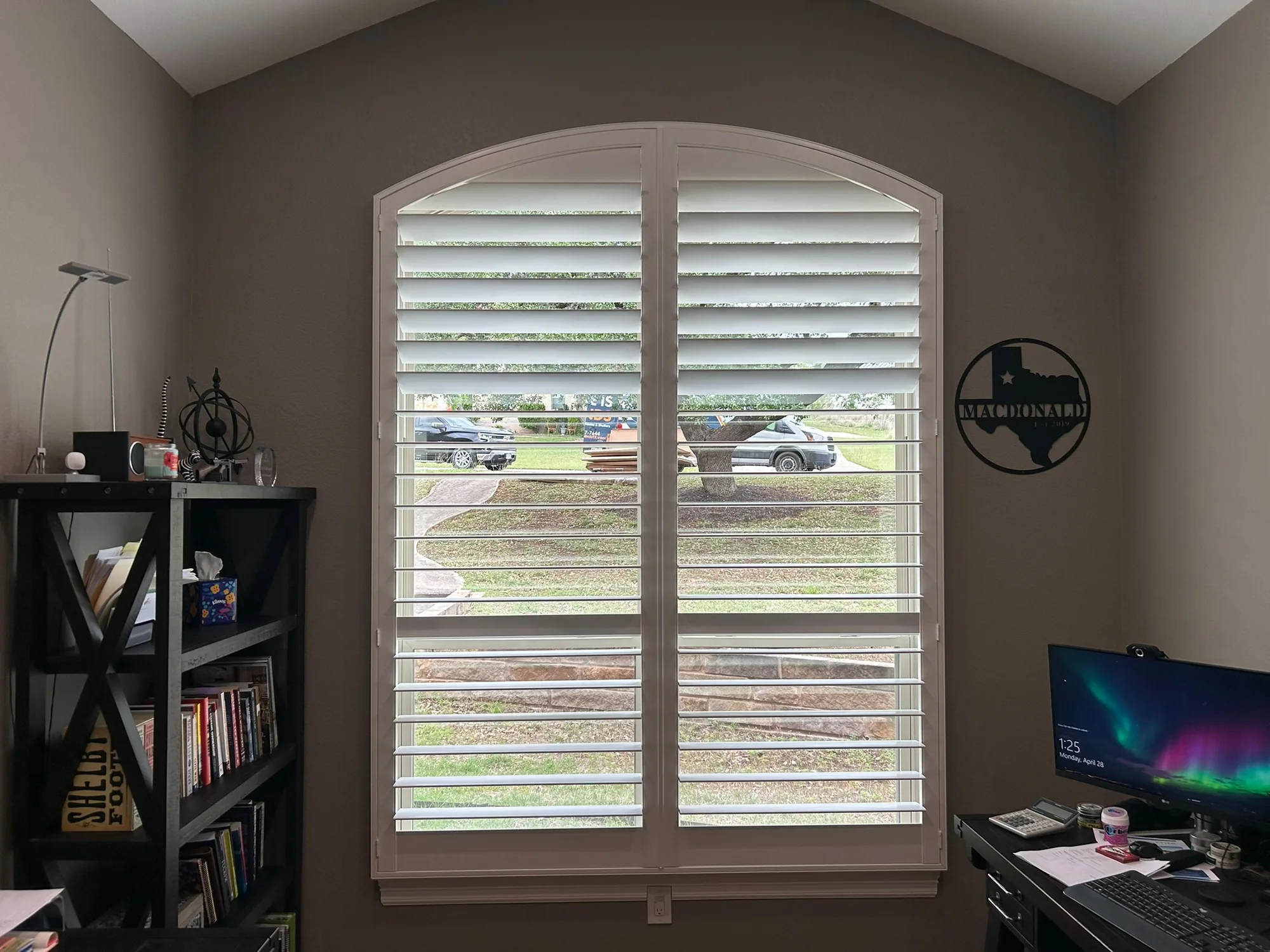
Openings wider than they are tall, where the lift gets heavy and the stack gets deep. Arched or angled tops, where slats cannot follow the shape. Rooms that need to go fully dark, because light always finds the gaps between slats and around the edges, and that is a fabric job rather than a slat one.