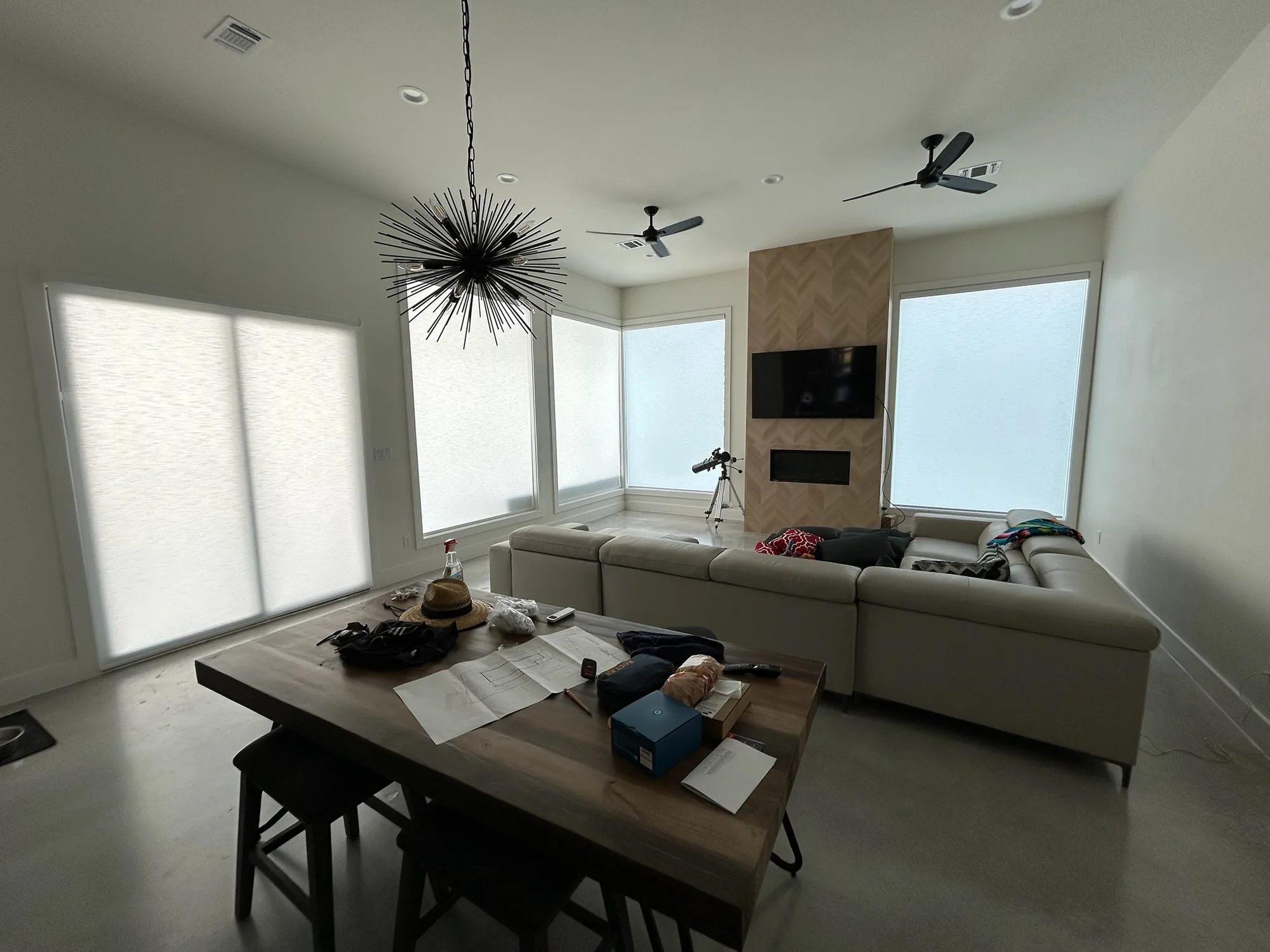
Short answer: modern window treatment is mostly about what you remove. Less hardware, less stack, fewer visible cords, and one treatment doing the job instead of two layers fighting each other.
Let the window read as glass
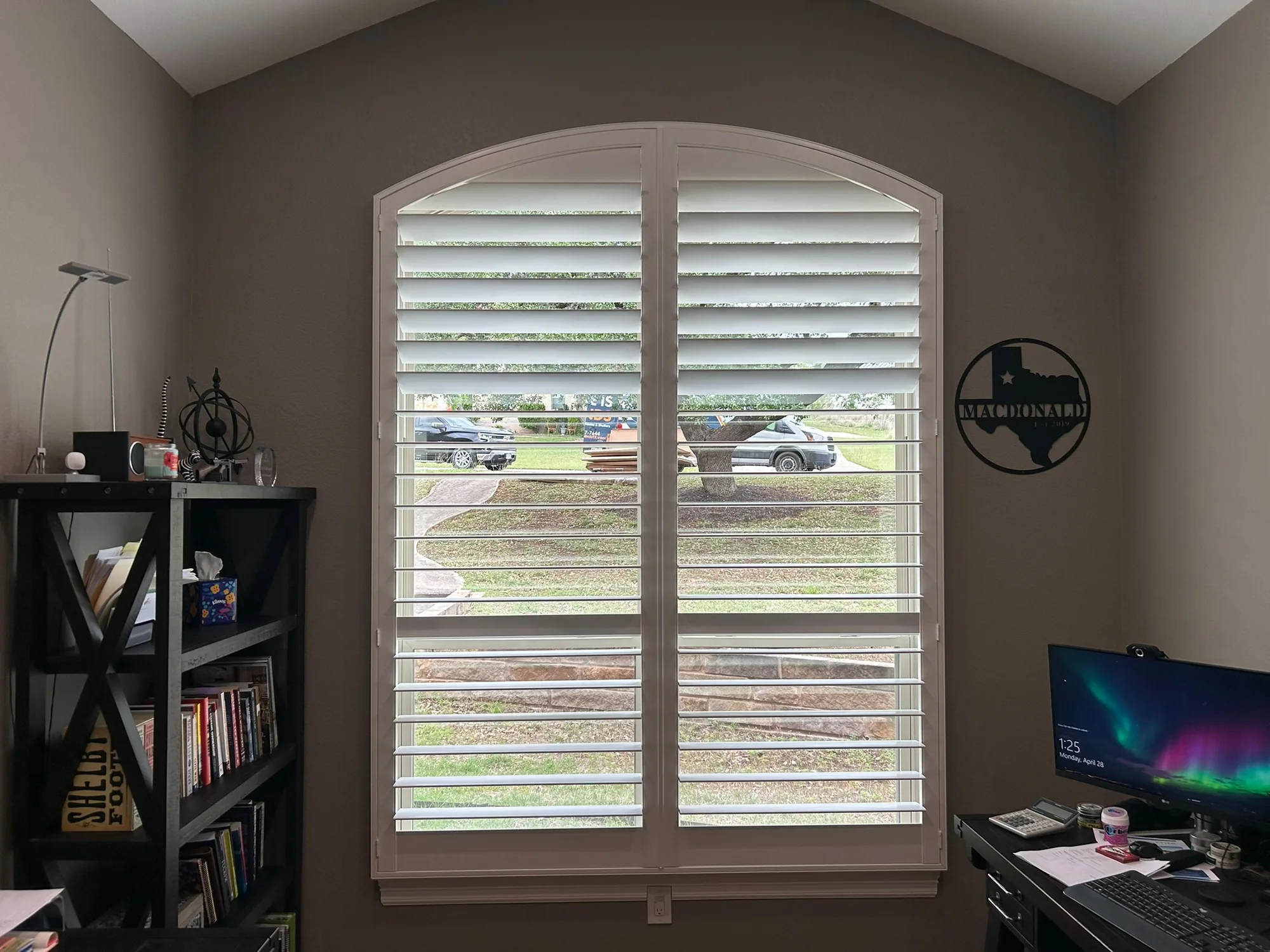
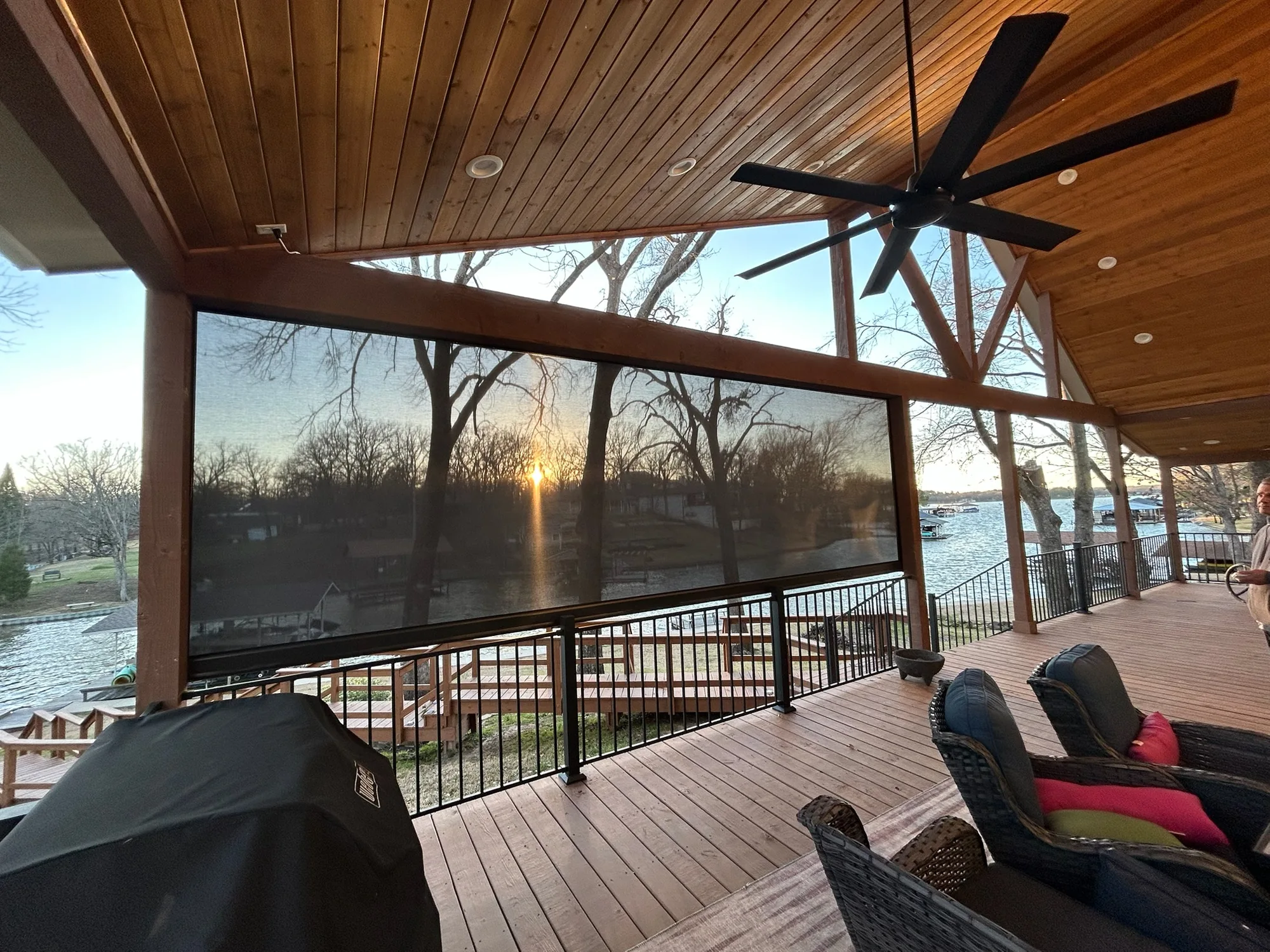
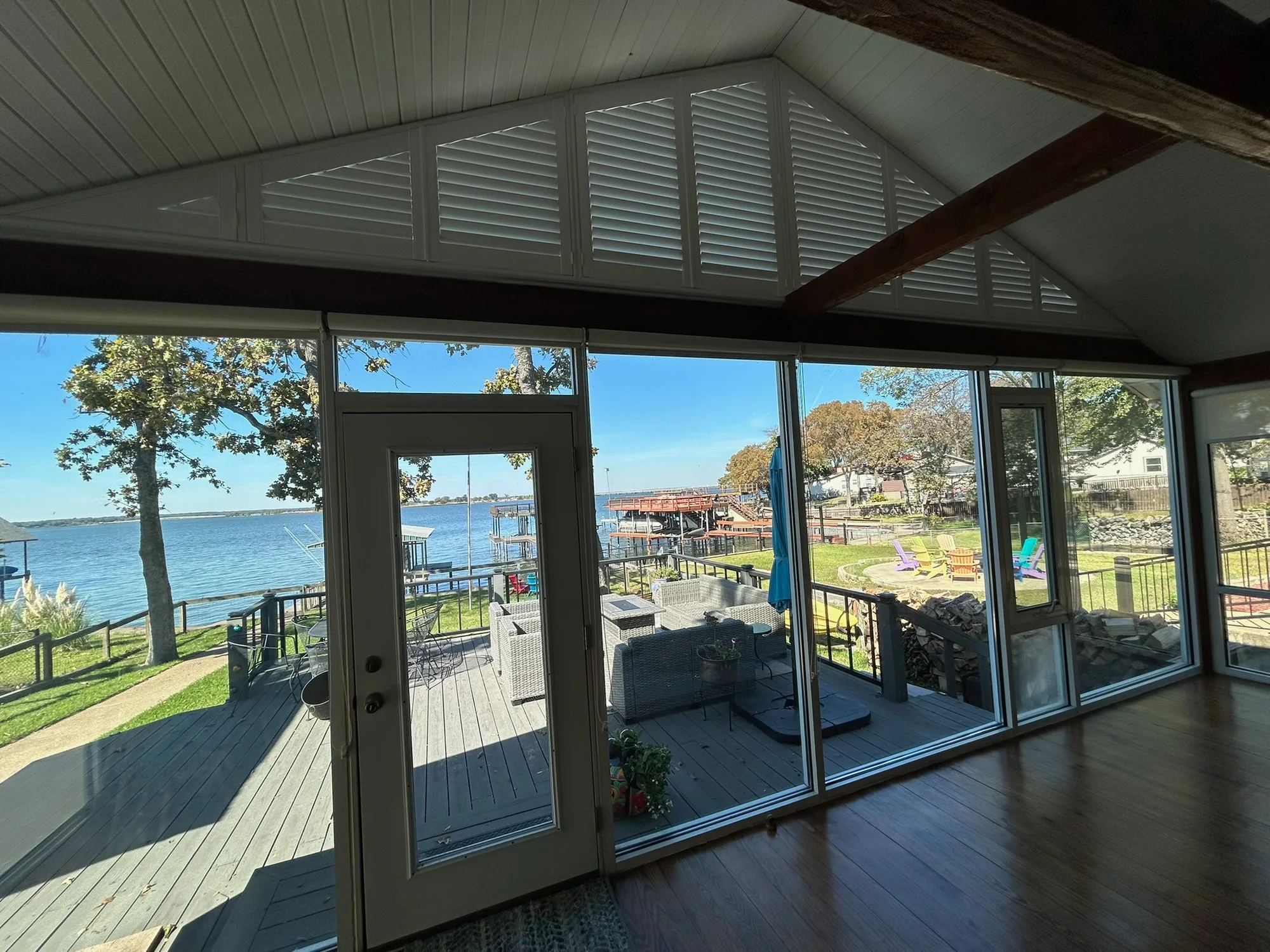
The clearest modern move is a treatment that disappears when it is open. A roller shade in a recessed pocket leaves nothing at the top of the opening. Inside-mounted shutters show the trim rather than covering it. The window becomes the feature instead of the thing hung over it.
Take the cords out
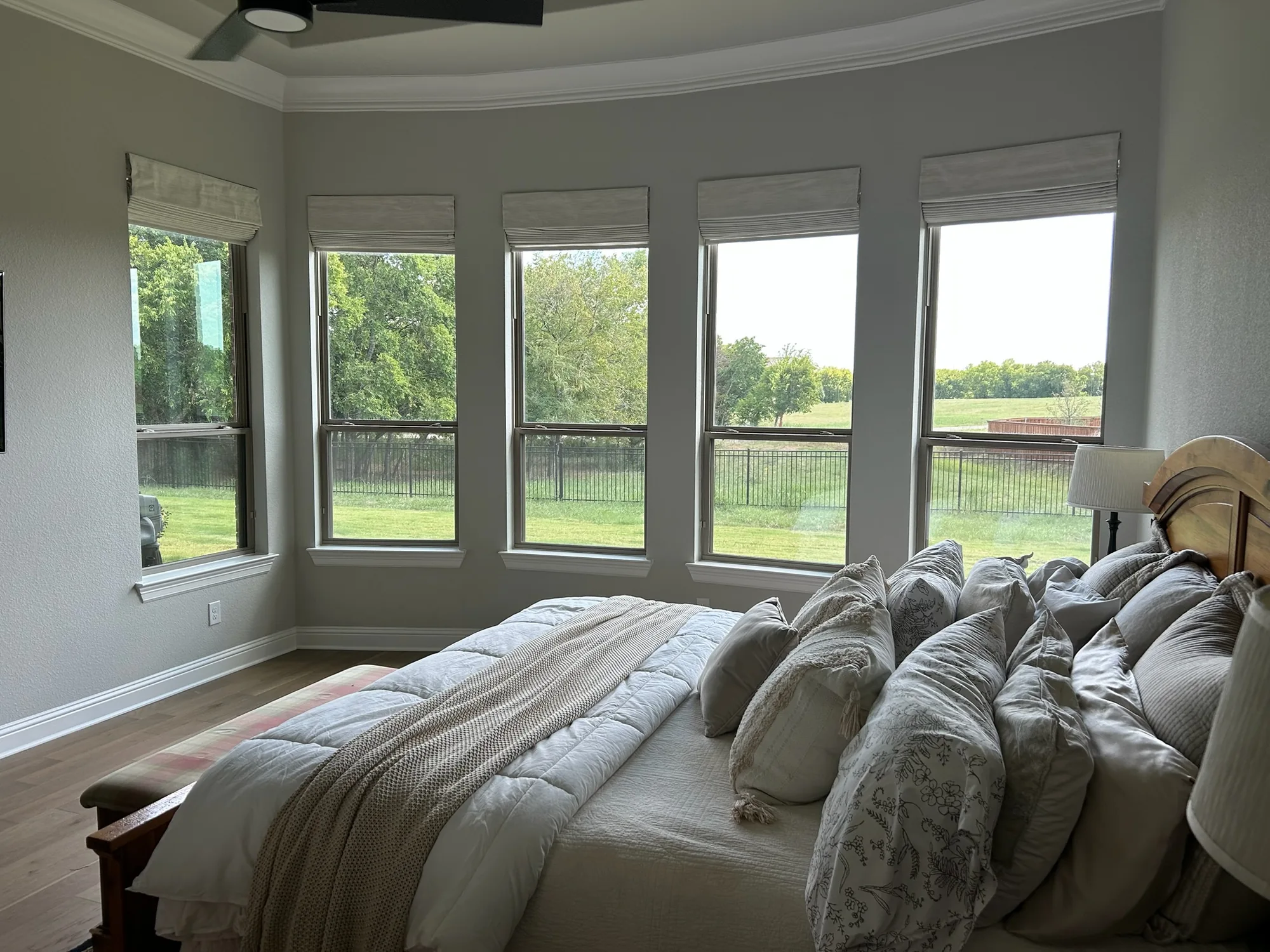
Nothing dates a window faster than a loop of cord down one side. Cordless lift and motorization both remove it, and motorization removes the wand as well. On a bank of windows the difference is not subtle, because you go from several dangling controls to none.
Run one treatment across a whole wall
Where there are three or four windows in a row, treating them as one line rather than three separate openings is what makes a room look considered. Same fabric, same mount height, same reveal. The eye reads the wall instead of counting windows.
Layer only when the room needs two jobs done
Sheers plus a solid is a real solution when a room needs daytime glare control and night-time blackout. It is not a decorating default. If one treatment can do the job, adding a second only adds stack, hardware and cost.
Texture instead of pattern
Woven wood, linen weaves and banded fabrics carry interest without introducing a pattern that has to coordinate with everything else in the room. It is a way to stop a minimal room feeling flat without committing to a print you may tire of.
Mount higher than the opening
Setting the headrail above the window rather than inside it makes the ceiling read taller and the window larger. It costs nothing beyond the extra fabric and it is the single easiest change to the proportions of a room.
What actually makes it look finished
Consistency. One mount type through a room, one reveal, one colour of hardware. Most rooms that look wrong are not badly chosen, they are inconsistently mounted, and that is decided at measurement rather than at selection.