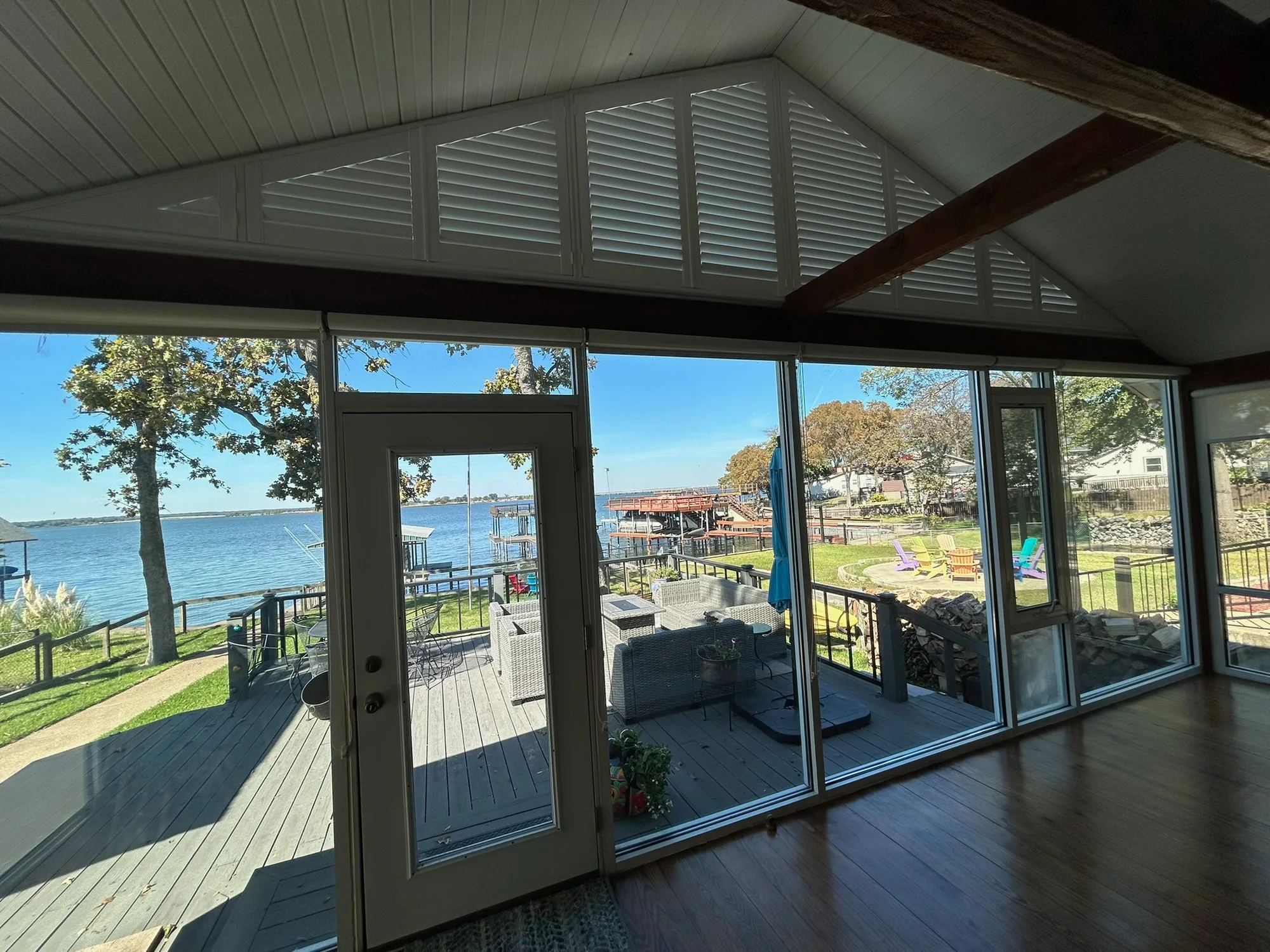
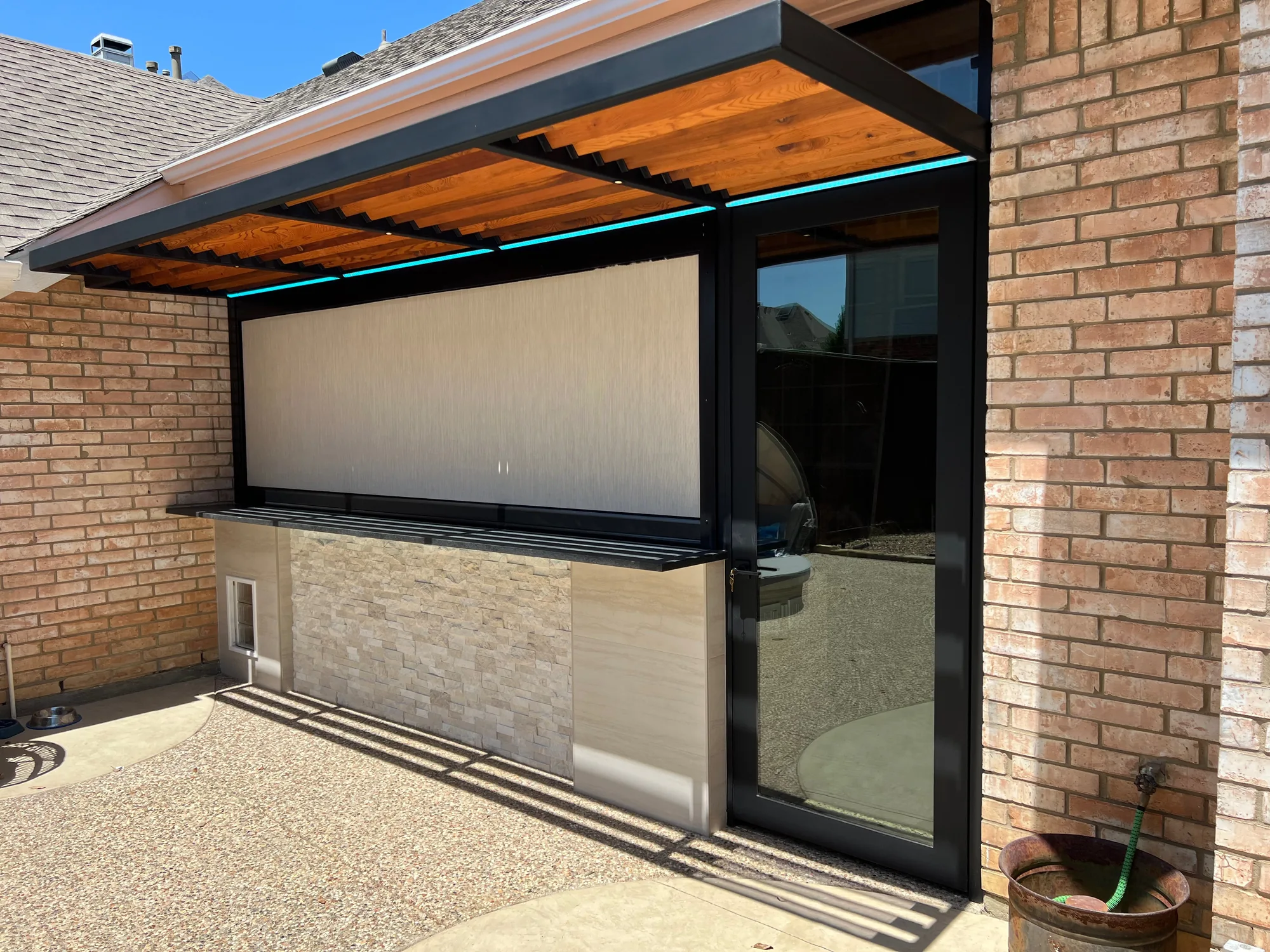
Short answer: on an exposed Texas patio, the hardware decides how long the shade lives. Wind-rated, track-guided systems survive what unguided fabric does not.
What Texas weather does to outdoor fabric
The gulf wind that makes a porch bearable in August is the same force that works an unguided shade loose a little at a time. Fabric that can swing will slap, fray at the edges and pull at its fasteners, and hail season finishes what the wind starts. Most patio shades do not wear out. They get worked loose.
Track-guided screens hold the fabric still
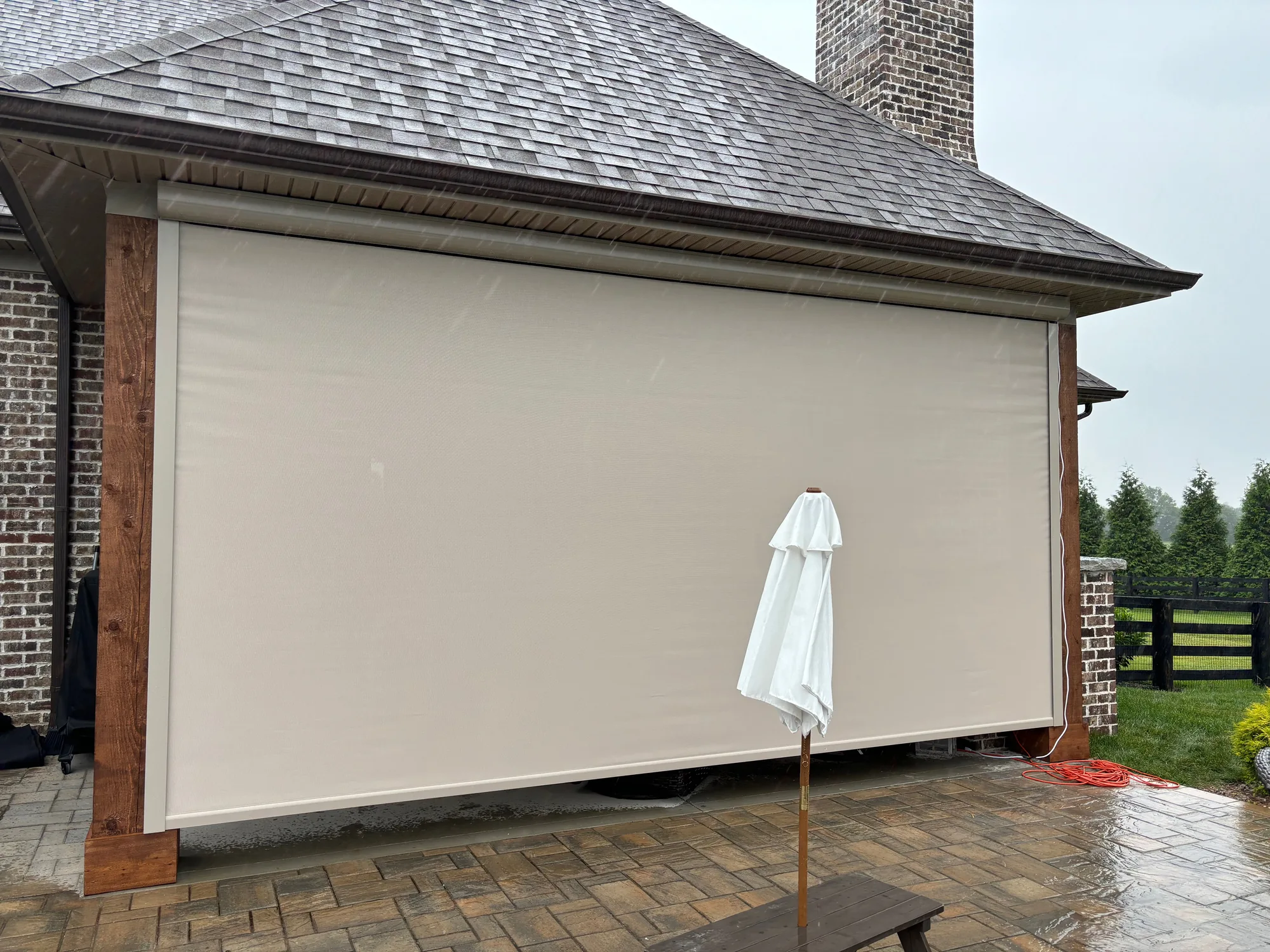
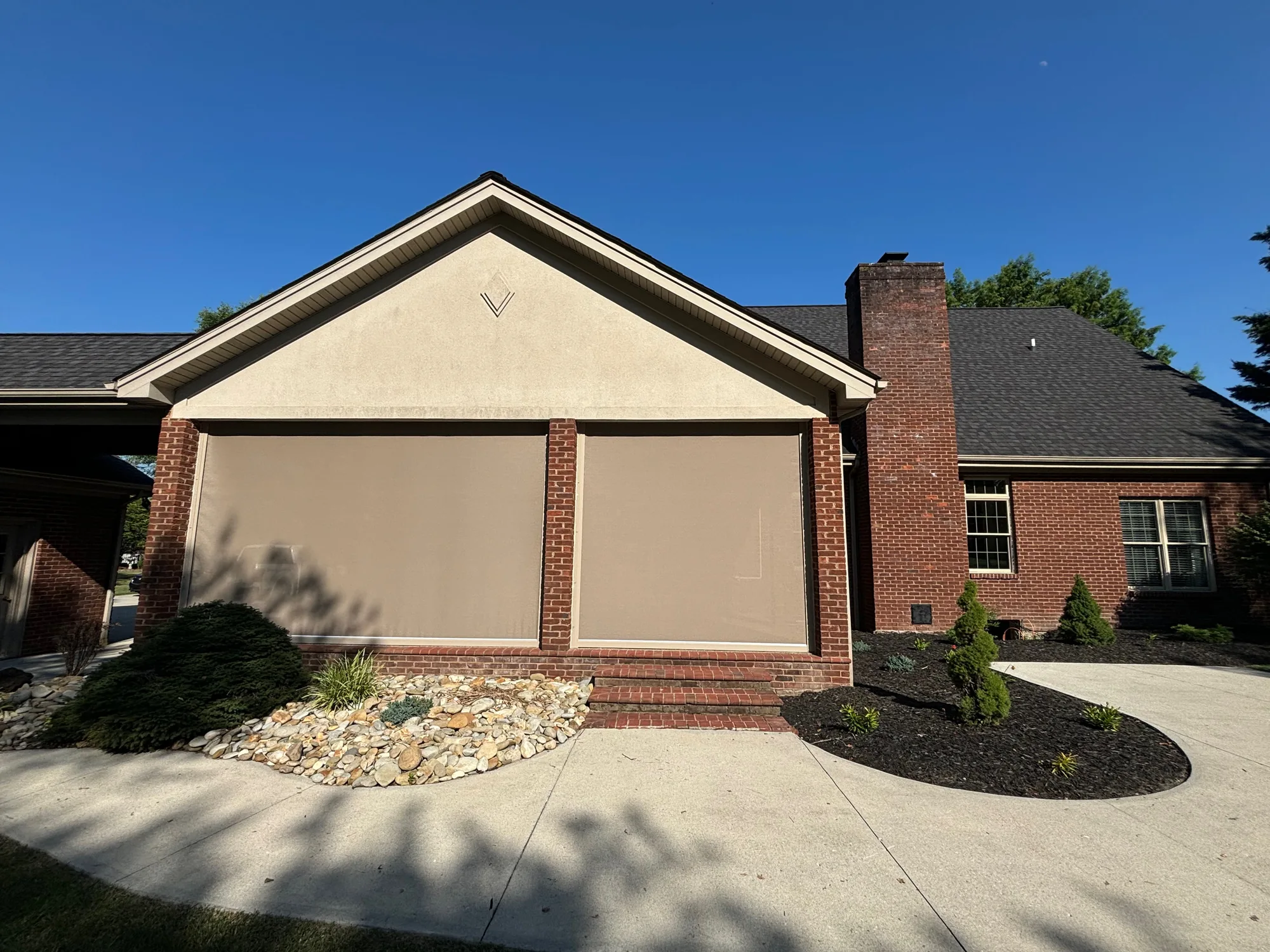
A track-guided system runs the edges of the fabric inside side channels, so wind pushes against a held panel instead of a loose sail. That is the difference between a shade that lasts and one that frays in a season, and it also closes the light and insect gap at the edges that an unguided shade always leaves.
Retractable is a weather strategy, not a convenience
A shade that rolls up out of the weather when the space is not in use spends most of the storm inside its housing. Motorized versions make that automatic, and a wind sensor takes the person out of it entirely: the shade raises itself when gusts pick up, whether or not anyone is home to think about it.
The openness factor still decides the afternoon
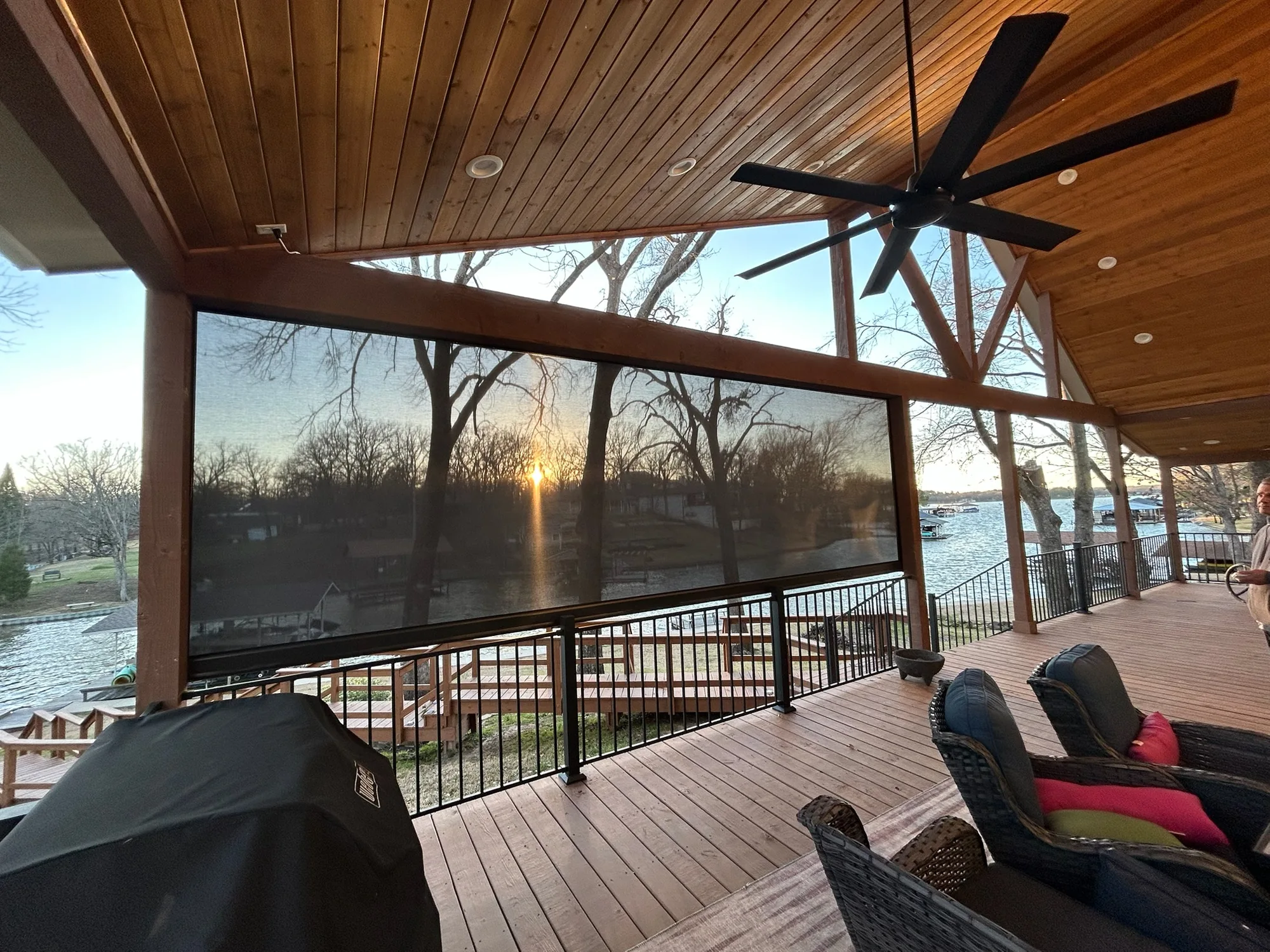
Wind rating keeps the shade alive; the weave decides whether the patio is usable at four o'clock. A tighter weave stops more heat and glare, a looser one keeps more of the view out to the yard. On a west-facing patio we usually specify tighter, because the afternoon sun is the whole reason the shade exists.
Sized to the opening, because patios are not standard
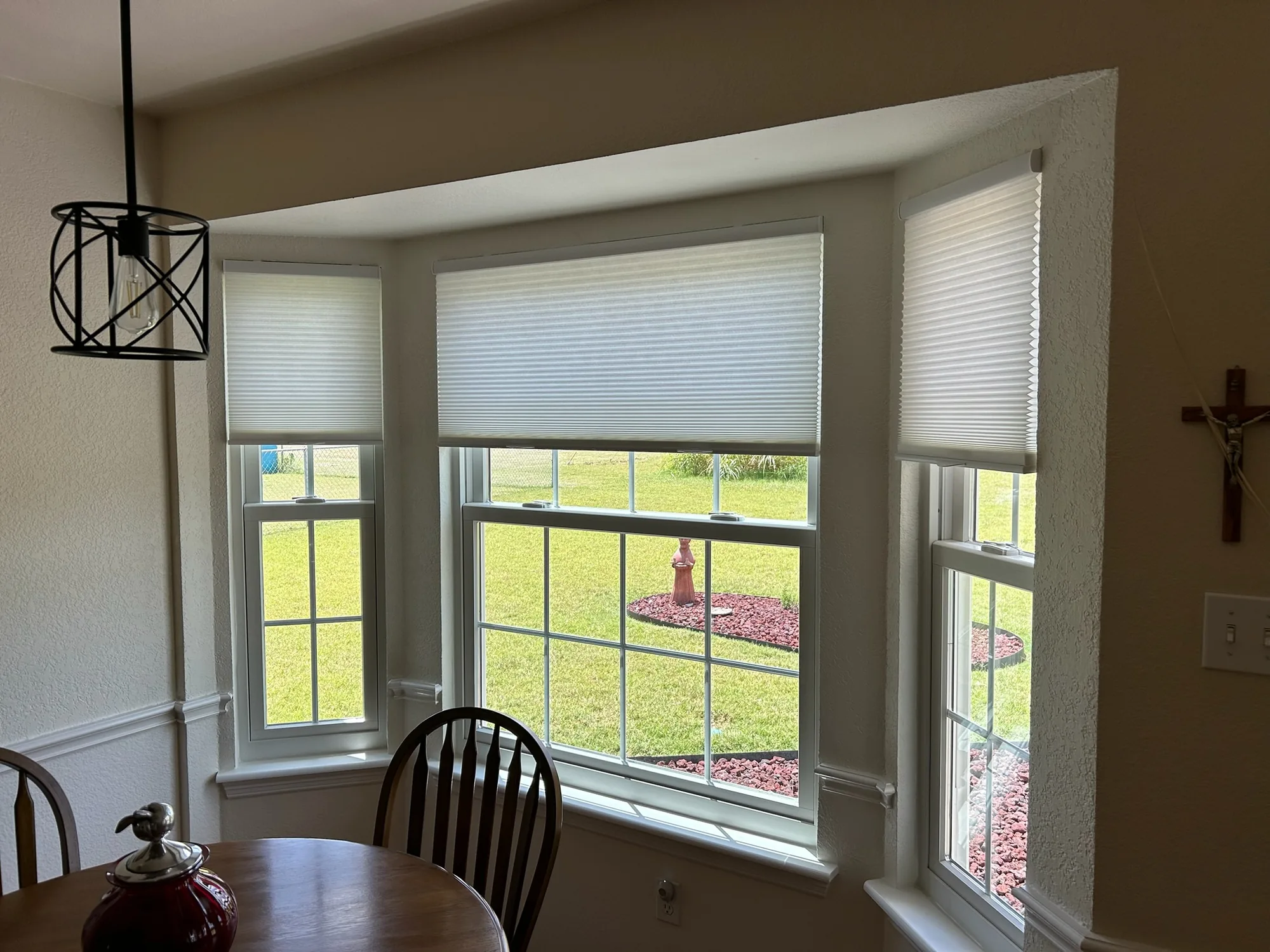
Posts lean, headers sag and openings on the same porch differ by more than you would guess. Every exterior shade we install is measured on site, and wide spans get the hardware that can carry them. The quote is written, installation is included, and the four-year service guarantee applies outdoors the same as in.