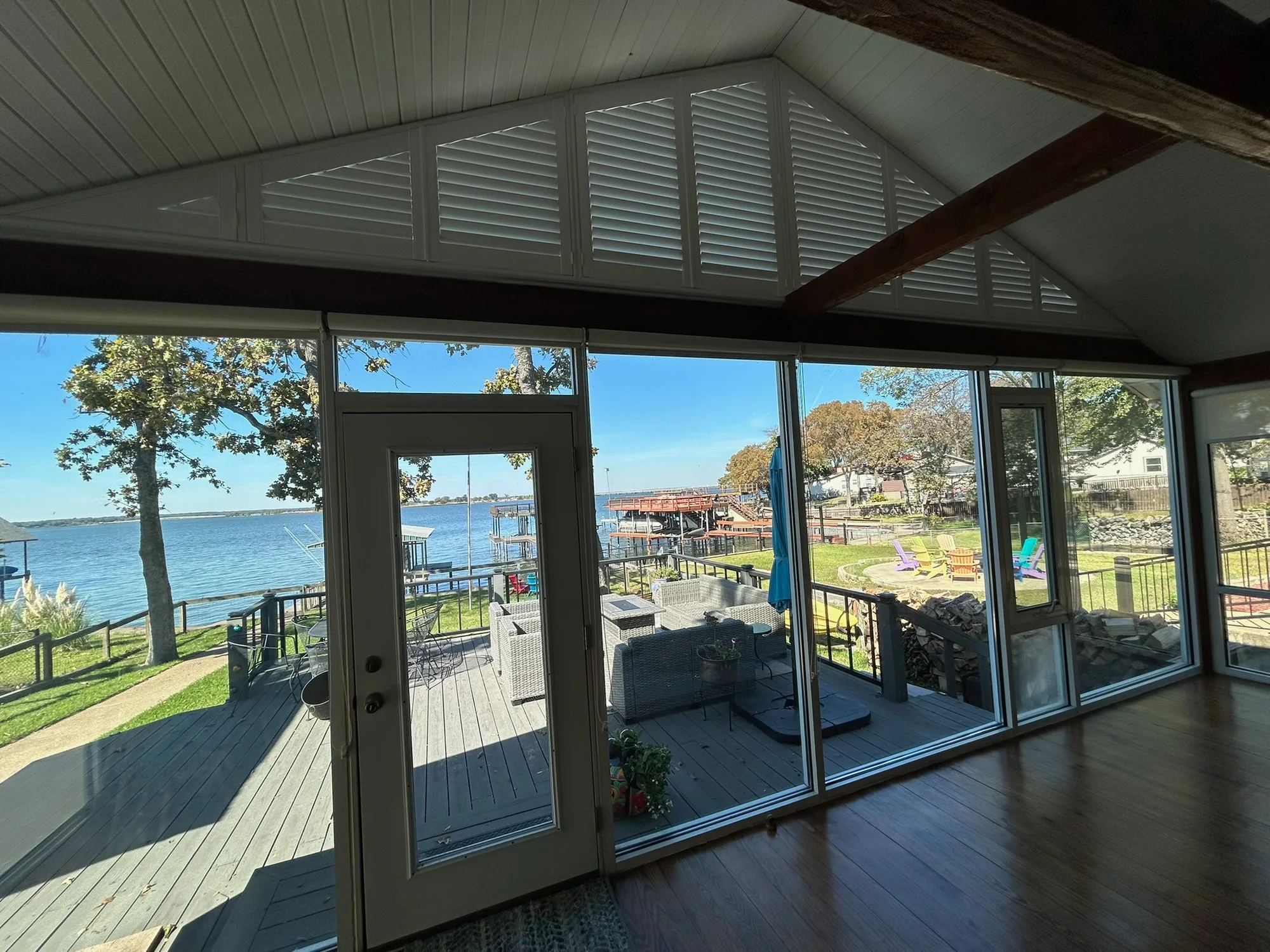
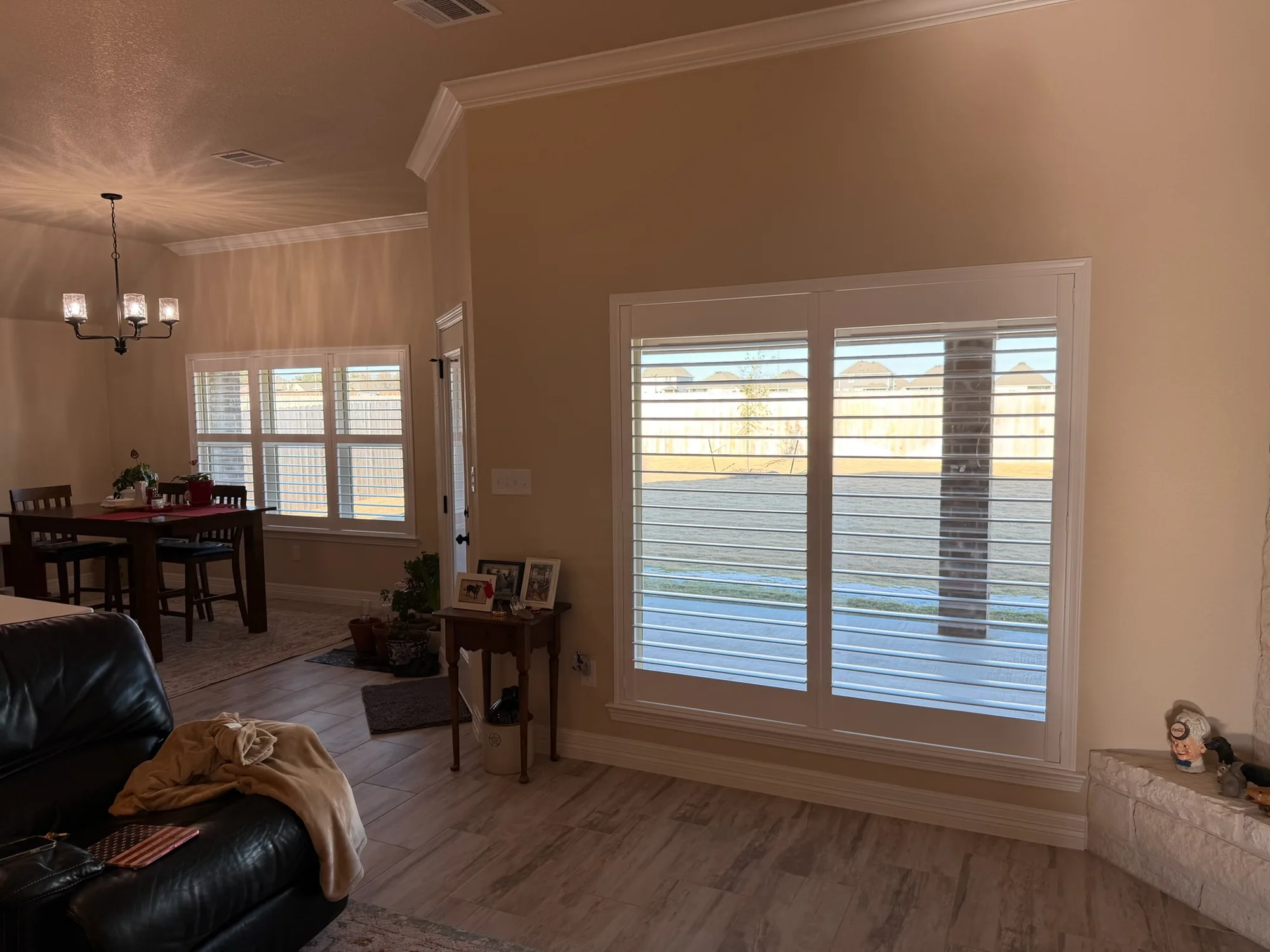
Short answer: real wood is lighter and shows grain, faux wood tolerates moisture and costs less. Weight and humidity decide it far more often than looks do.
The honest difference
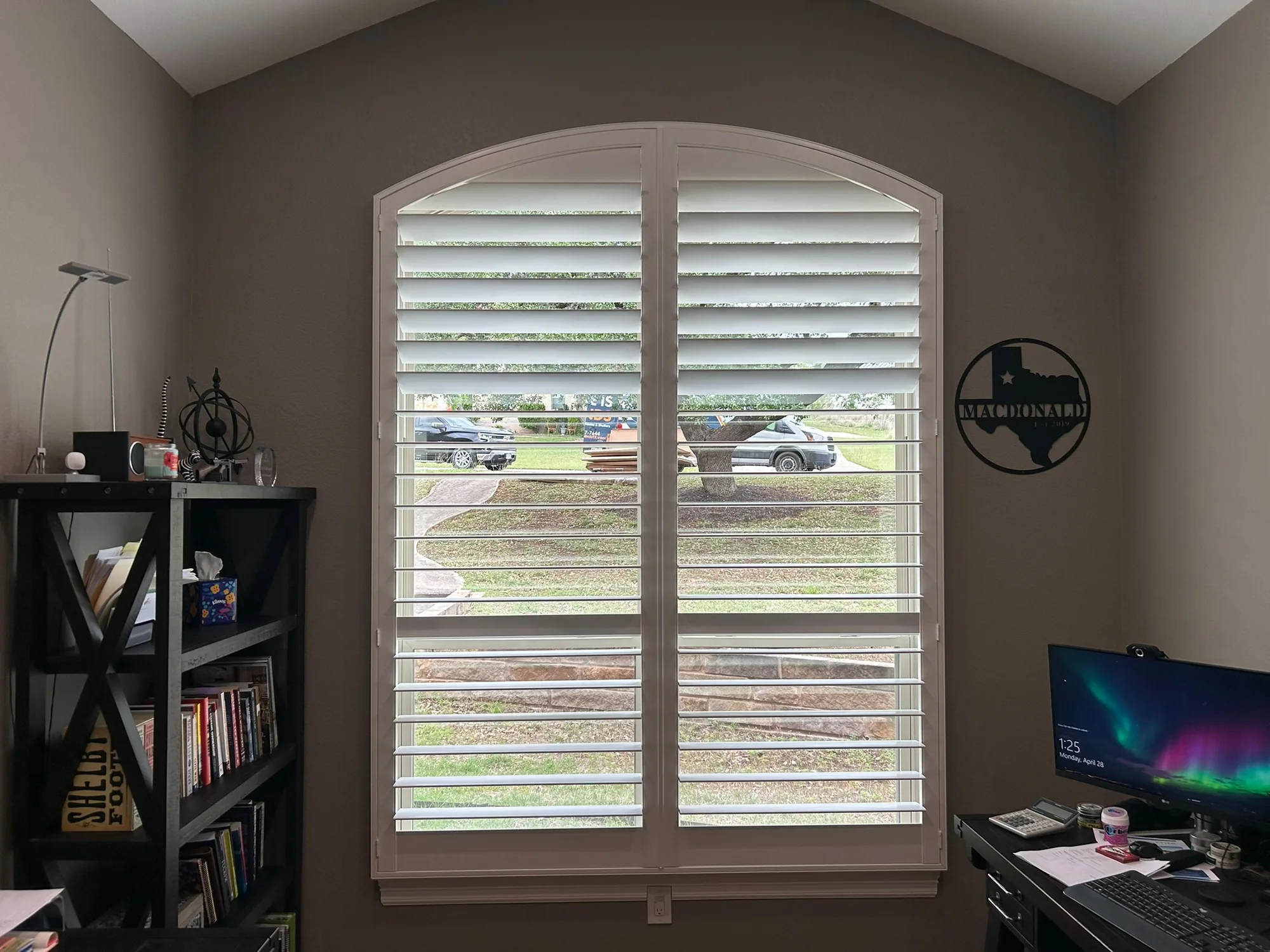
Real wood shutters are milled from hardwood. Faux wood is engineered, usually a composite or a vinyl-clad core built to hold its shape when the air gets damp. Both are made to the same shapes, so from across a room the difference is not always obvious. The difference shows up in weight, in how they age, and in where you can safely put them.
Weight, and why it decides tall windows
Real wood is significantly lighter for the same panel size. On a tall or wide opening that is not a nicety: a heavy panel puts load on the hinges and sags over years. If the opening is large, wood is usually the answer for structural reasons rather than aesthetic ones.
Moisture, and why it decides bathrooms
Wood moves with humidity. In a bathroom, over a kitchen sink, or on a window that gets driven rain, that movement shows up as louvers that stop sitting flush and a frame that no longer closes cleanly. Faux wood does not care, which is the entire reason it exists.
Finish and repair
Wood takes stain, so grain stays visible. Faux is painted, and the colour range is narrower but the finish is harder. Wood can be sanded and refinished if it gets marked. Faux cannot be refinished, but it is far less likely to need it.
Cost
Faux wood is the cheaper material of the two. It is not the cheaper decision if the opening is tall enough that panel weight becomes a problem, because the fix for a sagging panel is a new panel.
How to decide in one pass
Ask whether the room gets moisture. If it does, faux. If it does not, ask whether the opening is tall or wide. If it is, wood. If neither applies, either will last, and you are choosing on grain versus budget. Both carry the same manufacturer's limited lifetime warranty on factory defects.