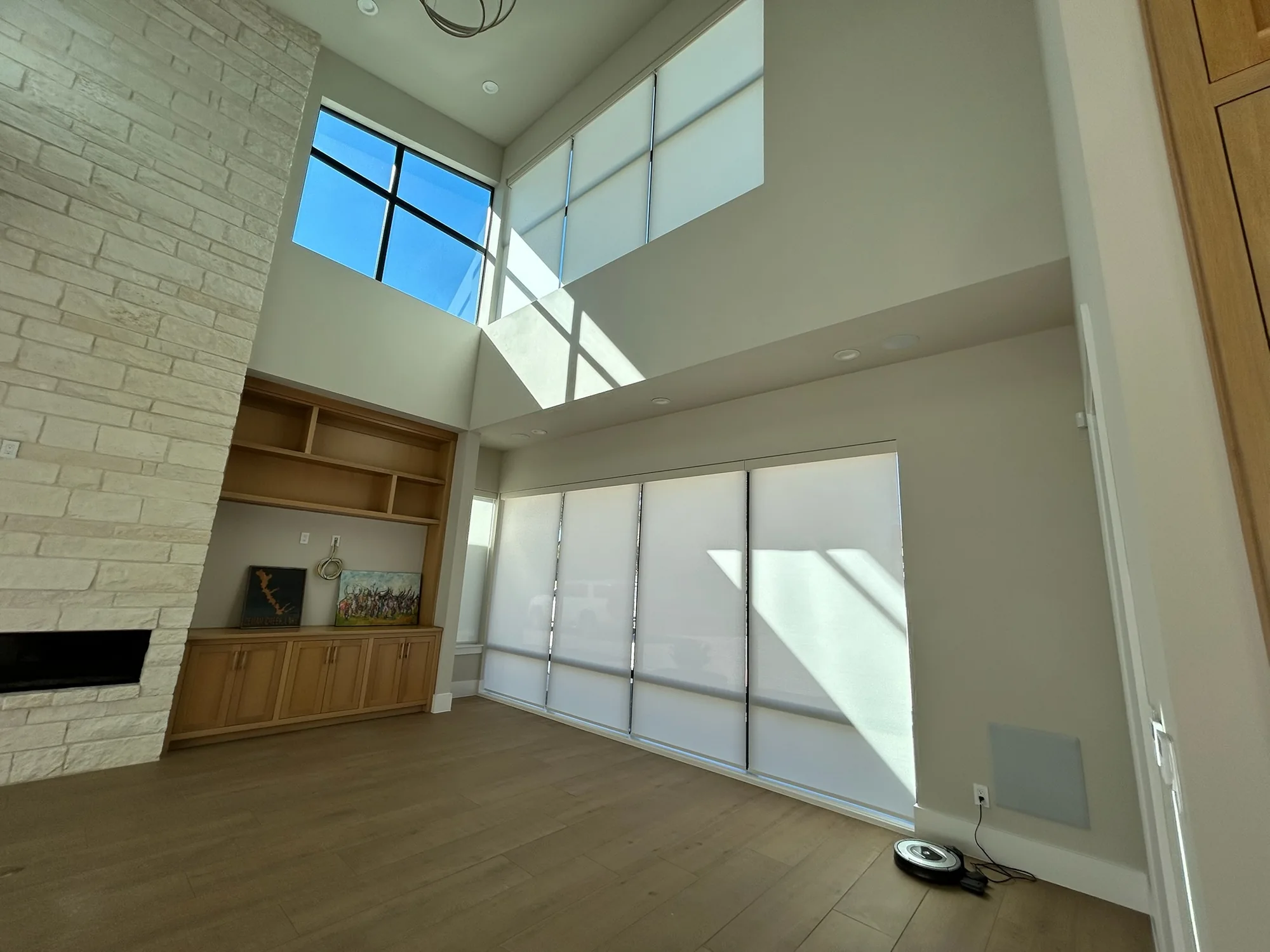
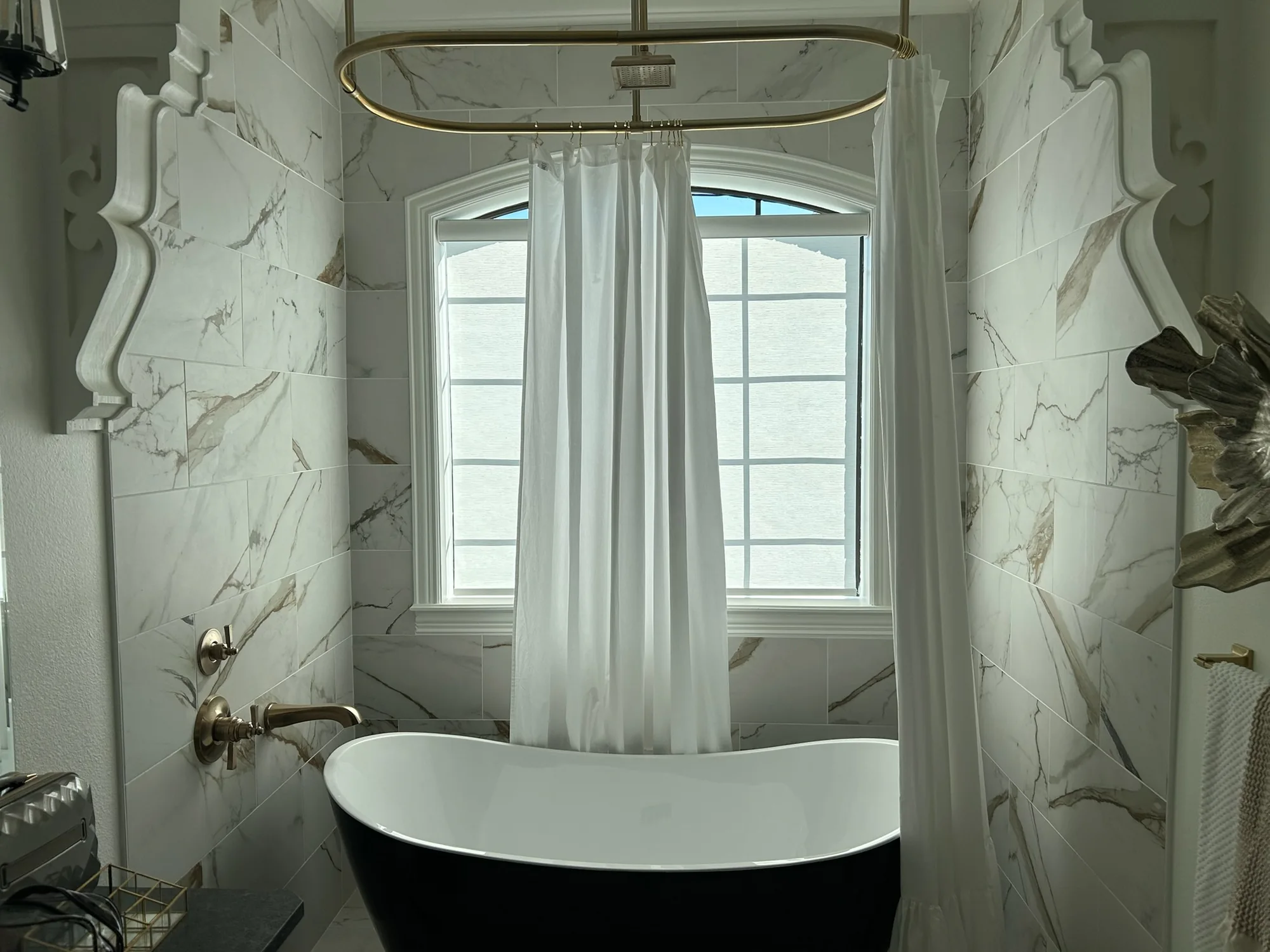
Shade labels use room-darkening and blackout as if the difference were marketing, and buyers find out at 6am that it is not. The two are different specs with different fabrics, and matching the right one to the room saves either money or sleep.
What each label means
Blackout fabric blocks effectively all light through the material: an opaque backing or foam layer stops transmission outright. Room-darkening fabric blocks most but not all, dimming a bright day into dusk rather than night. Light-filtering, one step further down, is about glow and privacy, not darkness.
The honest room-by-room call
- Nurseries and shift-worker bedrooms: true blackout, plus attention to edge gaps
- Most adult bedrooms: room-darkening is often enough, and it wakes you gently
- Media rooms: blackout, with side tracks or overlap doing the real work
- Living spaces: room-darkening only where western glare demands it
Why the room matters more than the label
A blackout shade with quarter-inch edge gaps produces a dim room with glowing borders; a room-darkening cellular with side tracks can beat it. Fabric sets the ceiling, fit decides the result. This is measured, not guessed, which is what an in-home consultation is for.
Both specs come in nearly every product we install: rollers, cellulars, romans with liners. You choose the look; the liner or backing chooses the darkness.