
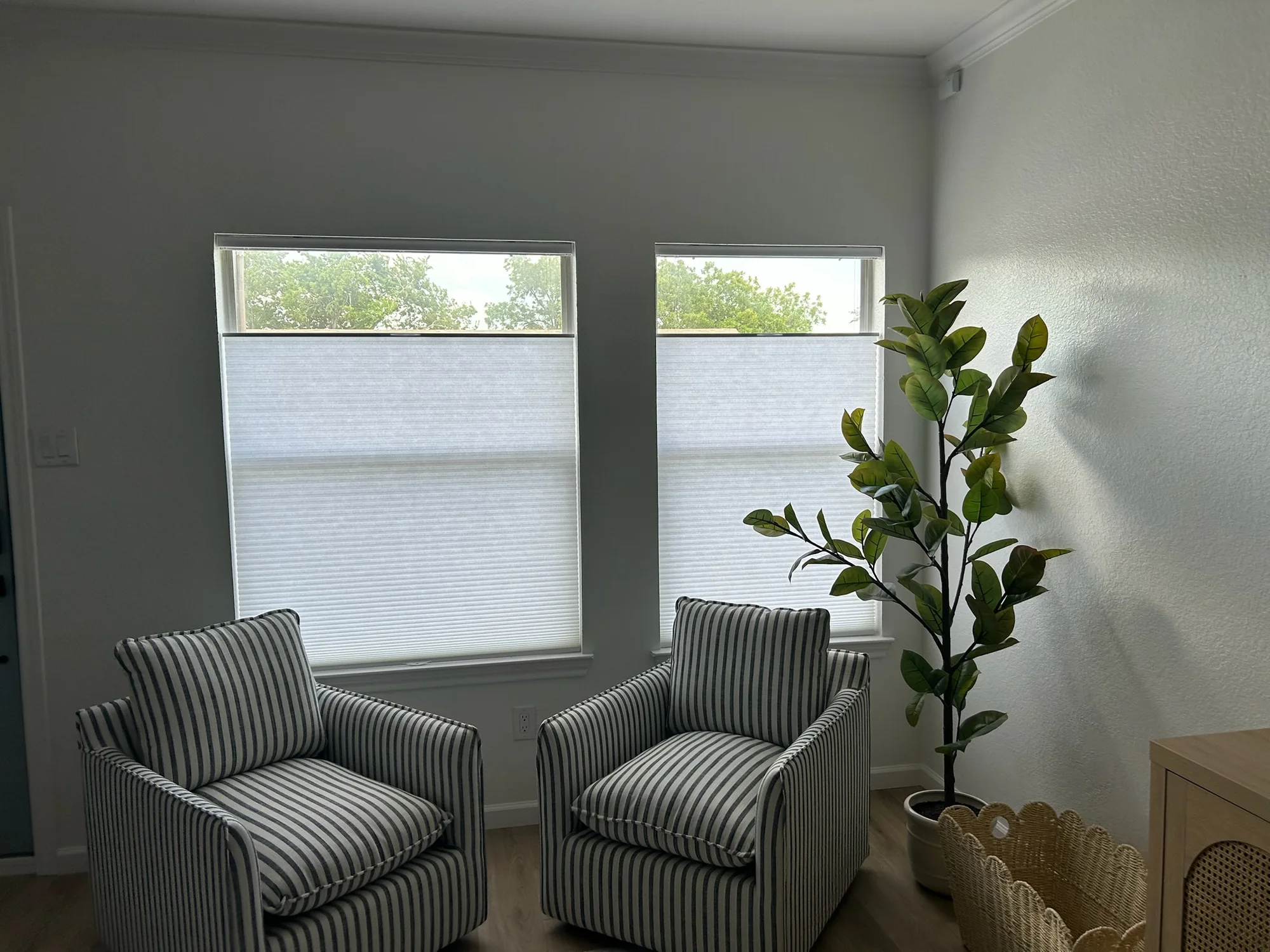
Most shades make you choose: raise them for light and lose privacy, or lower them for privacy and lose the light. Top-down bottom-up shades refuse the choice. The shade travels from the top of the window, the bottom, or both at once, so you can open a band of sky above while the glass at eye level stays covered.
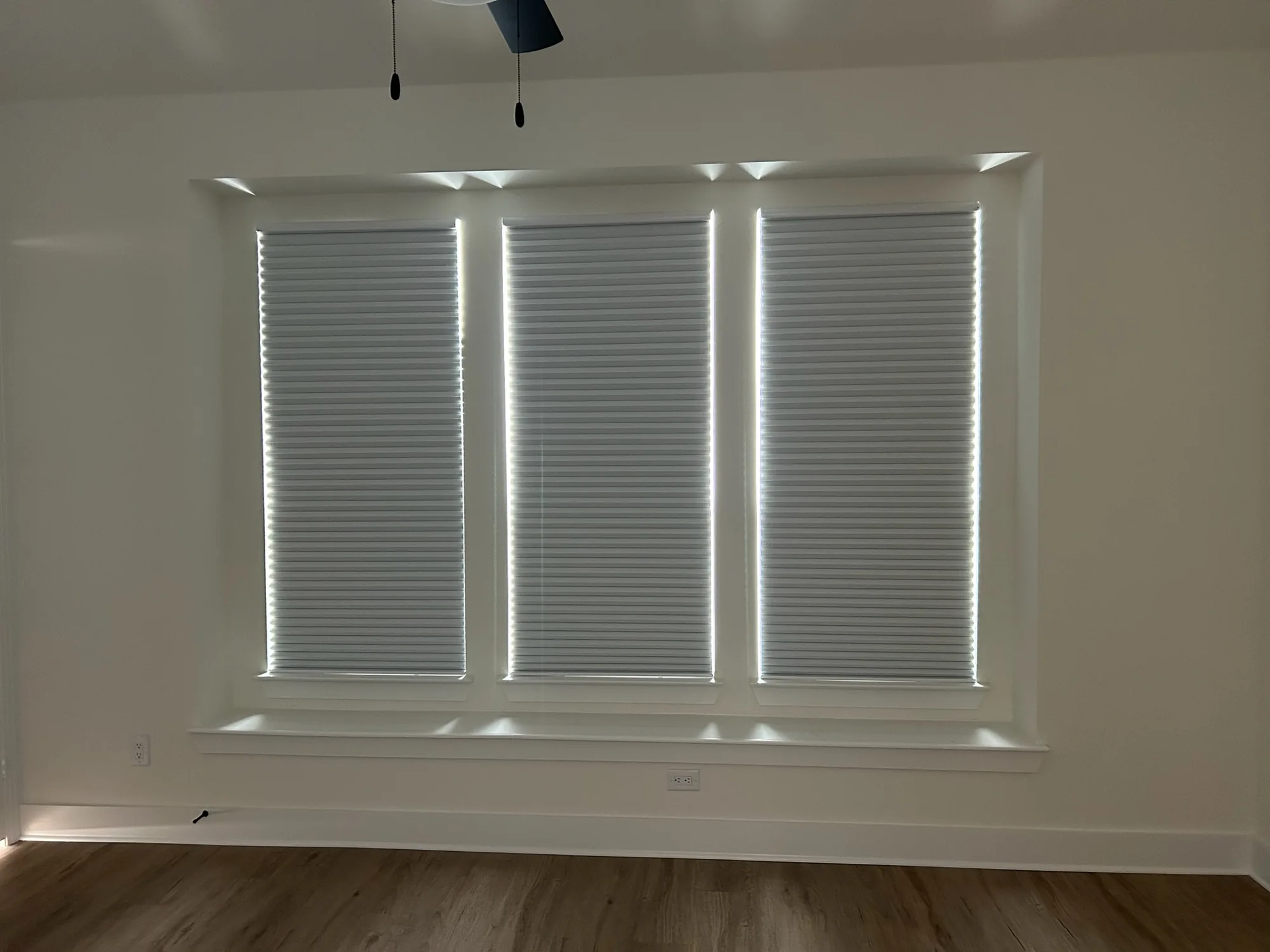
How the mechanism works
Two rails move independently: the top rail drops down and the bottom rail lifts up, with the fabric stacking between them. Cordless versions move either rail by hand; motorized versions put both on a remote or schedule. Cellular and honeycomb fabrics suit the mechanism best because they compress into a tight stack.
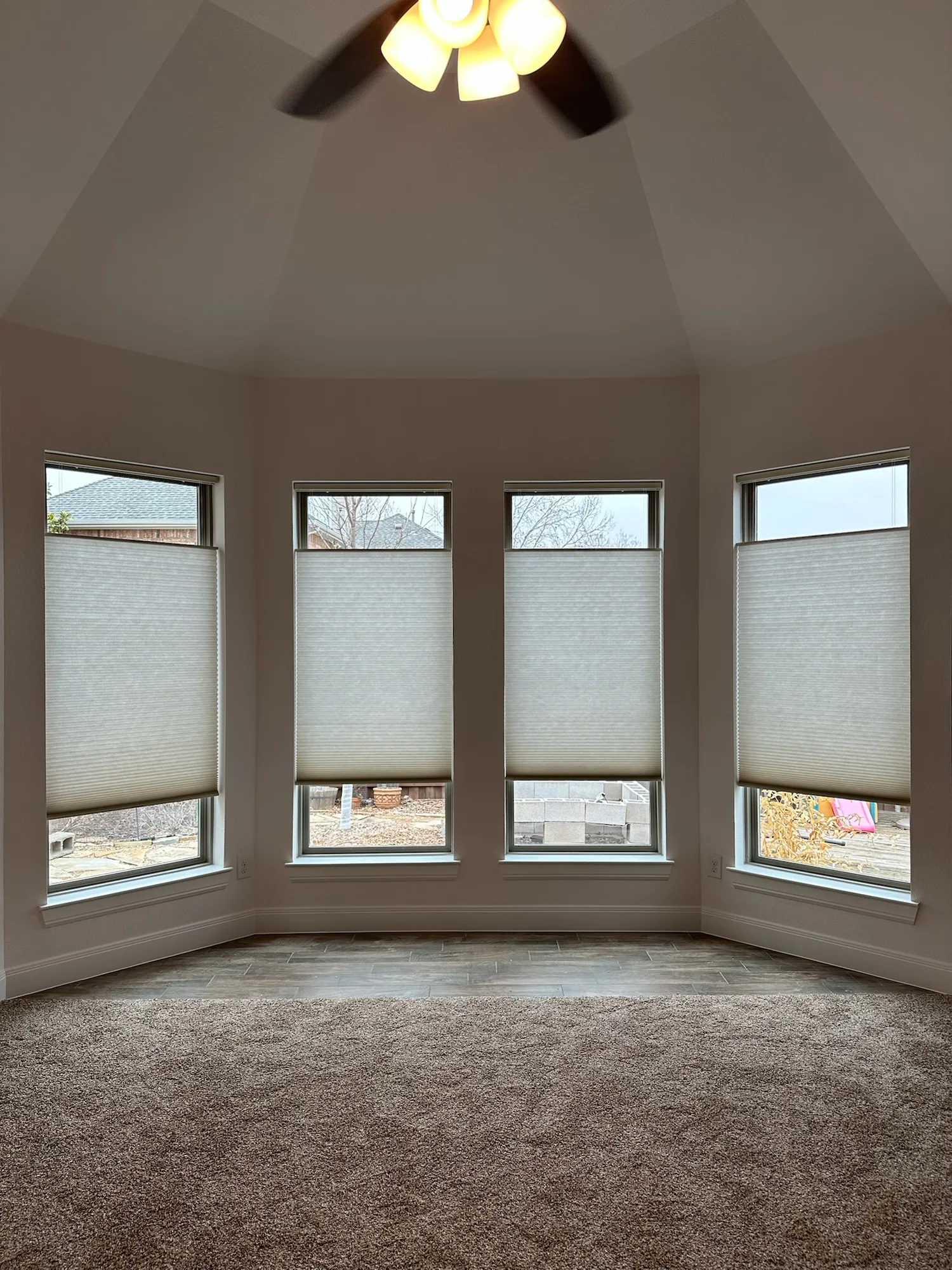
The rooms where it earns its keep
- Bathrooms, where a dropped top lets daylight in while the tub stays private
- Street-facing bedrooms that want morning light without an audience
- First-floor offices where screens face the window
- Dining rooms, where light above the sightline flatters without glare
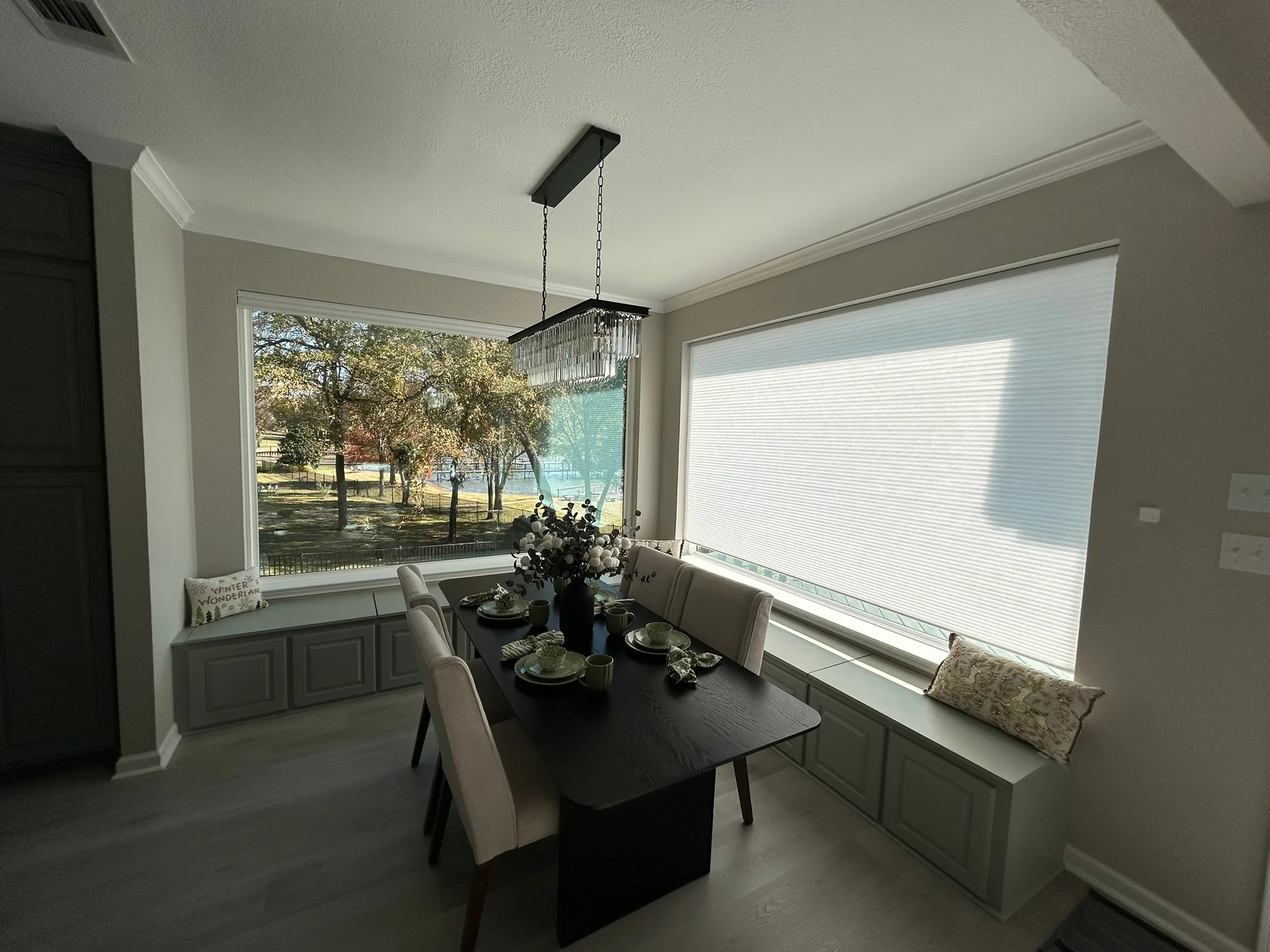
Choosing fabric and opacity
Because the open band moves, opacity matters more than with a fixed shade. Light-filtering cellular fabric glows when closed and insulates against Texas heat. Room-darkening fabric suits bedrooms; the top-down option means you can still wake to daylight by dropping the top rail a hand's width.