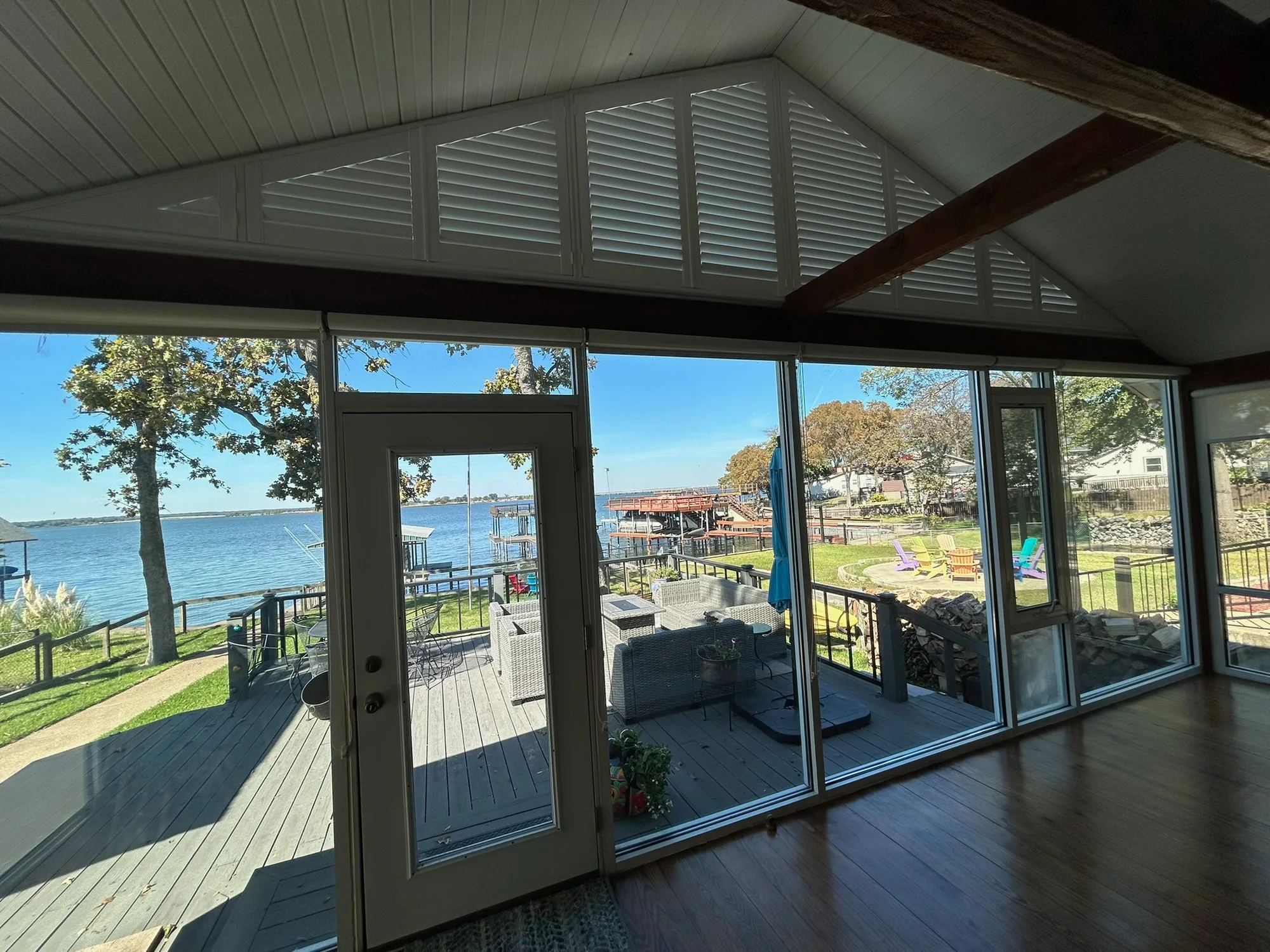
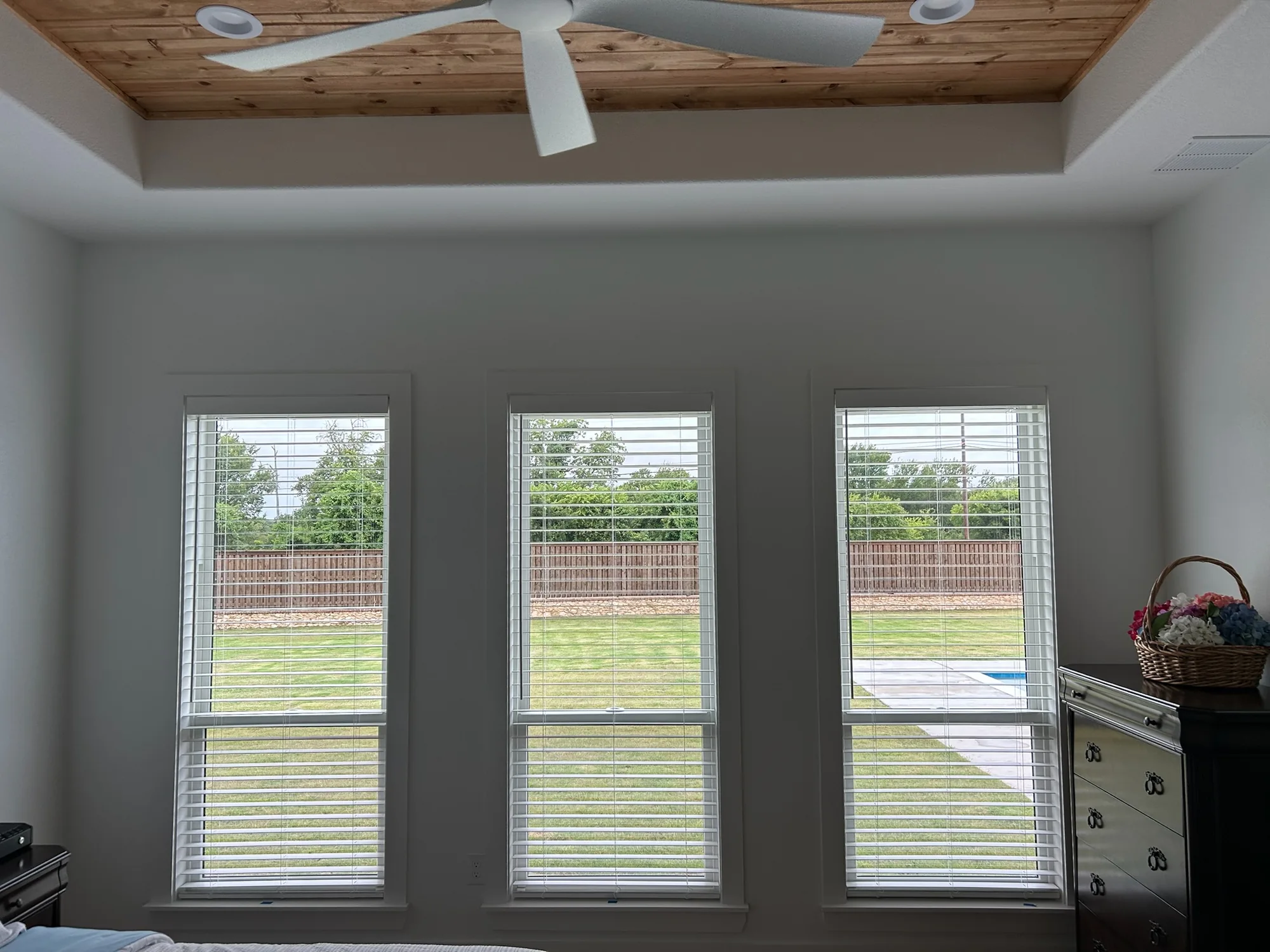
Short answer: blinds are treatments with hard slats you tilt. The families that matter are real wood, faux wood, composite, aluminium and vertical, and the right one is usually decided by the room rather than the look.
What counts as a blind
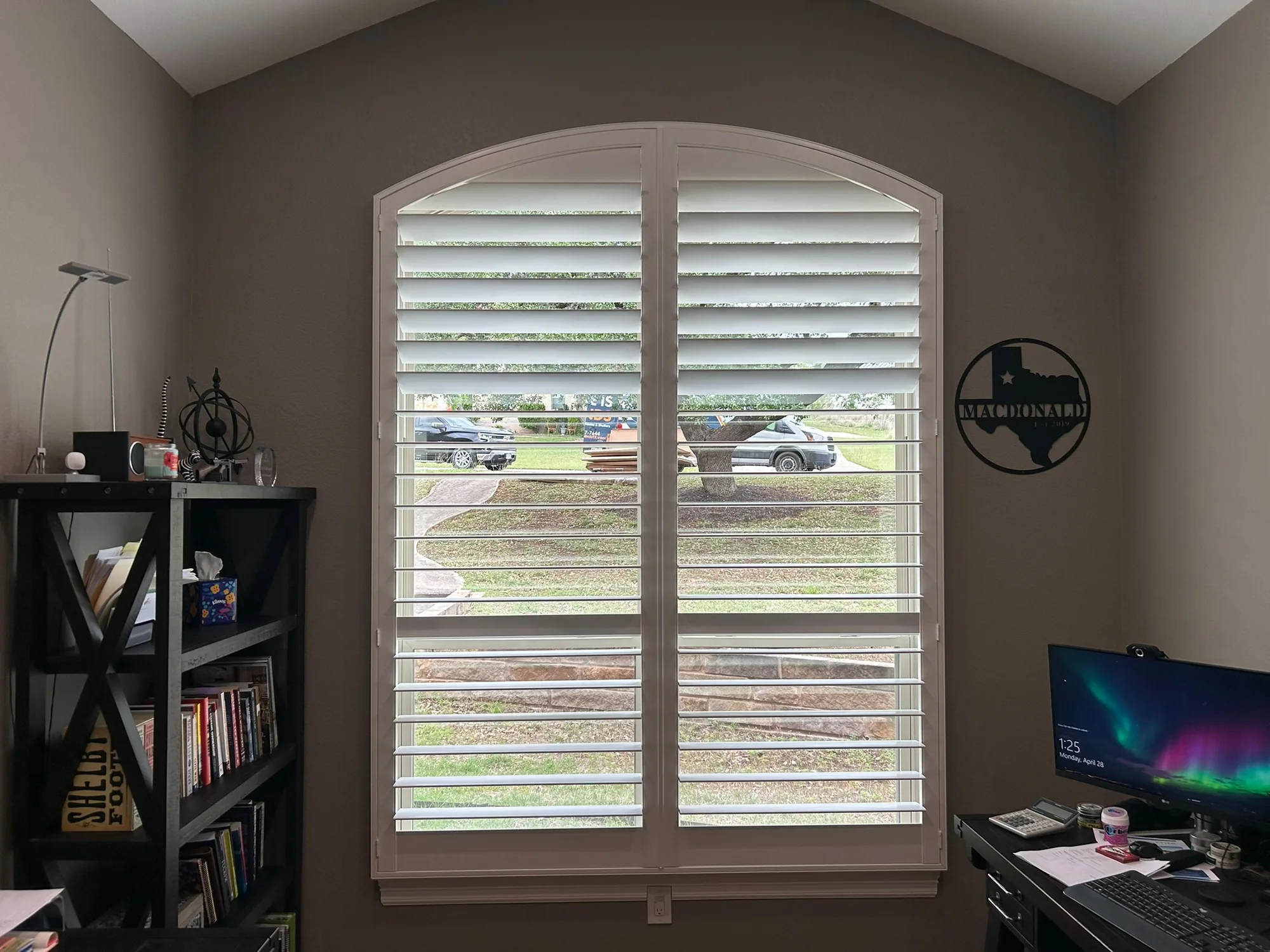
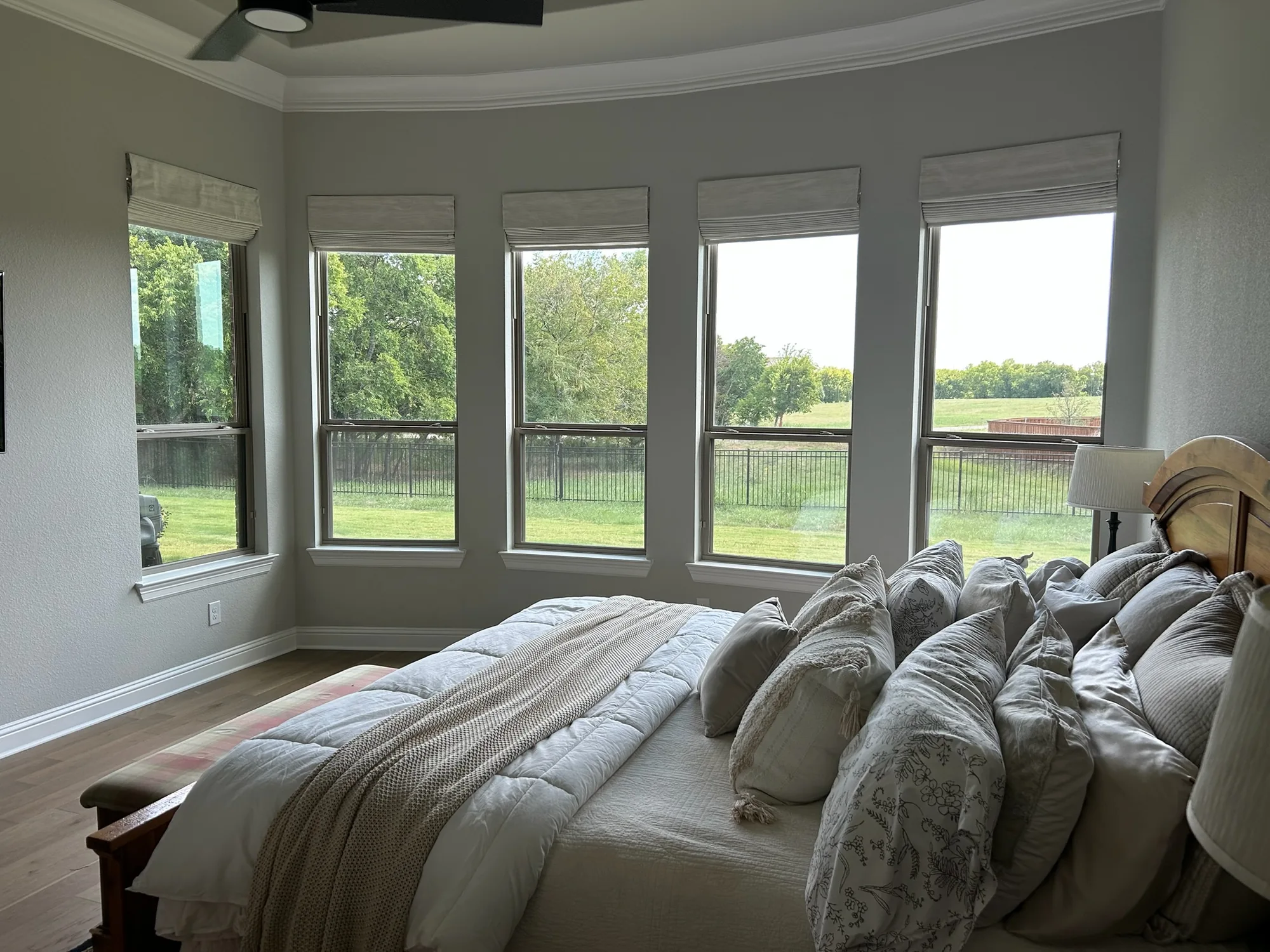
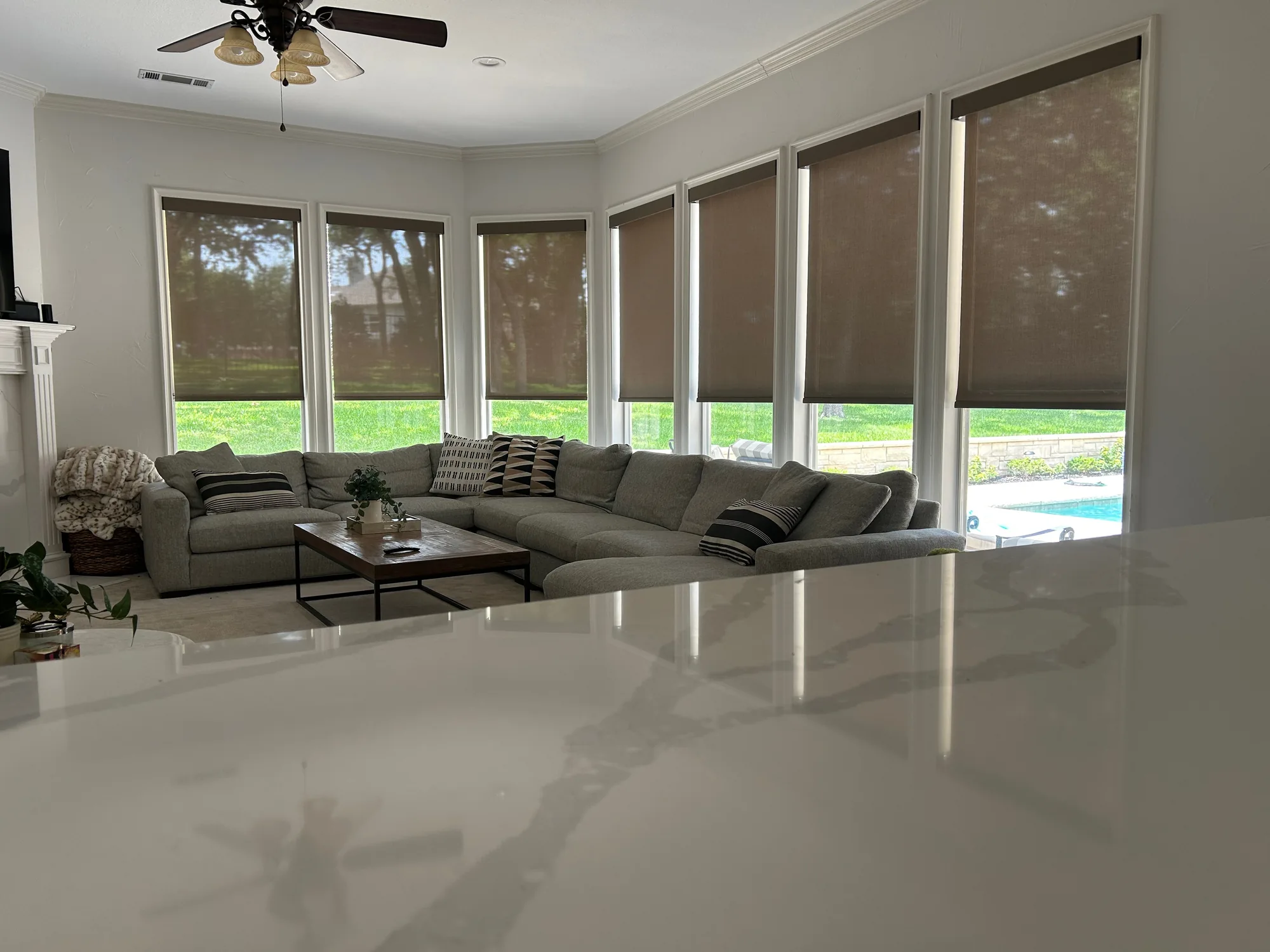
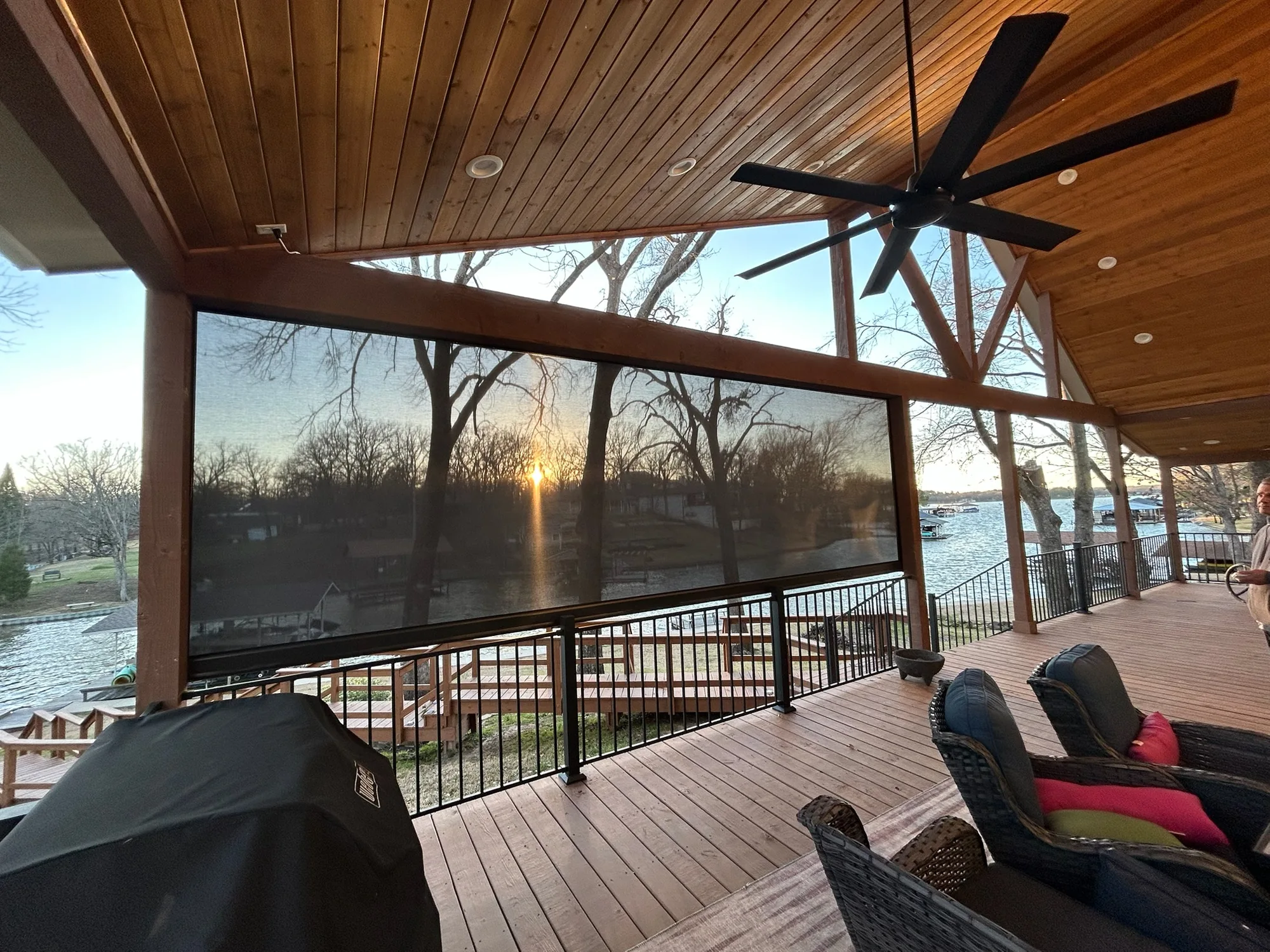
A blind has slats. You tilt them to aim the light and raise them to clear the glass. That is the line between blinds and shades: a shade is a single piece of fabric that goes up and down, a blind is a stack of slats that also rotates. It matters because tilting gives you a middle setting, where light comes in but the view in does not.
Real wood blinds
Cut from hardwood, so they are the lightest of the slat treatments and the easiest to lift on a tall window. The grain is the point: nothing else looks like it. The trade is that wood moves with moisture, so a room that gets steam or a window that gets driven rain is the wrong place for it.
Faux wood blinds
Built to look like wood but made to shrug off humidity. Heavier than real wood, which you notice on a wide opening, and worth it anywhere the air gets damp. This is the usual answer for a bathroom or a kitchen window over a sink.
Composite blinds
A middle option: a wood core with a hard outer skin. Closer to wood in weight and to faux in tolerance. Useful on a window that gets afternoon sun and occasional moisture, where wood would move and faux would sag.
Aluminium and mini blinds
Thin metal slats, usually 1 inch or under. They fit shallow openings where nothing else will, and they are the cheapest way to cover a window that only needs covering. Slats bend if a room gets rough use.
Vertical blinds
Slats that hang and draw sideways rather than lifting. Made for openings wider than they are tall: sliding doors, wide patio glass. On a door you actually use, the stack has to land somewhere it will not be walked into, which is a mounting decision rather than a product one.
How to choose without regretting it
Work in this order. Does the room get moisture? That rules wood out. How wide is the opening? Wide and heavy is hard to lift, so consider motorization or a vertical. Is the opening square? Slats are rigid, so an opening that is out of true has to be handled by the frame rather than hidden by the treatment. Then pick the material you like.
That last point is the one people skip. Most of what goes wrong with a blind was decided before anything was ordered, which is why we measure every opening ourselves rather than working from numbers sent over.