Vertical blinds had one great idea: slide sideways, like the door. The execution is what dates a room, with clacking vanes that yellow, crack and derail one by one. If you are shopping to replace them, you are really shopping for something that still slides but looks like it belongs in this decade. Three treatments do it well.
Panel track shades: the direct heir
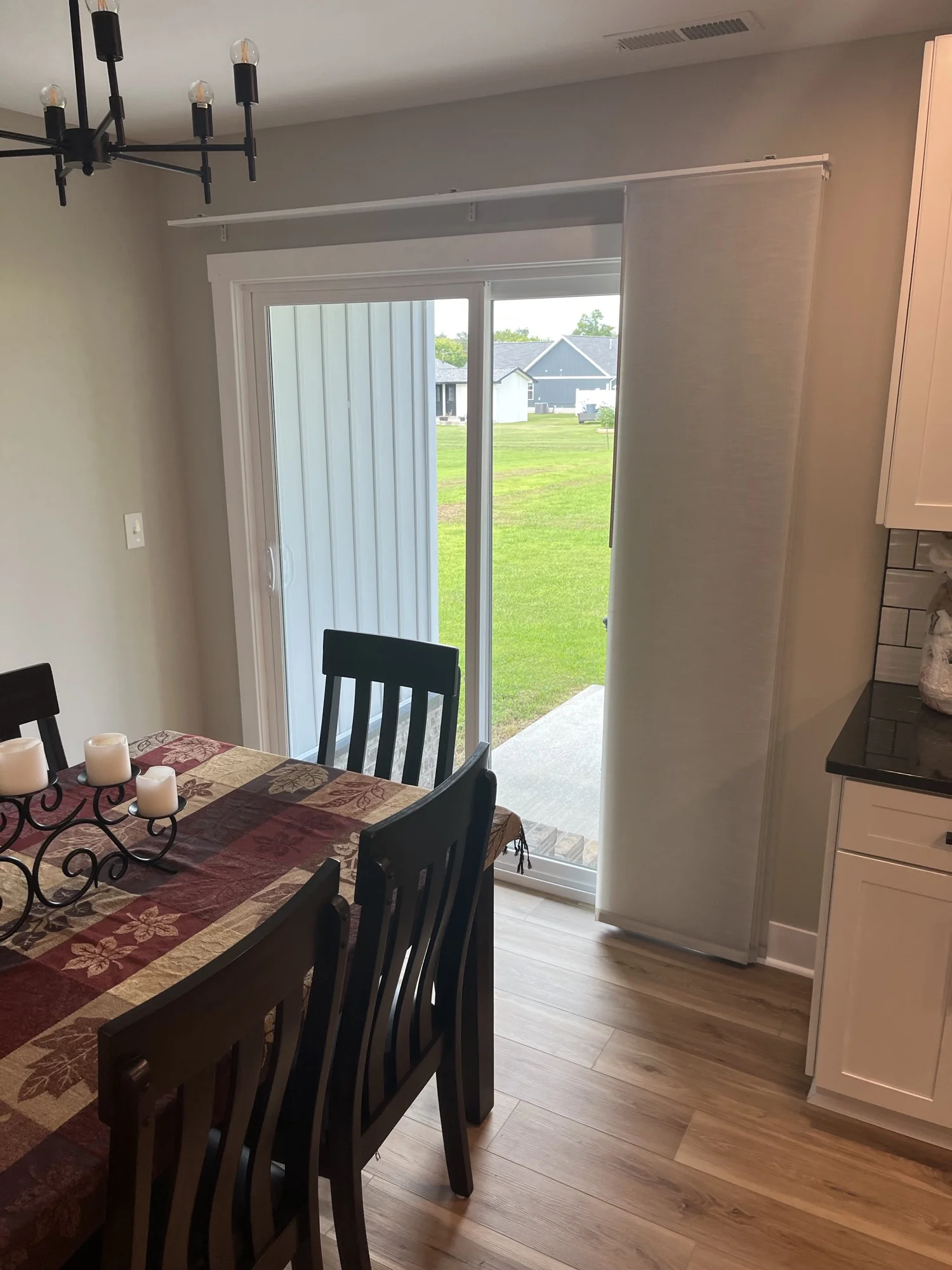
Panel track takes the sliding motion of vertical blinds and replaces dozens of narrow vanes with a few wide fabric panels that glide on a headrail and stack cleanly to one side. Closed, they read as a calm fabric wall; open, they disappear behind each other. Fabric choices run from light-filtering to blackout, so the same system works on a family room slider or a bedroom patio door.
Custom drapery: the soft answer
Drapery panels on a proper rod bring height, softness and color that hard treatments cannot, and they clear the door completely when stacked back. Motorized drapery tracks put the whole run on a remote or schedule, which turns a heavy west-facing slider into something you never touch. In rooms where the slider is the biggest visual surface, drapery is often what makes the room feel finished.
Wide roller and solar shades: the minimal answer
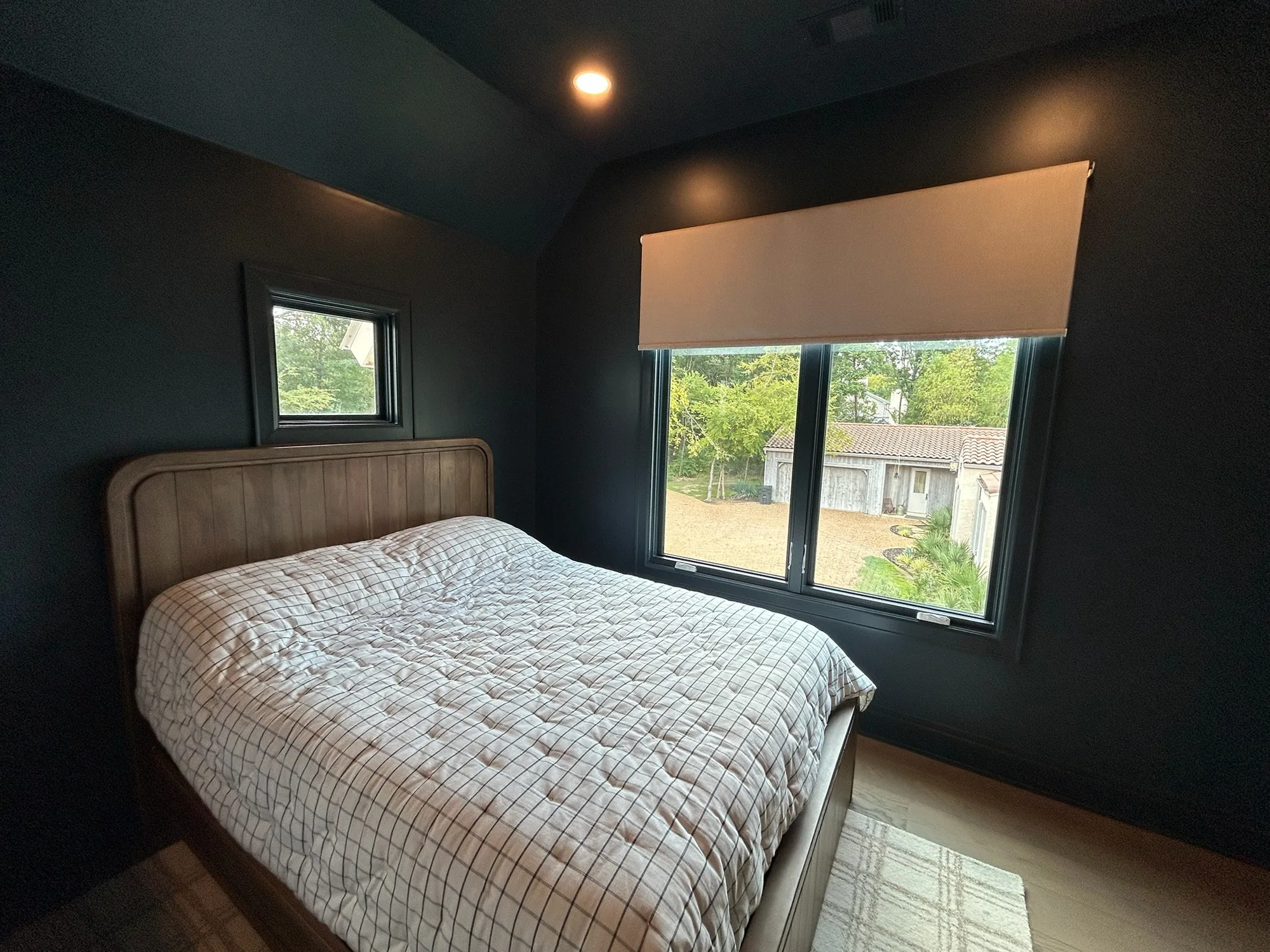
A roller or solar shade mounted above the door keeps the glass and the view while cutting glare and heat, and it vanishes into a slim roll when raised. The tradeoff is vertical operation: the shade must be up to use the door. That suits doors used a few times a day, less so a door that is used all day.
How to choose between the three
- Use the door constantly: panel track, because it slides with you
- Want softness, height or a motorized glide: custom drapery
- Want the view and the light with minimal hardware: roller or solar shade
- Blackout for a bedroom slider: panel track or lined drapery, both do it properly
Why sliders punish guesswork
Door openings are wide, heavily used and unforgiving of a treatment that hangs a half-inch too low. Stack direction has to match how the door slides, and clearance over handles and locks has to be measured, not assumed. This is precisely the opening we would rather measure ourselves, which is what the free in-home consultation is for.