Walk into a room that feels finished and drapery is usually doing quiet work at the windows. Custom drapery is not the same product as store-bought curtains: panels are made to your window's exact height and width, lined for body and light control, and hung on hardware that was chosen rather than settled for.
What custom changes
- Length that kisses the floor instead of floating or puddling by accident
- Fullness sewn in, so panels stack rich instead of hanging flat
- Linings that block light, insulate, and protect the face fabric from Texas sun
- Hardware sized to the wall, mounted into structure, level across wide spans
Layering: where drapery earns its keep
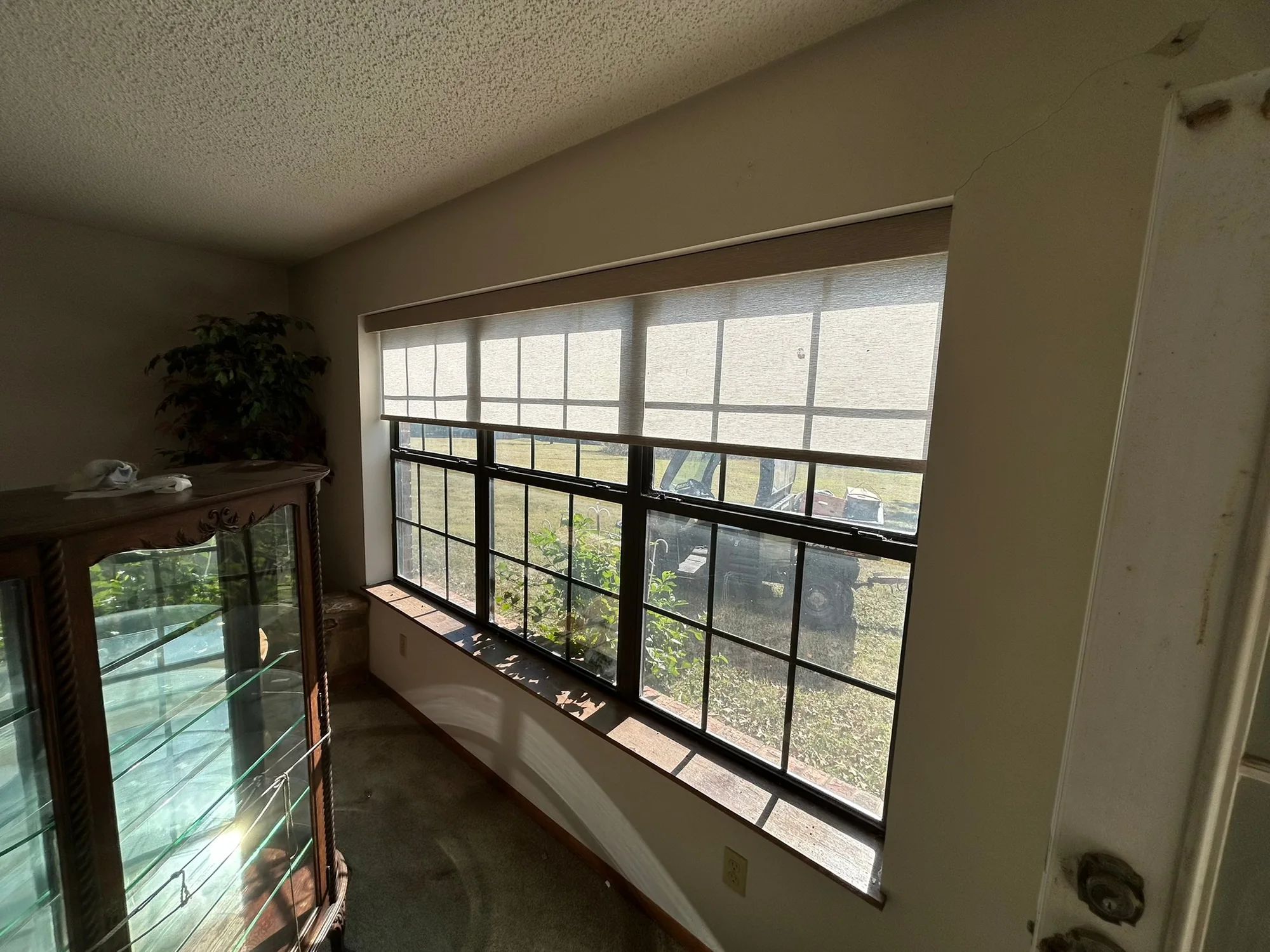
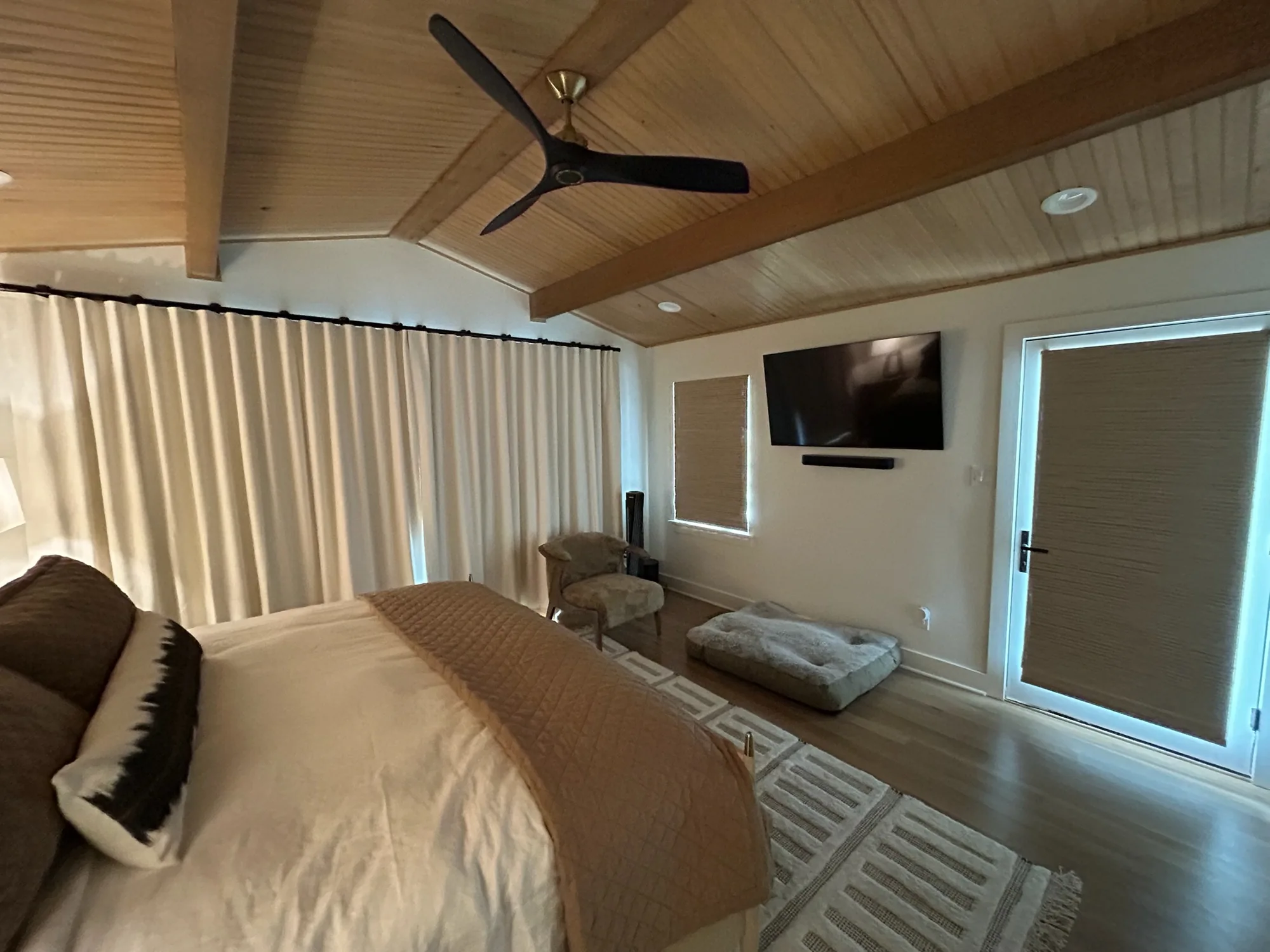
The strongest Texas window treatments are usually layered: a blind or shade does the daily light work, and drapery panels frame the window, soften the wall and add the color and texture a hard treatment cannot. Panels over woven wood shades or roller shades is the pairing designers reach for again and again.
Motorized drapery exists too
Drapery tracks motorize just like shades: a remote, a schedule or a voice command draws a wall of fabric evenly every time. On wide spans it also protects the fabric, because nobody is dragging panels by hand.
Our drapery installation service handles measuring, hardware and hanging, so the panels land level and the stack clears the glass. It is the difference between curtains and window treatments.
Measuring starts at the hardware
Drapery measurements start at the rod. Mounting the rod above the window frame and extending it past the sides lets the panels stack on the wall instead of over the glass. The window reads taller and wider, and you keep the daylight when the panels are open. Length is measured from the rod down to the floor, so the panels land where you want them every time.
Stationary panels or working drapery
Stationary side panels frame the window and never close. They add color, softness and height, and they need less fabric. Working drapery draws across the glass for privacy or darkness, which takes fuller panels and hardware that lets them travel freely. Many rooms use stationary panels over a shade that does the daily work.
Fabric and Texas sun
Any fabric facing hard afternoon sun will fade over time. Linings slow that by taking the sun on the back of the panel, and they add body so the folds hang evenly. Delicate natural fibers such as silk fade fastest in direct sun, so they are best kept to north and east windows or protected by a shade behind them.