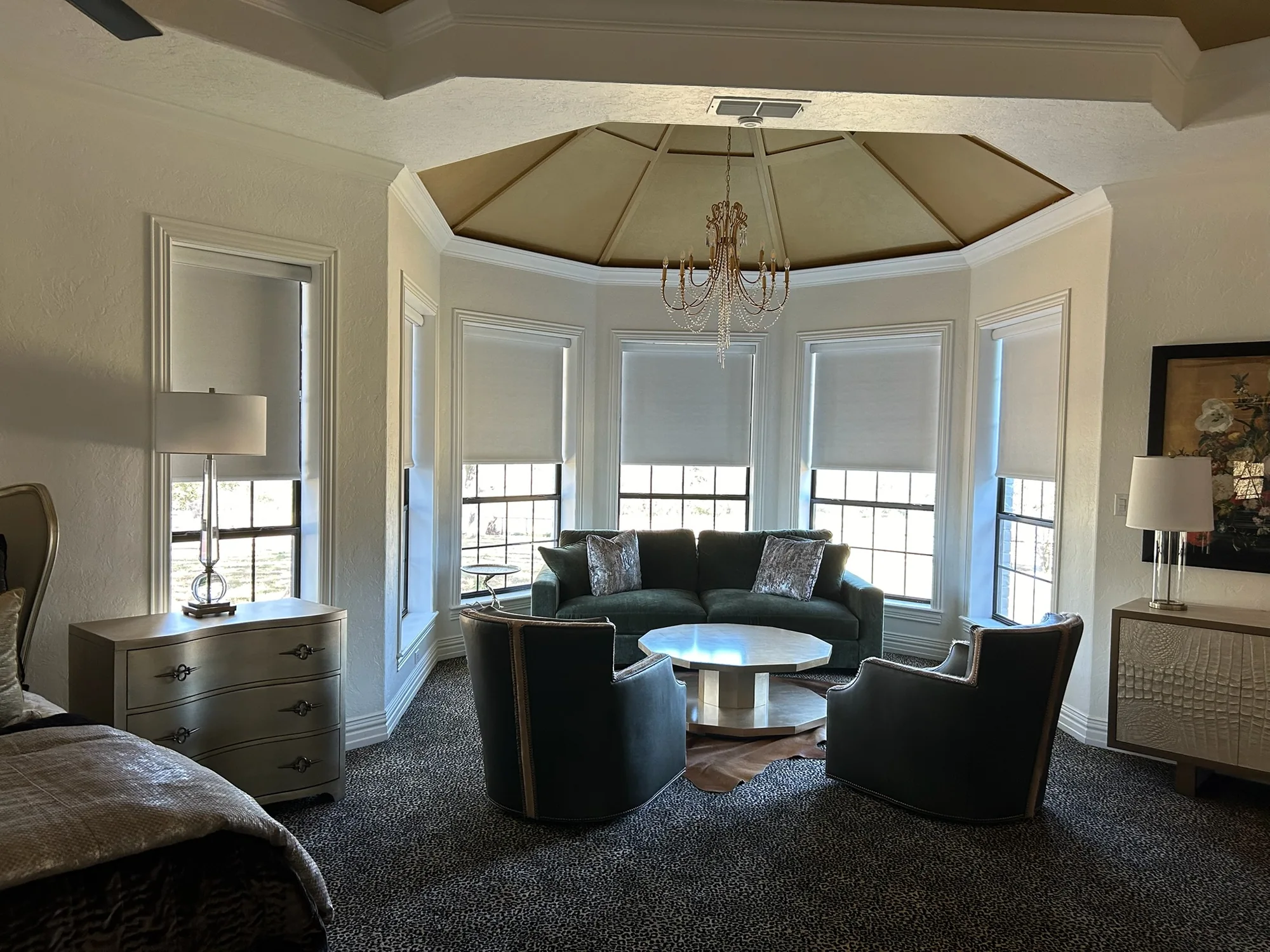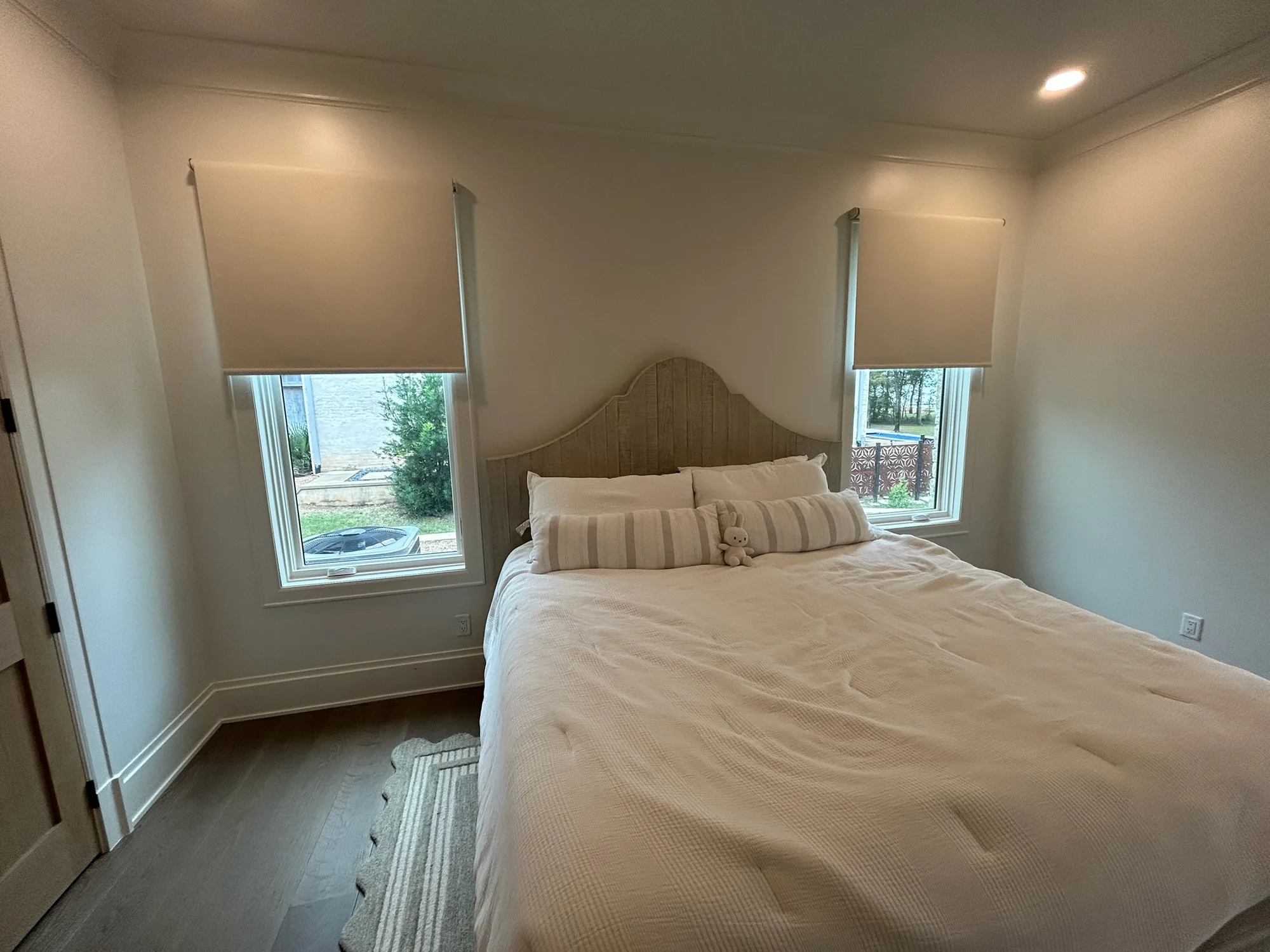
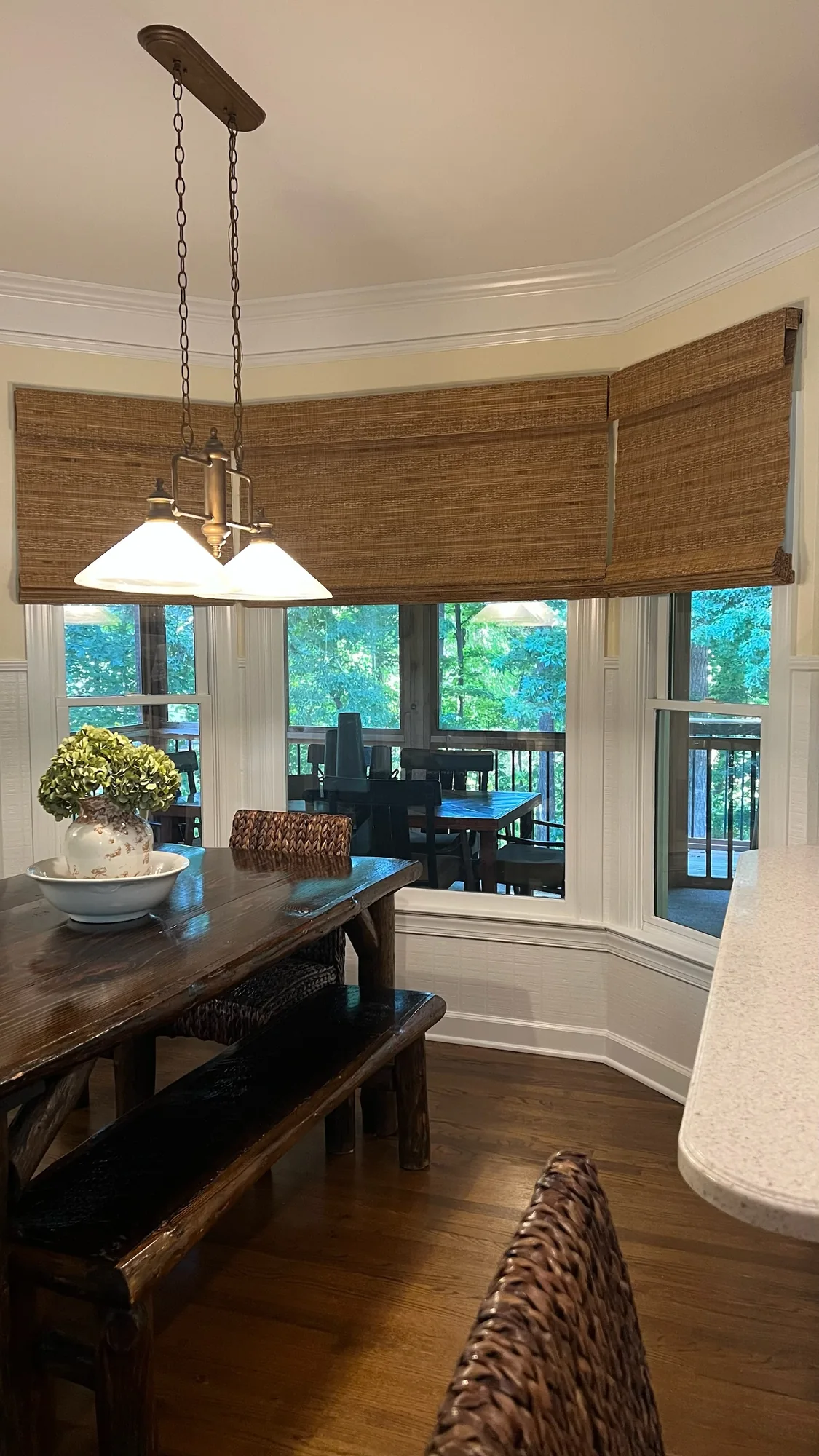
Woven wood shades are made from bamboo, rattan, jute and natural grasses woven into panels with real depth. No printed texture fakes what they do to a room: the weave filters sunlight into something warm rather than flat, and no two shades repeat exactly.
Where woven woods shine
- Living rooms and dining rooms that want texture without pattern
- Layered looks, where a woven shade adds warmth behind drapery panels
- Rooms with plenty of wood or stone, where a fabric shade would read too soft
- Daytime light control, turning harsh Texas sun into a filtered glow
The honest cons
An unlined woven shade is a daytime treatment. The same weave that filters light going out lets silhouettes read at night with interior lights on, so bedrooms and street-facing rooms want a privacy or blackout liner. Natural fibers also prefer dry rooms; a steamy bathroom will age them faster than a faux wood blind.
Woven woods also vary by lot, because the material grew somewhere before it was woven. We treat that as character, but if you want two windows to match perfectly, the consultation is where we order both from the same run.
Liner options change the answer
A light-filtering liner keeps the glow and adds night privacy. A blackout liner turns a woven shade into a bedroom treatment without losing the daytime texture. This single choice is why woven woods belong in more rooms than people expect.