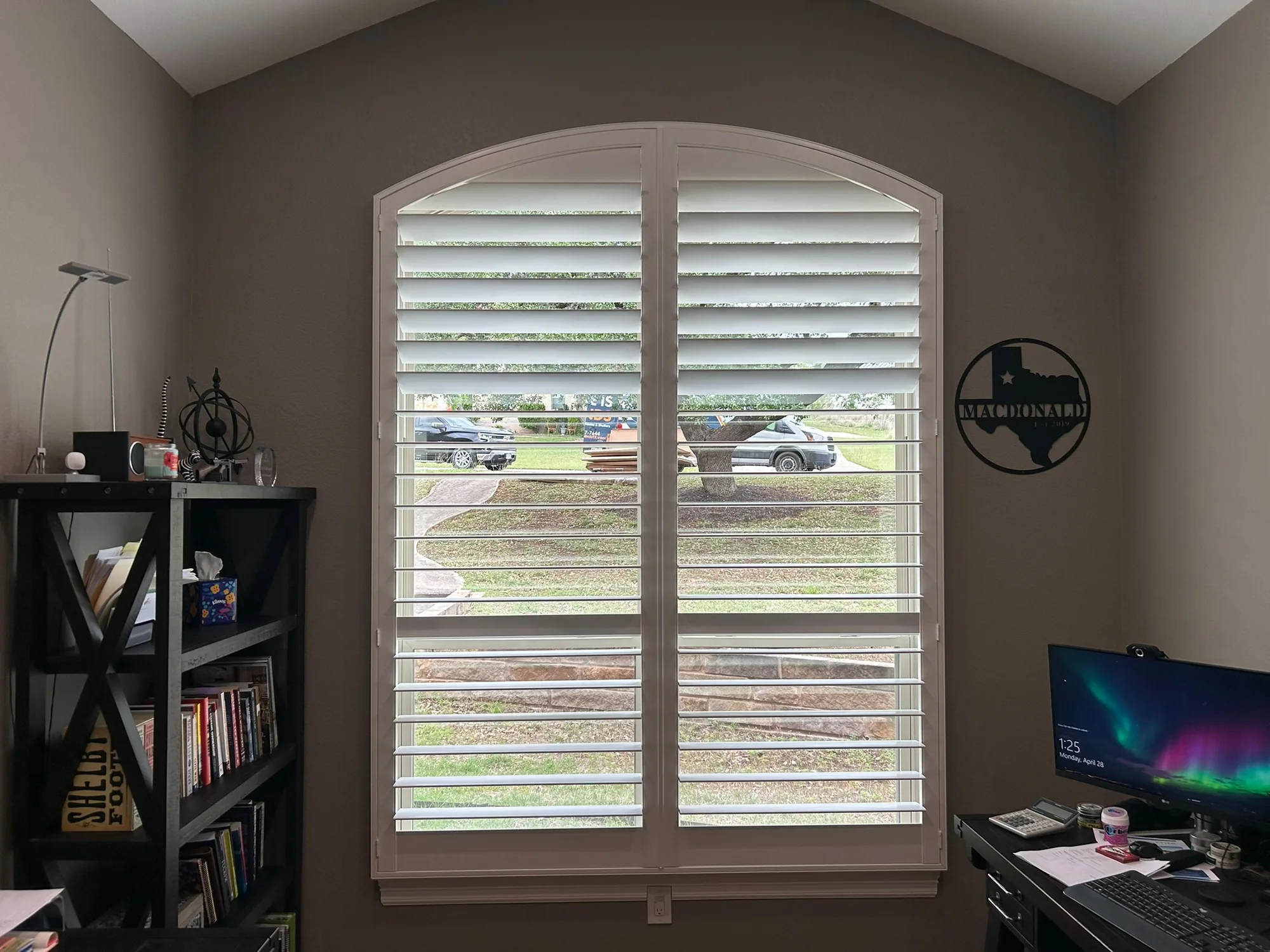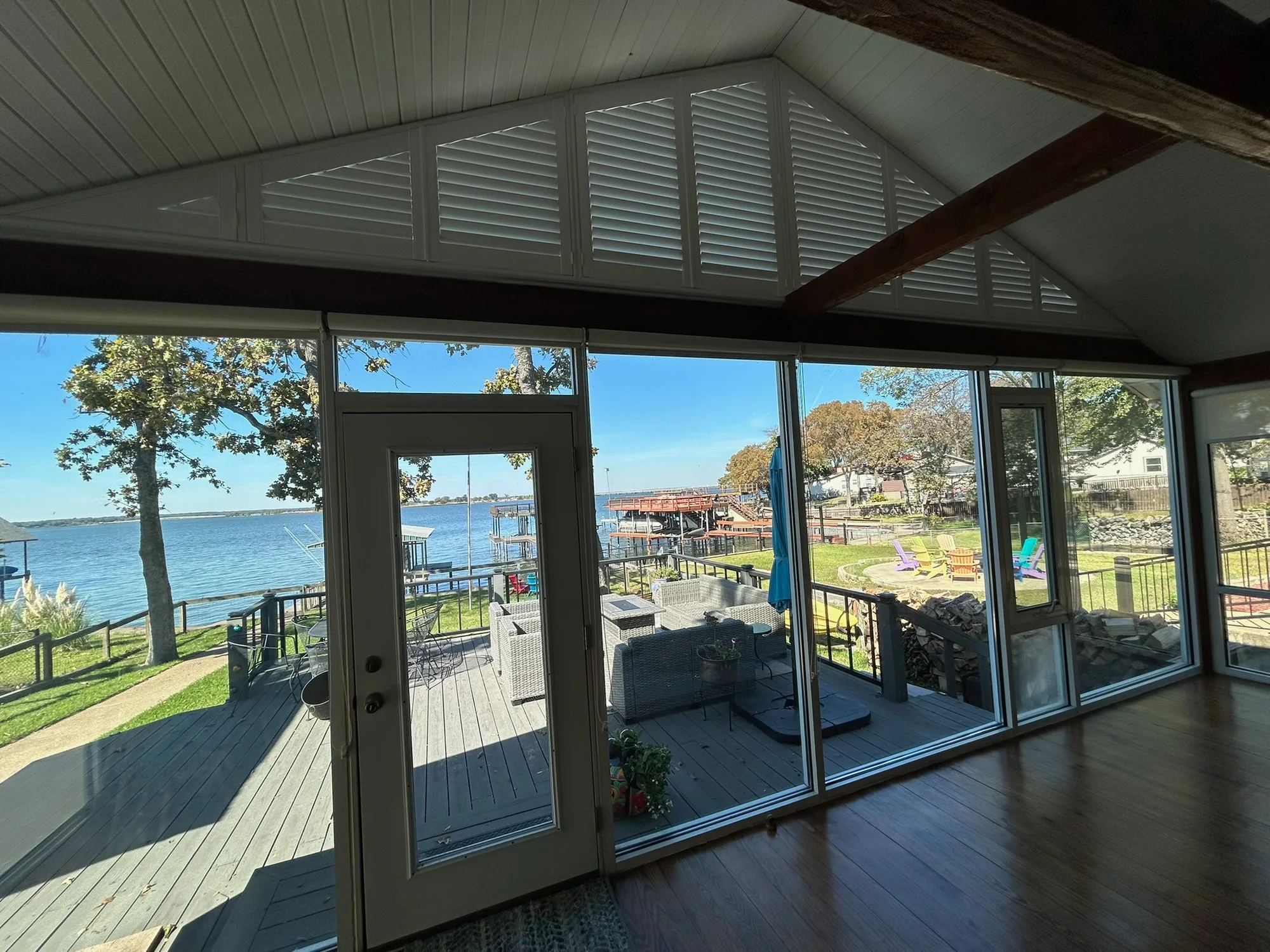
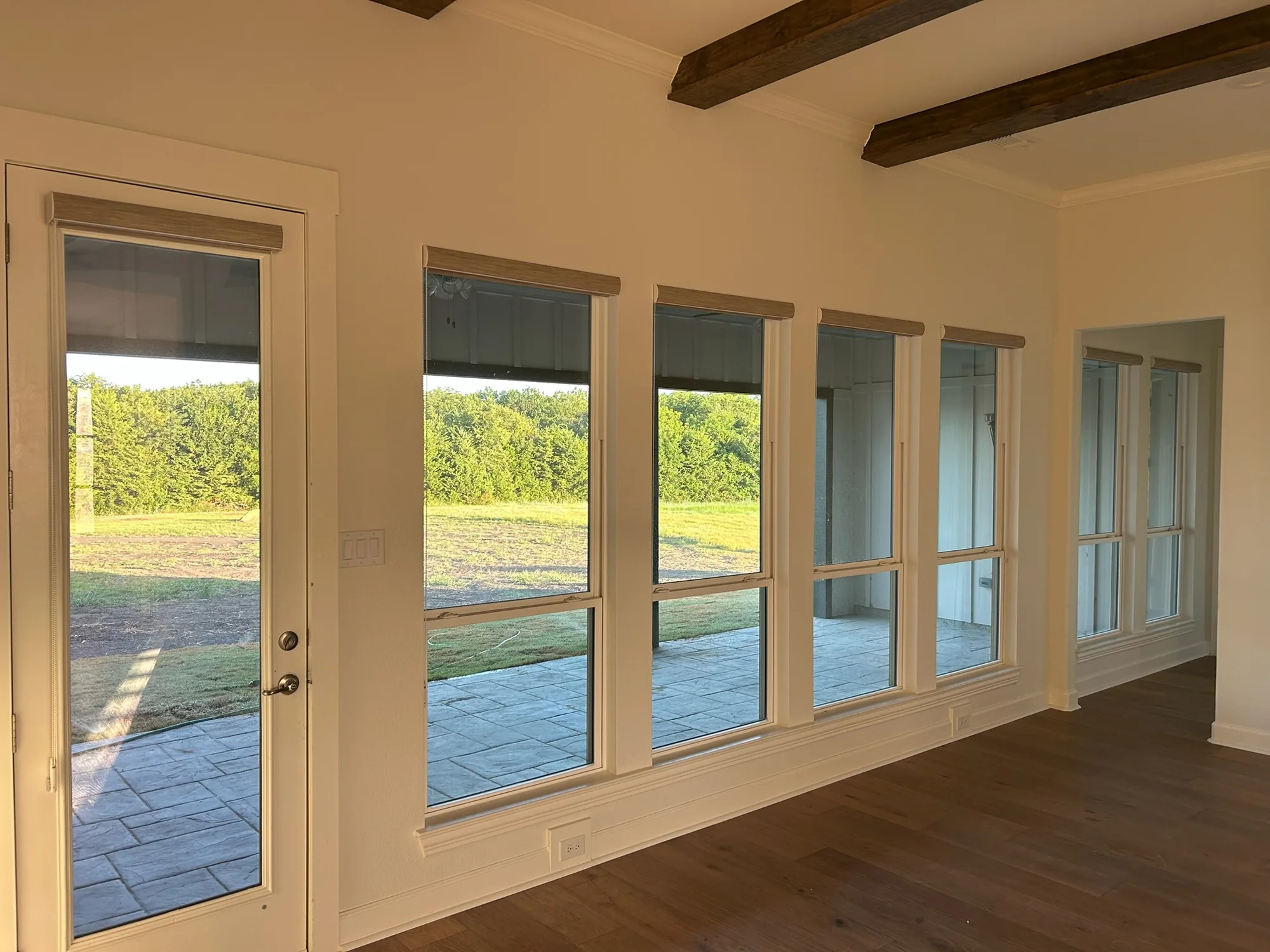
Short answer: shades are fabric rather than slats. Roller, solar, cellular, roman, woven wood and banded are the families, and they differ mostly in how much light they let through and whether they insulate.
Shades versus blinds
A shade raises and lowers as one piece of fabric. There is no tilt, so you are choosing how much light the fabric itself passes. That makes the fabric choice the whole decision, and it is why two shades that look identical can behave completely differently at four in the afternoon.
Roller shades
The simplest mechanism there is: fabric on a tube. Clean lines, very little stack at the top, and available in everything from sheer to blackout. If you want the window to read as glass and not as a treatment, this is usually the answer.
Solar shades
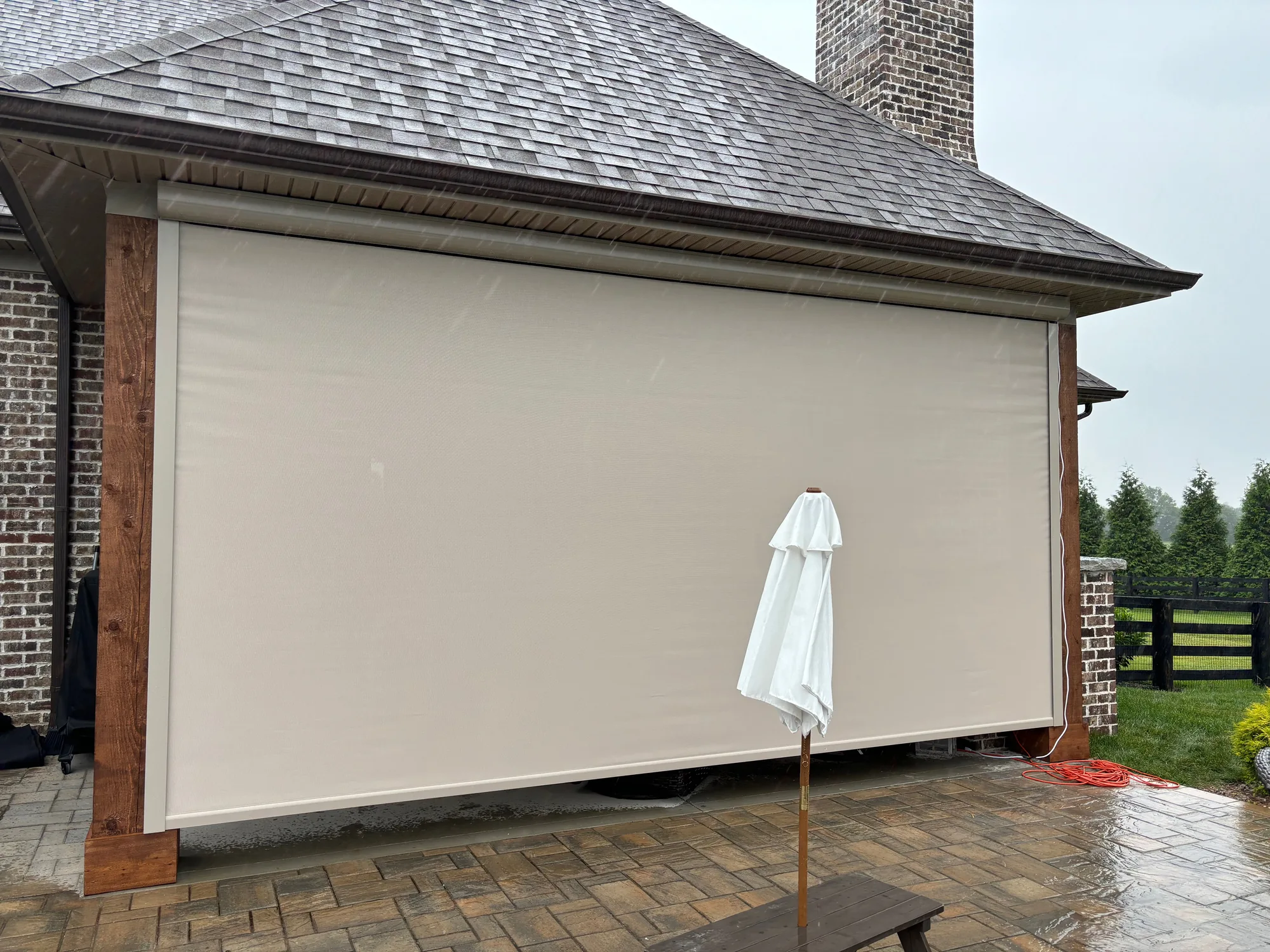
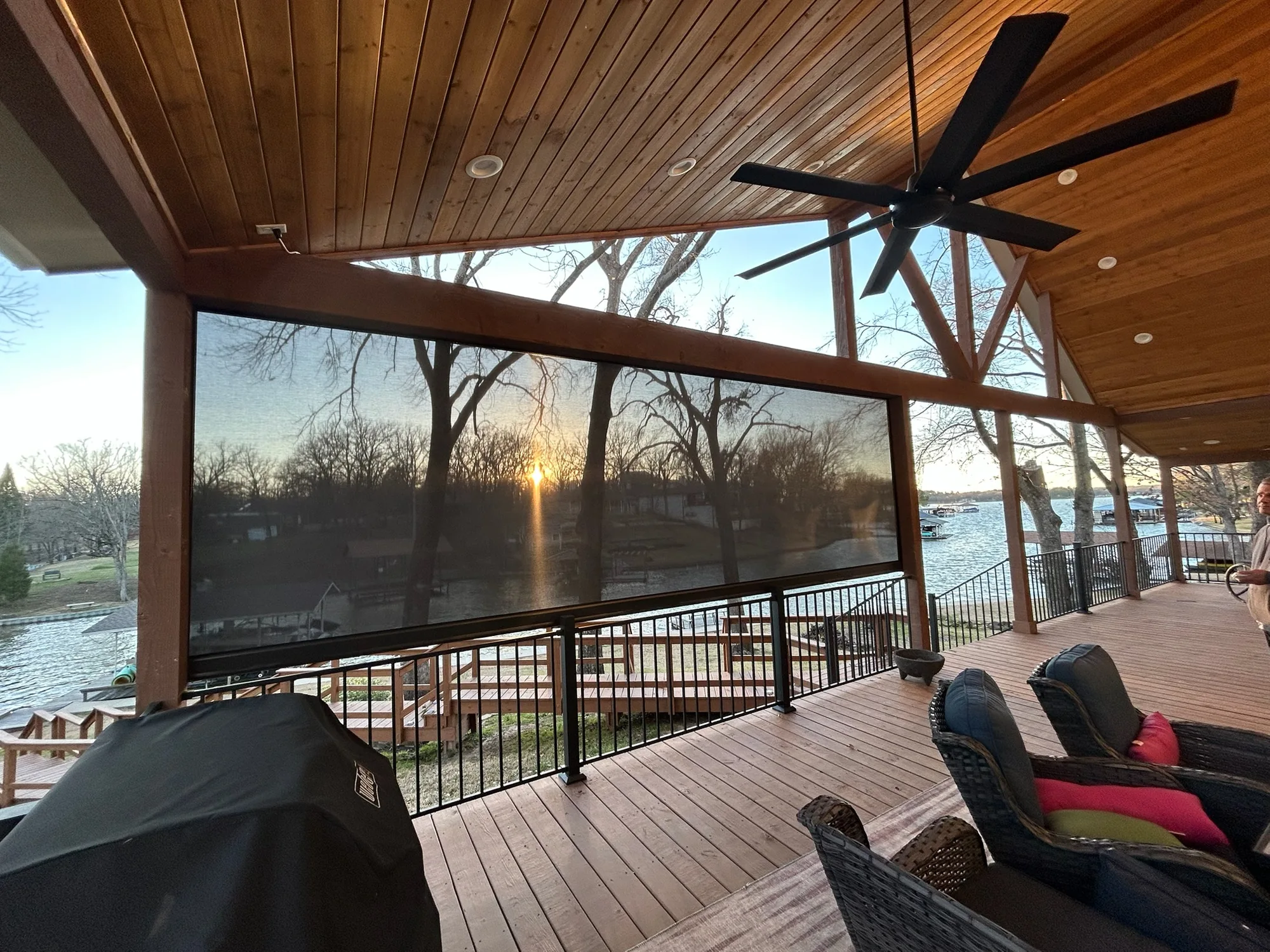
A roller shade in an open-weave fabric. The weave is rated by openness, and that number decides the trade you are making: a tighter weave cuts more heat and glare, a looser one keeps more of the view. On a west-facing window in Texas this is the family that does the most work.
Cellular and honeycomb shades
Pleated fabric folded into cells that trap air, which is what makes them the insulating option. Worth the money on glass that drives your cooling bill, and available in light filtering or blackout depending on the room.
Roman shades
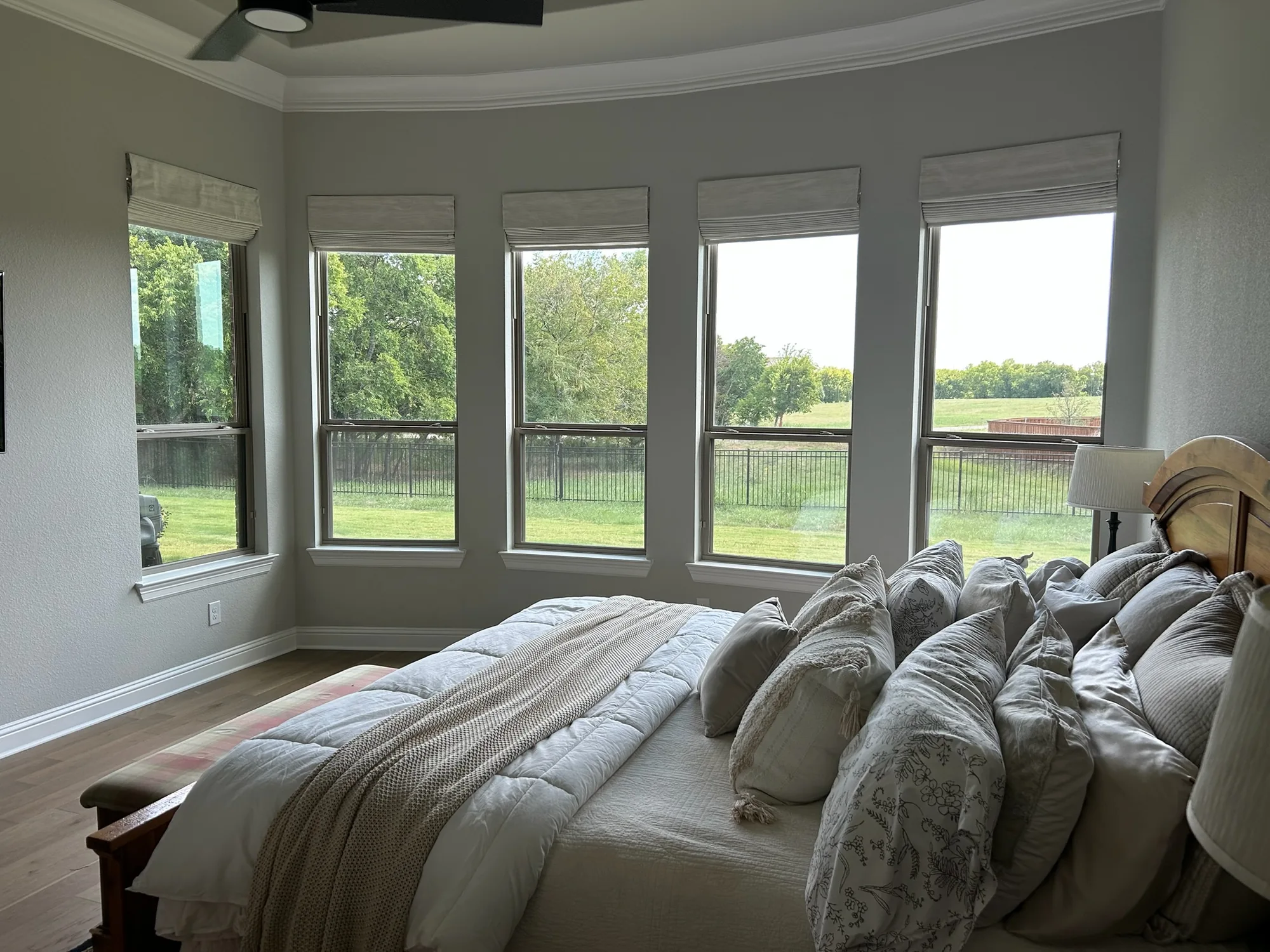
Fabric that folds into soft horizontal pleats as it lifts. The dressiest of the flat shades and the one that reads most like a curtain, so it suits a formal room where a roller would look bare.
Woven wood shades
Natural reeds, grasses and bamboo woven into a shade. Texture is the reason to buy them. They filter light rather than block it, so pair them with a liner if the room needs to go dark.
Banded and dual shades
Alternating sheer and solid bands on one roller. Line the solids up and the window closes; line the sheers up and you get filtered light with the view intact. One treatment doing the job of two, which is why they suit a room used at very different times of day.
Choosing the fabric before the family
Pick the light level first and the family second. Decide whether the room needs to go fully dark, needs glare cut while keeping the view, or just needs privacy after dark. That answer narrows the fabric, and the fabric narrows the family faster than any showroom tour will.