
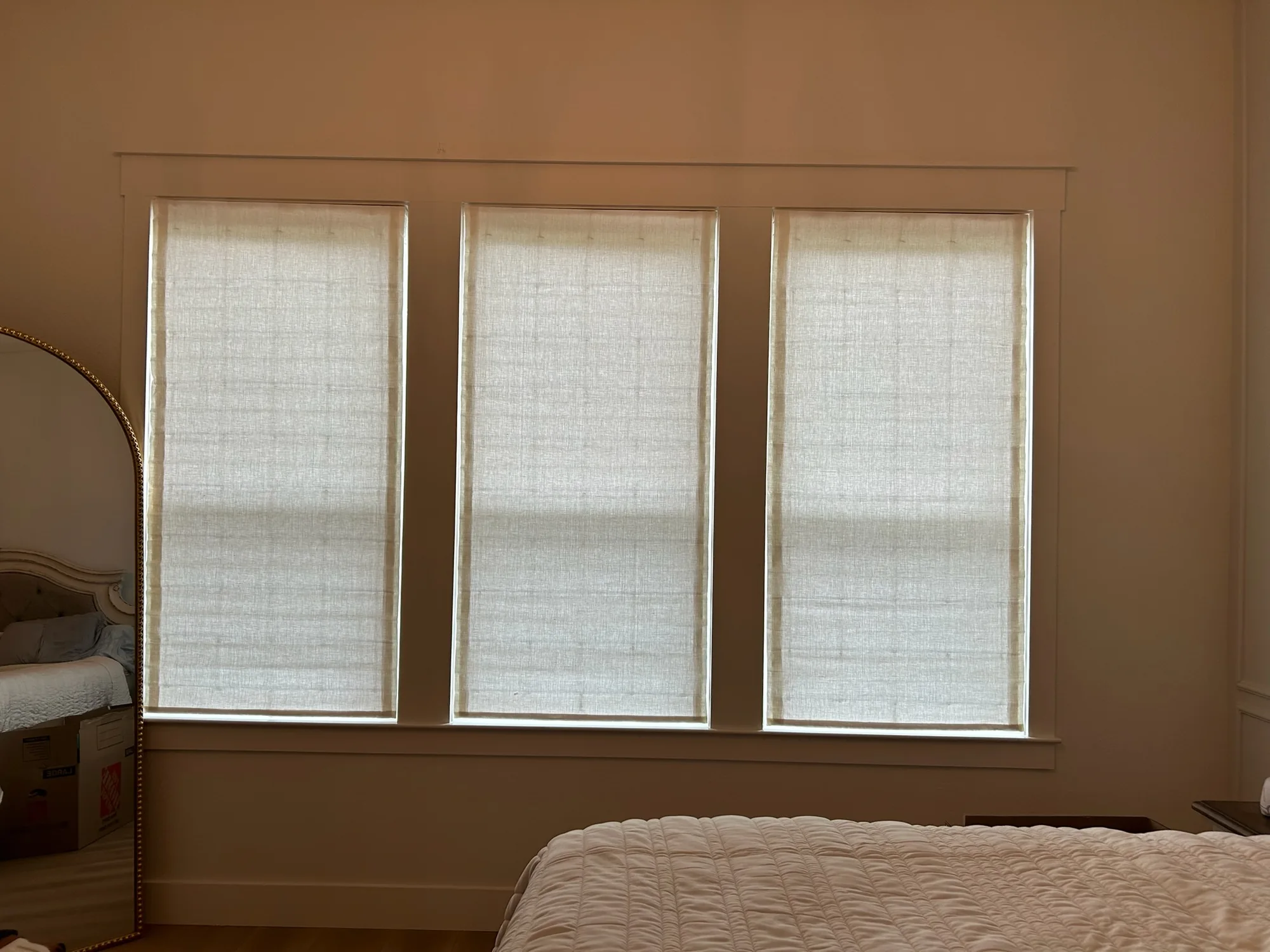
Roman shades earn their place by being fabric, and fabric is exactly why cleaning them makes homeowners nervous. The folds that give a roman its tailored look also catch dust along every ridge, and an aggressive scrub can leave a clean spot that reads worse than the dust did.
The routine that keeps them looking new
A vacuum with the brush attachment on low suction, run top to bottom along the folds once a month, handles almost everything. Follow the direction of the fold rather than across it so the fabric stays trained. A microfiber duster between vacuums keeps the ridges from building up.
Spot cleaning without a water ring
Blot, never rub. Use a barely damp white cloth with a drop of mild soap, work from the outside of the spot inward, and dry the area quickly with a second cloth. Test on the back of the bottom fold first: some weaves water-spot, and the back tells you before the front does.
What never to touch a roman shade
- Steam cleaners, which can relax the fold training and warp the batten pockets
- Bleach or solvent cleaners, which strip color unevenly
- A washing machine, even for shades with removable fabric, unless the manufacturer's care tag explicitly allows it
When cleaning is the wrong answer
Sun rot and deep staining do not clean out. If a shade has hung on a west-facing Texas window for a decade, the fabric may be brittle even where it looks fine. That is usually the moment to talk about a replacement with a liner that protects the new fabric from the same fate.
Specific marks and messes
- Fresh spills: blot with a dry white cloth right away, before trying anything damp.
- Pet hair: a lint roller run with the direction of the fold lifts it without disturbing the fabric.
- Dust on the top fold: the brush attachment and a slow pass along the ridge.
- Odors: air the room out. Avoid fabric sprays, which can spot some weaves.
The parts you do not see
Dust collects on top of the headrail and along the back of the shade, which faces the glass. Lower the shade fully once in a while and run the brush over the back and any liner. On corded romans, check the lift cords for fraying while you are there. A cordless or motorized shade that starts raising unevenly should be looked at before it is forced.
When to call us
If a shade will not hold its folds, raises crooked or has stopped working, our Here-4-You guarantee covers service visits at no cost for four years. For older shades with sun-damaged fabric, the consultation can look at a replacement with a liner that protects the new face fabric.