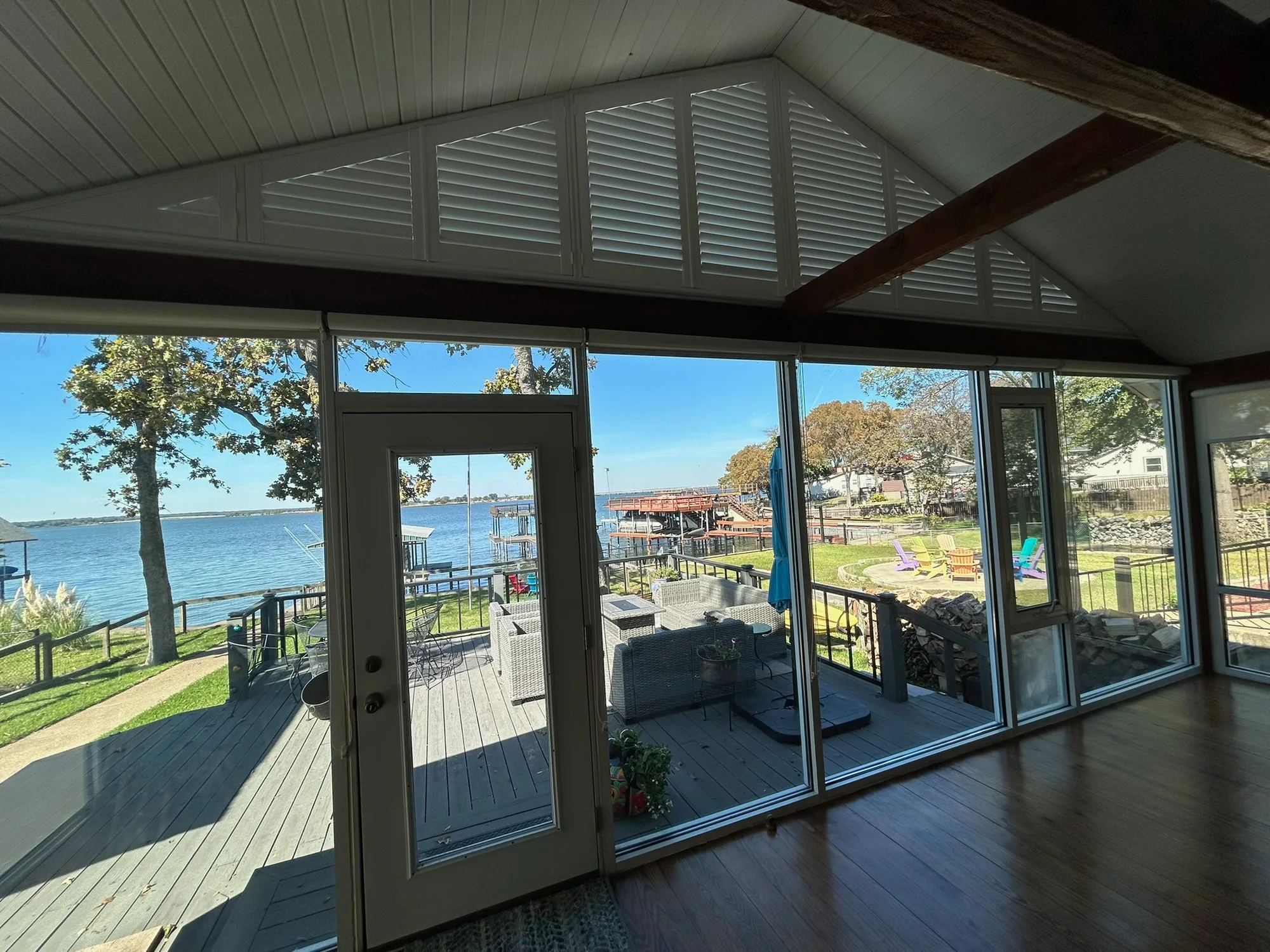
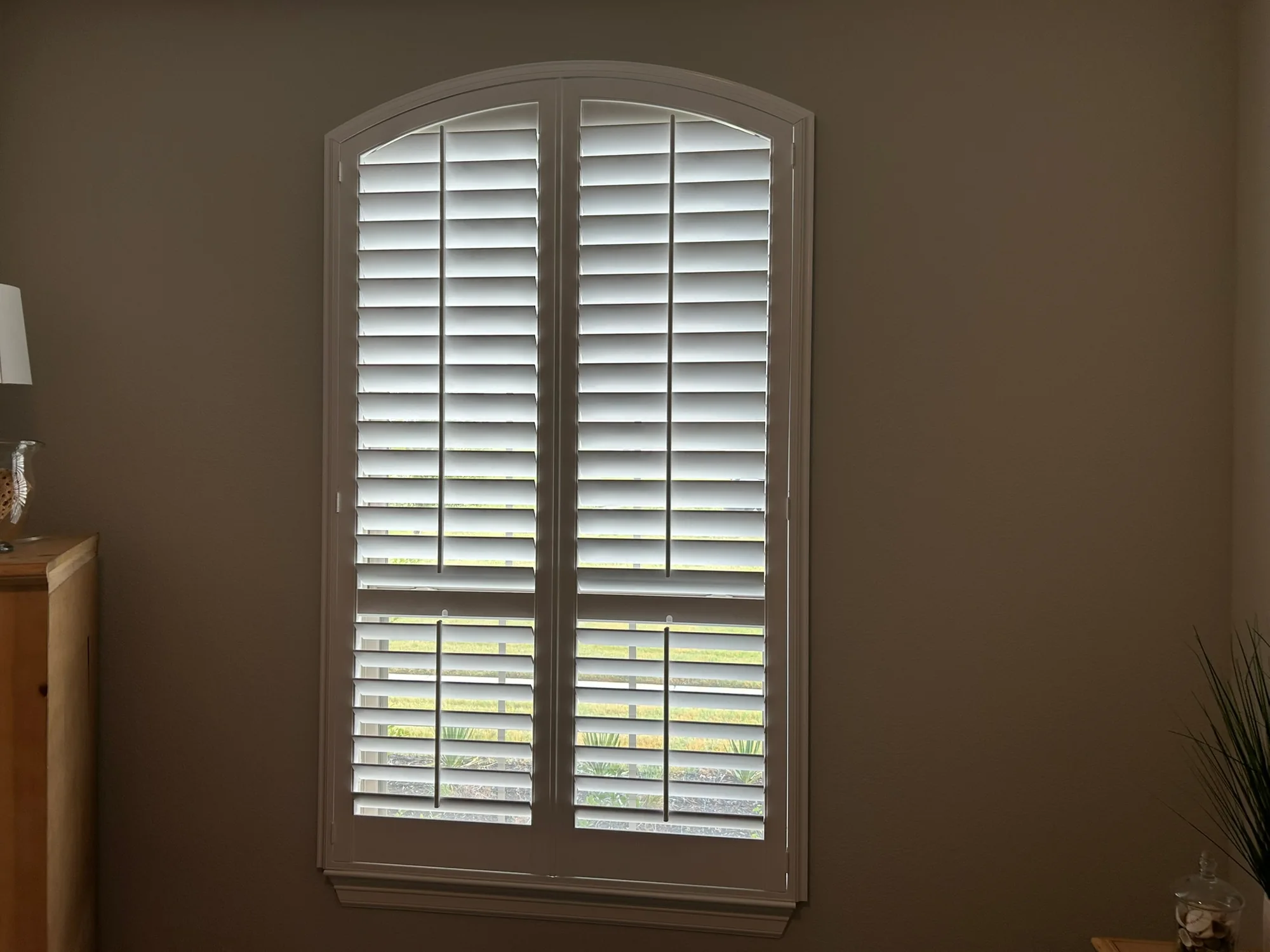
Short answer: shutters need more depth than blinds, the opening has to be assessed for square, and the frame style is chosen from what the measurement reveals.
Shutters are less forgiving than any other treatment
A shutter is a rigid panel in a frame. It cannot flex to absorb a crooked opening the way a fabric shade can, which is why shutter measuring is the one we would least recommend doing yourself.
Measuring step by step
1. Decide inside or outside mount first
Everything downstream changes based on this. Inside mount sits within the frame and looks built in. Outside mount covers the opening and hides an out of square frame.
2. Measure the width in three places
Top, middle and bottom. Openings settle, especially in older houses. For an inside mount use the narrowest of the three. For an outside mount measure the area you want covered and add overlap on each side.
3. Measure the height in three places
Left, centre and right. For an inside mount use the longest. For an outside mount measure from where the treatment will mount to where you want it to end.
4. Check the depth
Inside mount needs enough clear depth for the headrail. Shutters need more than blinds. If the frame is shallow, or there is a crank, alarm sensor or tile return in the way, outside mount is the answer.
5. Write it width by height, always
Width first, height second, every time. Reversing them is the single most common way a custom order goes wrong.
Depth is the first question
Every shutter has a minimum depth for the louvers to rotate without hitting the glass or the frame. If the opening is too shallow, the answer is a frame that projects rather than abandoning shutters.
Frame styles and when each is used
Inside the opening
Cleanest look, needs depth and a reasonably square frame.
Over the opening
Sits on the trim or wall, hides an irregular opening.
Bay and angled
Each panel is measured and built individually, and the angles between them measured on site.
The mistakes that cost a remake
- Measuring the old blind instead of the opening
- Rounding up on an inside mount, which leaves a treatment that will not fit
- Using one width measurement on an opening that is not square
- Forgetting the depth check before committing to inside mount
- Writing height before width
Why custom orders punish small errors
A custom treatment is cut to the number you give. There is no returning it, no trimming it down and no swapping it for the next size. That is the whole reason we measure every opening ourselves rather than working from a list.
- An eighth of an inch too wide on an inside mount will not fit at all
- An eighth too narrow leaves a light gap you will notice every morning
- A height error shows as a treatment that stops short of the sill
- Reversing width and height produces something unusable
Openings are rarely square
Houses settle. Frames move. In most homes over a few years old, the width at the top of a window is not the width at the bottom, and the difference is often enough to matter on an inside mount.
This is why we measure in three places and why an outside mount is frequently the right answer in an older house, even when an inside mount would look neater.
Tools worth having
- A steel tape, not a cloth or fabric one, which stretches
- A step ladder, so you are measuring level rather than reaching
- A notepad with a column for width and a column for height, kept in that order
- A second person for anything wide or high
Or let us measure it
Every consultation includes measuring each opening on site. It is free, there is no obligation, and it removes the one risk that matters on a custom order: a treatment cut to the wrong number.