
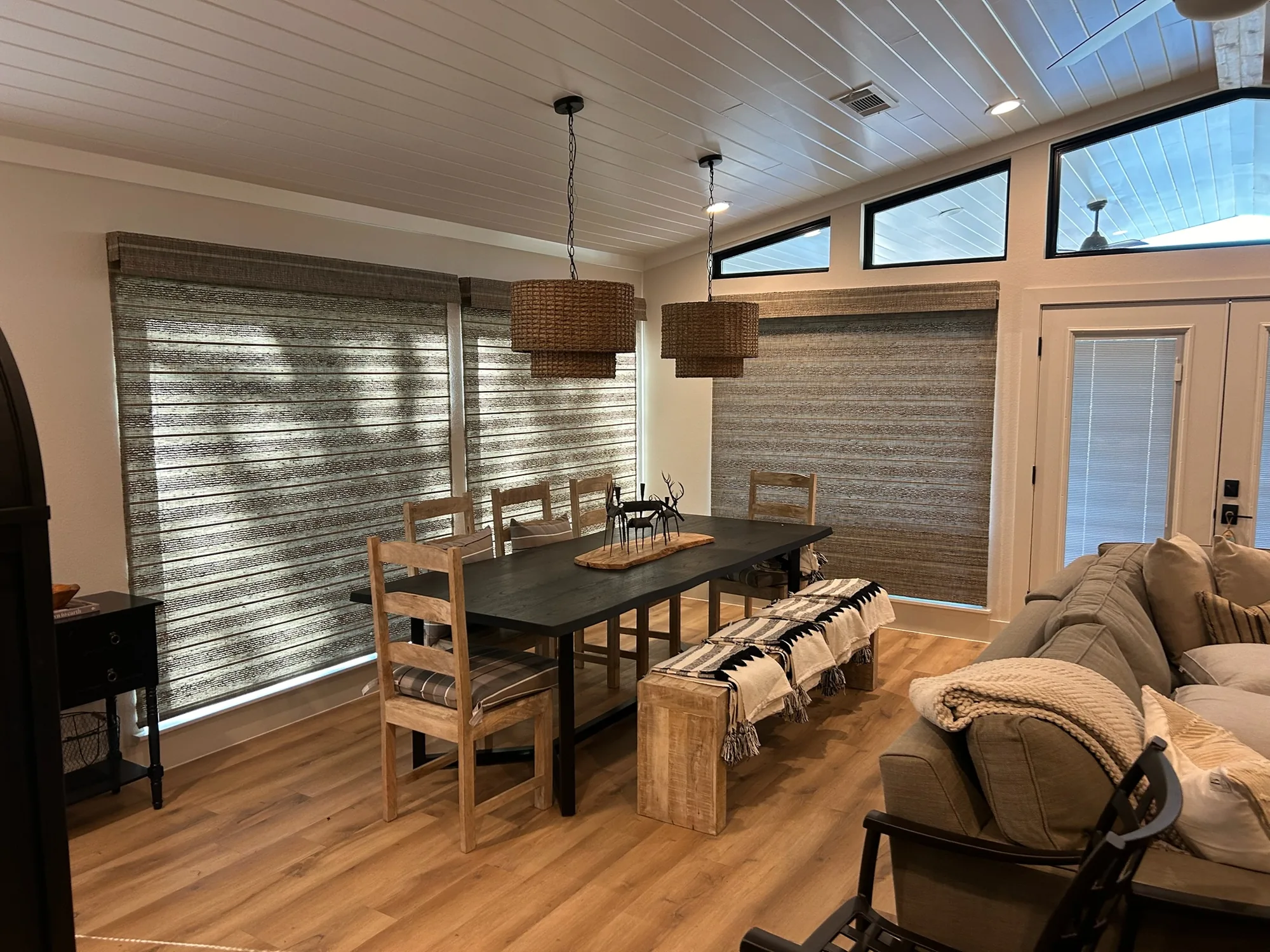
Two roman shades in the same fabric can read completely differently, because the fold, not the fabric, sets the personality. Choosing a fold style is the real design decision, and it is worth making deliberately.
Flat fold: the tailored one
Panels drop in clean horizontal planes with crisp edges. Flat folds suit modern and transitional rooms, large patterns that should not be broken up, and anywhere the window should read architectural. They stack tight and neat when raised.
Relaxed fold: the soft one
The bottom edge curves gently upward at the center, like fabric that settled naturally. Relaxed romans warm up formal rooms and soften hard-surfaced spaces. They ask for solids and quiet textures, since the curve interrupts strong patterns.
Banded and hobbled looks: the structured ones
Banded romans alternate fabric weights for a designer, deliberate look; hobbled folds hold a cascade of soft loops even when fully lowered. Both bring more presence to the window and suit rooms where the shade is the statement rather than the backdrop.
Matching fold to room and function
- Bedrooms: any fold takes a blackout liner without changing the look
- Kitchens and eat-in nooks: flat folds in wipeable weaves stay practical
- Living and dining rooms: relaxed and banded folds carry the softness
- Wide windows: flat folds keep long spans disciplined
Fold styles are exactly what samples-at-your-window decides best: the same fabric held both ways answers in seconds what photos cannot.