Window treatment quotes and sample books use a lot of trade terms. This glossary defines the ones you are most likely to see, grouped by topic.
Types of window treatments
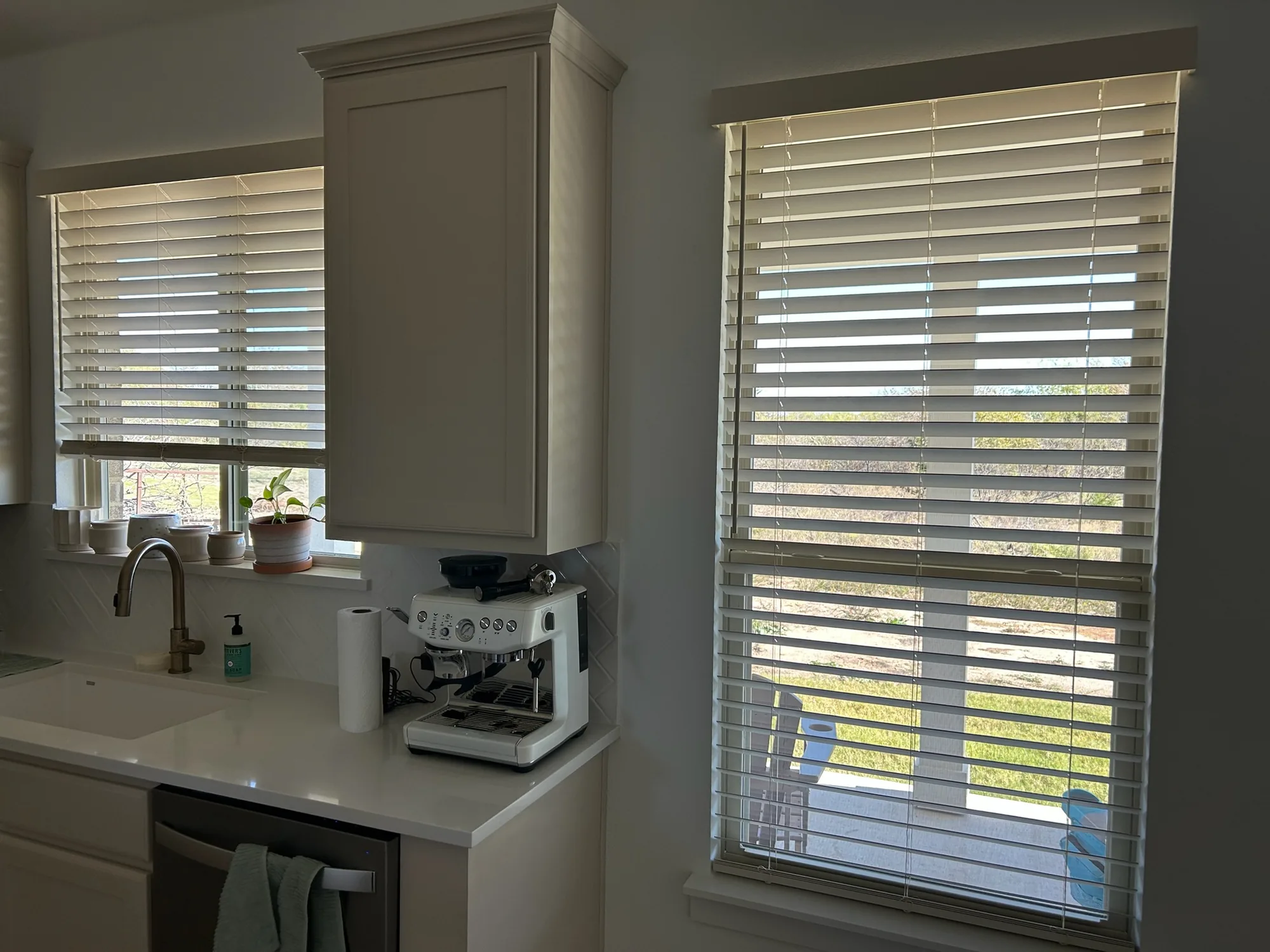
Blinds. Treatments made of hard slats that tilt, such as faux wood, real wood and aluminum. Tilting the slats changes the light without raising the blind.
Shades. Treatments made of continuous fabric that raise and lower by rolling, folding or stacking. Roller, roman, cellular and solar shades are all shades.
Shutters. Hinged panels with tilting louvers, mounted to the window frame and built to the size of the opening.
Drapery. Fabric panels hung from a rod or track. Stationary panels frame a window; traversing panels open and close across it.
Window treatment store, blinds shop. Google's business categories for companies that sell and install window treatments. Some have showrooms. Others, including Love Is Blinds, bring samples to your home and do the measuring and installation there.
Mounting and measuring
Inside mount. The treatment sits inside the window opening, flush with the wall. It needs enough depth in the frame to fit the hardware.
Outside mount. The treatment attaches to the wall or trim above the opening and overlaps it. It suits shallow frames and blocks more light at the edges.
Reveal. The strip of window frame left visible around an inside-mounted treatment. An even reveal on every side means the measurement was right.
Headrail. The housing across the top of a blind or shade that holds the lift mechanism and attaches to the mounting brackets.
Light gap. The small gap between a treatment's edge and the window frame. Inside mounts always have one; outside mounts reduce it.
Out of square. An opening whose corners are not true right angles, common in homes whose foundations have shifted. Careful measuring checks the width at the top, middle and bottom of the opening for this reason.
Light and privacy
Light-filtering. Fabric that lets soft, diffused light through while blocking the view into the room during the day.
Room-darkening. Fabric that blocks most light. The room gets dim but not fully dark.
Blackout. Fabric that blocks light completely. How dark the room gets also depends on the mount, because light can enter around the edges.
Openness factor. On solar shades, the percentage of the weave that is open. A lower percentage blocks more sun and glare and shows less of the view. A higher percentage keeps more of the view and lets in more light.
Top-down bottom-up. A shade with two moving rails, so it opens from the top, the bottom or both. It lets light in above eye level while covering the lower glass.
Louver. One slat of a shutter. Wider louvers give a more open view when tilted.
Products
Cellular shades. Also called honeycomb shades. The fabric forms air-filled cells, visible as honeycombs from the side, which insulate the window.
Solar shades. Roller shades made of a woven screen that cuts heat and glare while staying see-through from inside.
Roman shades. Fabric shades that fold into horizontal pleats as they rise.
Woven wood shades. Shades woven from bamboo, rattan, jute and natural grasses. They filter light, and a liner adds privacy at night.
Dual shades. Also called zebra shades. Alternating sheer and solid bands line up or offset as the shade moves, switching between view and privacy.
Panel track shades. Wide fabric panels that slide along a track and stack to one side. Common on sliding glass doors and wide windows.
Plantation shutters. Interior shutters with wide, tilting louvers, mounted to the window frame.
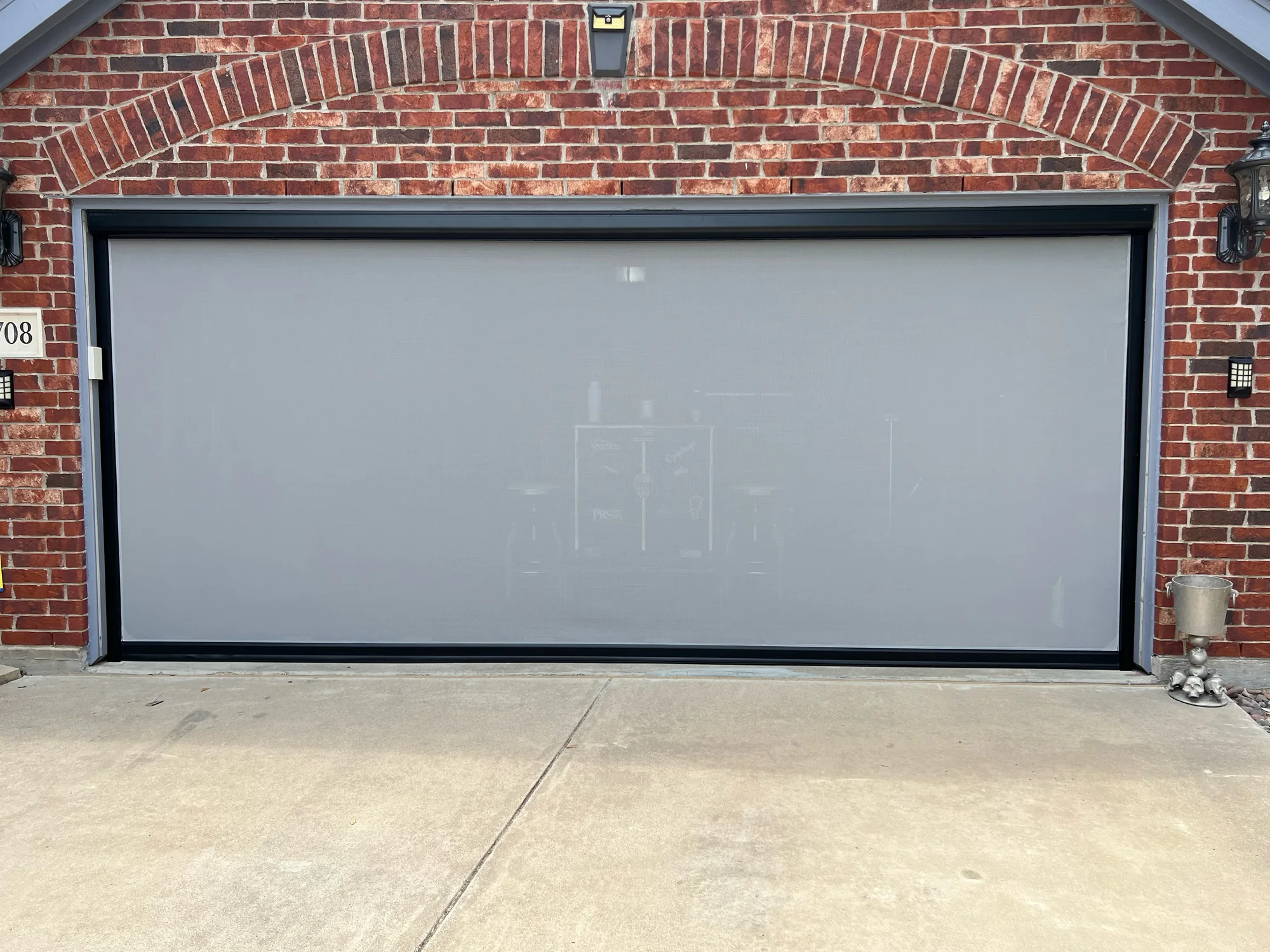
Exterior patio shades. Shades mounted outside, over patios and large glass, that stop sun before it reaches the window.
Motorization and lift
Motorized. The treatment moves by remote, app, schedule or voice instead of a cord or wand.
Rechargeable and hardwired motors. A rechargeable motor runs on a built-in battery that is charged periodically. A hardwired motor runs on low-voltage wiring, which is easiest to plan during construction.
Cordless. No pull cords. You raise and lower the treatment by hand from the bottom rail, so there are no cords within a child's reach.
On a quote
Written quote. The full project price in writing, window by window, including installation.
Limited lifetime warranty. The manufacturer covers factory defects for the life of the product.
Transferable warranty. A warranty that passes to the next owner if you sell the house.
Price match. A promise to match a competitor's written quote for the same product and job. Ours is called the Apples-to-Apples guarantee.
For terms not listed here, ask the company that wrote your quote to explain them.