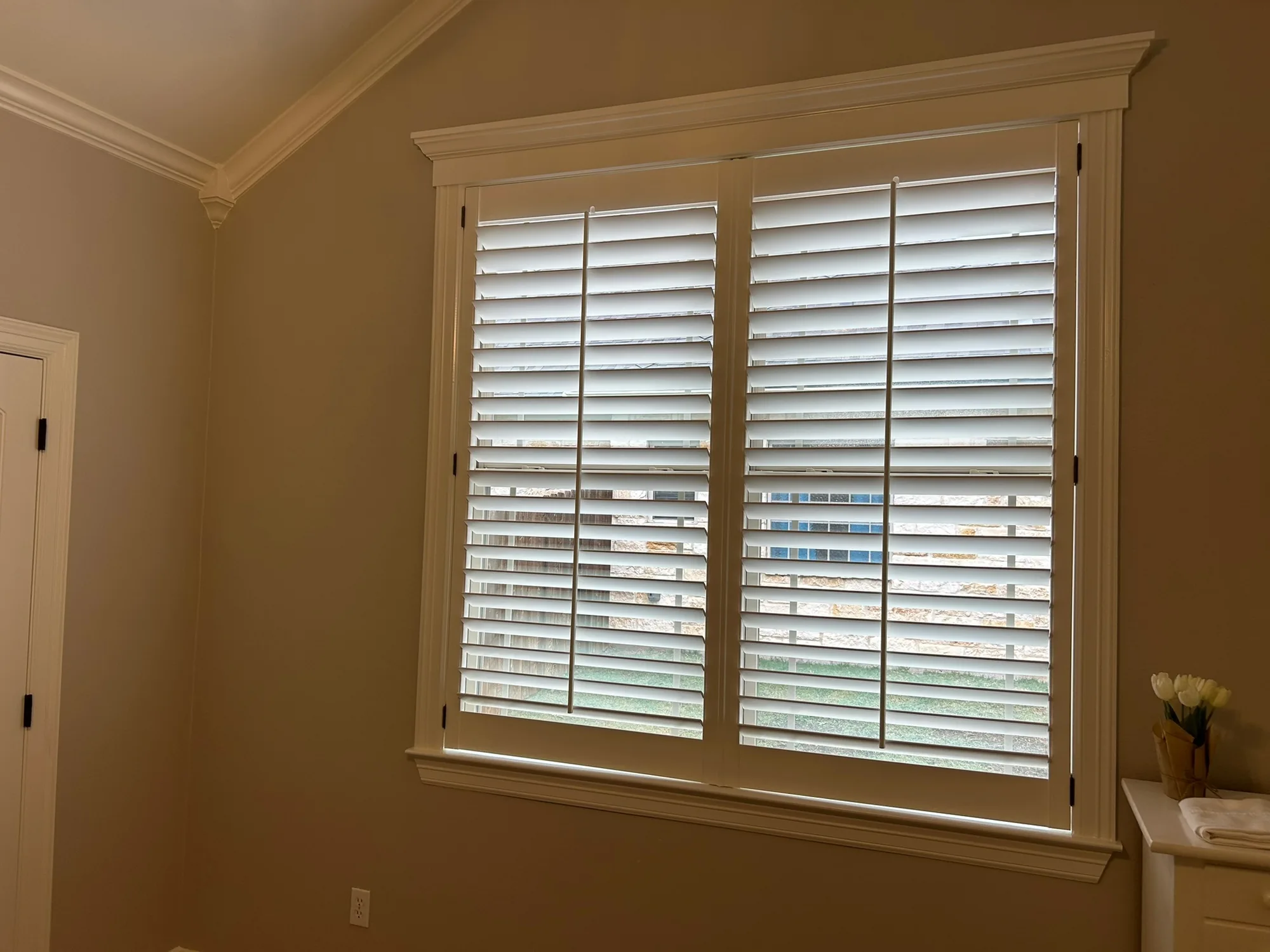

Short answer: close the louvers flat, dust both sides with a microfiber cloth or a vacuum brush every week or two, and a few times a year wipe each louver with a cloth that is barely damp with water and a drop of mild dish soap, then dry it right away. Composite shutters can take a little more water than wood. Neither should ever be soaked, sprayed directly or scrubbed with anything abrasive.
What you need
- Two or three microfiber cloths, or a clean cotton sock you can wear over your hand
- A vacuum with a soft brush attachment
- A small bowl of warm water with a few drops of mild dish soap
- A soft, dry towel for drying as you go
- A clean paintbrush or makeup brush for the corners where louvers meet the frame
Skip ammonia glass cleaners, bleach, scouring pads, magic erasers and anything sold as a polish. They can dull a painted finish, damage a stained one or leave a film that collects dust faster. If your shutters came with a care sheet from the manufacturer, it overrides any general advice, including ours.
Routine dusting, every week or two
Dust is the main job, and it is quick if you keep up with it. Work from the top of the window down so dust falls onto areas you have not cleaned yet.
- Close the louvers so they lie flat, pointing down.
- Wipe across the faces with a microfiber cloth, or run the vacuum brush over them in long strokes.
- Tilt the louvers the other way and repeat on the other side.
- Run the cloth along the top of the frame, the divider rail if your shutters have one, and the tilt rod.
- Finish with the window sill, which catches whatever fell.
A sock over your hand is the fastest tool for this. Pinch each louver between your thumb and fingers and slide across: one pass cleans the top and bottom at once. On a large living room with several windows, that turns a long chore into a few minutes per window.
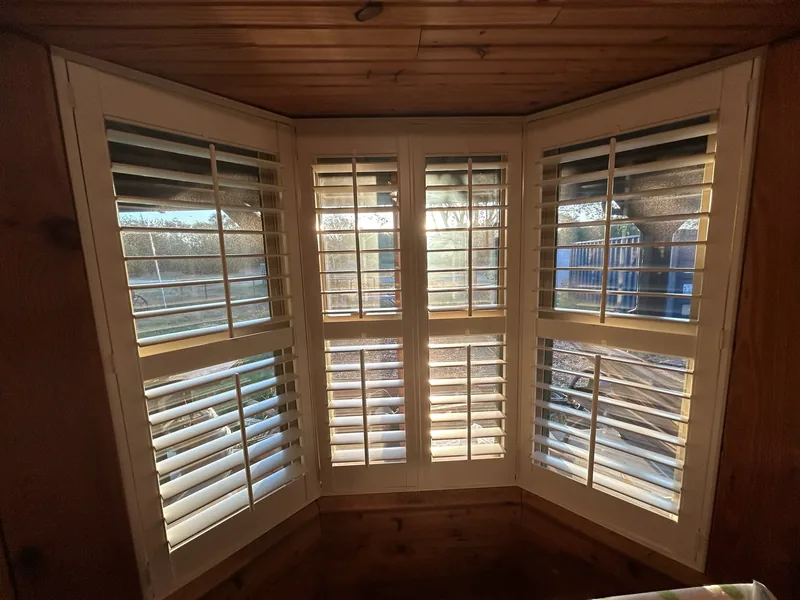
Deep cleaning, a few times a year
When dusting no longer brings the finish back, wash the louvers one at a time. Dip a cloth in the soapy water and wring it until it is only barely damp. Wipe the louver, then follow immediately with the dry towel. Rinse the cloth often so you are moving dirt off the shutter instead of spreading it around.
Do one panel completely before starting the next, and check the cloth: when it comes away clean, you are done. Leave the shutters open afterward so air can move across them while any last moisture dries.
Wood vs composite: what changes
Hardwood shutters
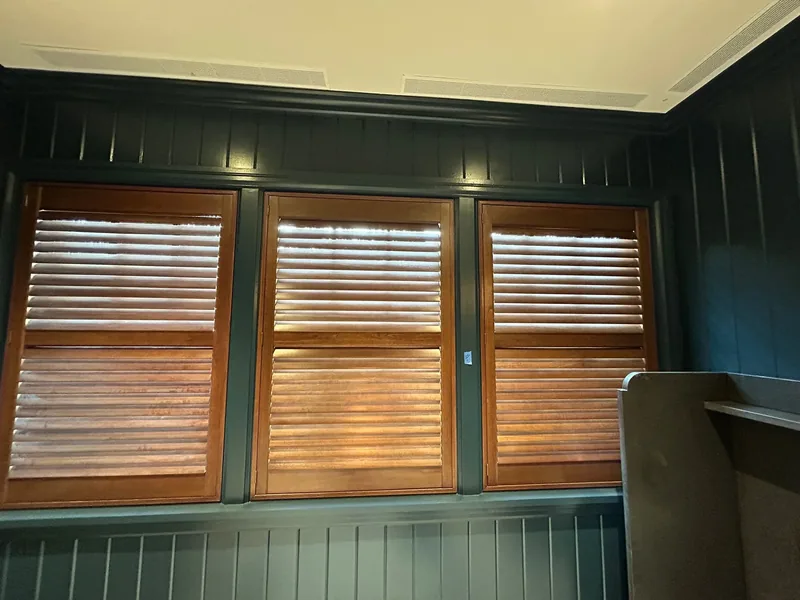
Wood is the material to be careful with. Water that sits on wood can work into the grain at edges and joints, where it raises the grain, swells the louver or lifts the finish. Keep the cloth barely damp and dry each louver as you go. On stained shutters, rub with the grain, and test any cleaner on the back of a louver first. Never take wood panels down to wash them in a tub or with a hose.
Composite shutters
Composite is built for humidity, which is why we recommend it for bathrooms and kitchens, and it tolerates more water during cleaning. You can use a slightly wetter cloth and a little more soap on stubborn spots. Still wipe it dry: standing water leaves spots and can collect in the hardware.
Vinyl and poly shutters
Many builder-grade shutters are vinyl or a solid poly material. Treat them like composite: mild soap and water are fine, and wipe them dry. If white vinyl has yellowed, that is usually the material itself aging in sun, and cleaning will brighten the surface but will not reverse it.
Not sure which you have? Check your paperwork, or call your local team. Our real wood vs faux wood shutters guide covers how the two materials differ in daily life.
Kitchen shutters and grease
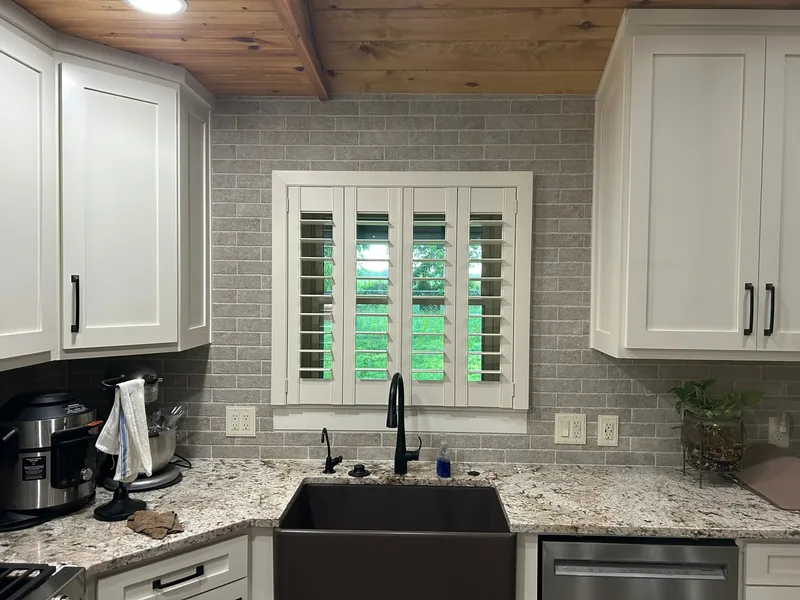
Shutters near a stove pick up a thin film of cooking grease that dust sticks to. Dry dusting smears it. Use warm water with dish soap, which is made to cut grease, and wipe with a barely damp cloth, then dry. A second pass with a clean damp cloth removes any soap left behind. A monthly wipe keeps the film from building up to the point where it needs real effort.
Bathroom shutters
In a bathroom, moisture is the main problem, along with soap and hairspray residue. Run the exhaust fan during and after showers, and open the louvers afterward so the shutter dries along with the room. Wipe the louvers nearest the shower more often than the rest.
Small dark spots that wipe away may be surface mildew. Clean them early: wipe with soapy water, then with a clean damp cloth, and dry the area well. On composite or vinyl, a diluted white vinegar solution also works. Spots that come back quickly mean the room needs more ventilation.
If you are choosing shutters for a bathroom now, our guide to shutters for bathrooms covers materials and placement.
How often to clean plantation shutters
- Dust: every week or two in most rooms.
- Kitchens: a soapy wipe once a month.
- Deep clean: two to four times a year everywhere else.
- More often during spring pollen season, during nearby construction, or in a home on a dirt or gravel road.
Shutters on west-facing windows show dust sooner in the afternoon, when low sun rakes across the louvers and lights up every speck.
The back of the panels, the hinges and the glass
Hinged panels swing open, so a few times a year open them and dust the back of the louvers, the inside edge of the frame and the window glass behind. Wipe the hinges with a dry cloth while you are there. If a hinge squeaks or a panel has started to sag or rub, leave the oils on the shelf and call us; the fix is usually an adjustment.
Mistakes that damage shutters
- Spraying cleaner directly onto the shutter. It runs into joints and hinges. Spray the cloth.
- Soaking wood. Water should never stand on or drip from a wood louver.
- Pulling louvers one at a time to tilt them. Use the tilt rod, or on hidden-tilt shutters, tilt one louver gently and let the linkage move the rest.
- Using a feather duster as the only tool. It moves dust into the air and back onto the louvers.
- Forcing a stiff louver. If louvers will not stay where you put them or are hard to move, the louver tension probably needs adjusting. On shutters we installed, your local team handles it under the four-year service guarantee.
When cleaning is not the problem
Louvers that droop or will not hold their angle, panels that rub the frame or a hinge that has loosened are not cleaning problems. On shutters we installed, the four-year service guarantee covers service visits at no cost, so call your local team before forcing anything.
If you are planning shutters for more rooms, The consultation is free, and the team that measures is the team that installs. You get a written quote with installation included, anything that does not fit the approved measurements is remade at no cost, and every install carries the manufacturer's limited lifetime warranty plus our four-year service guarantee. Find your local team on the service areas page.