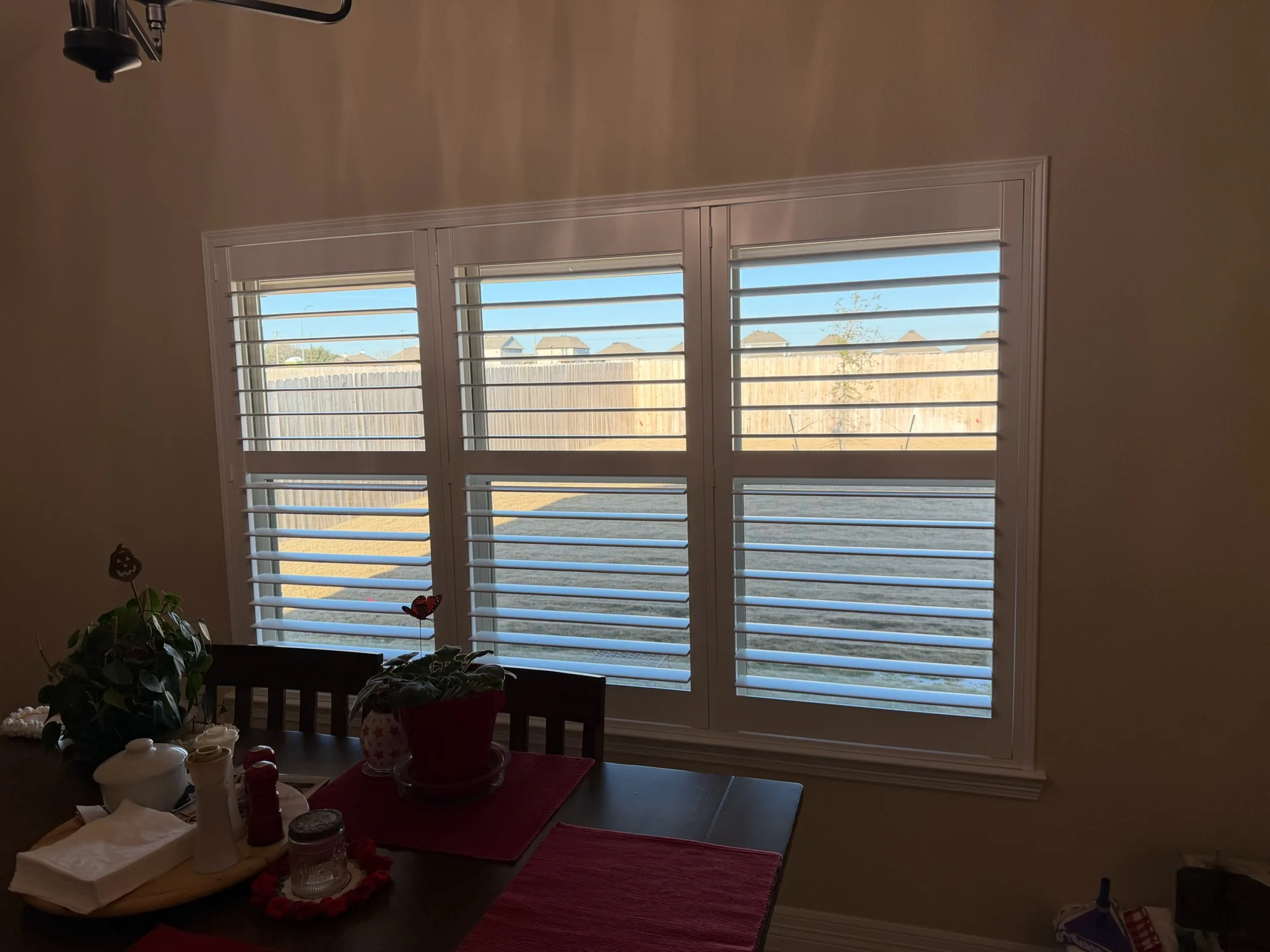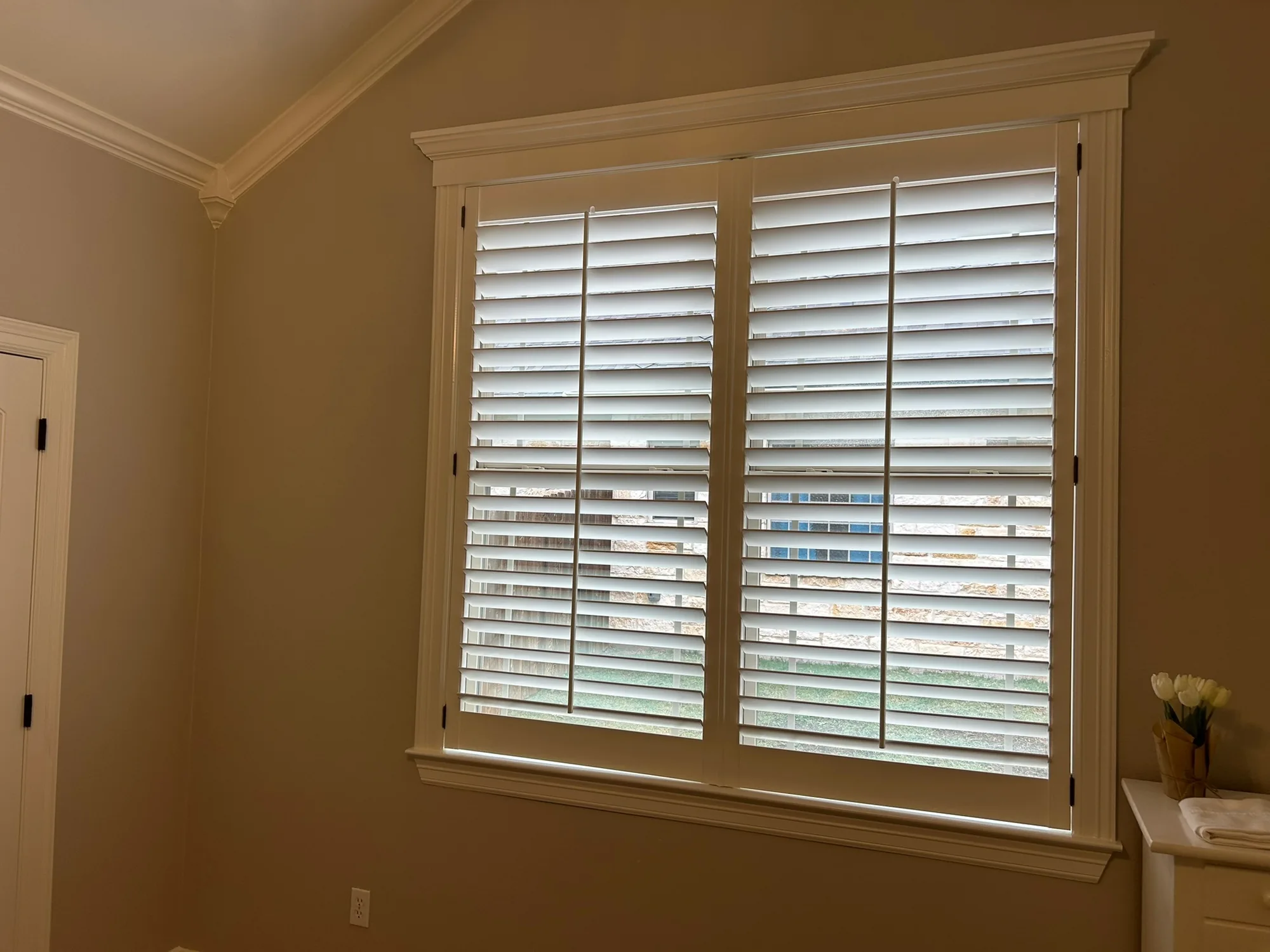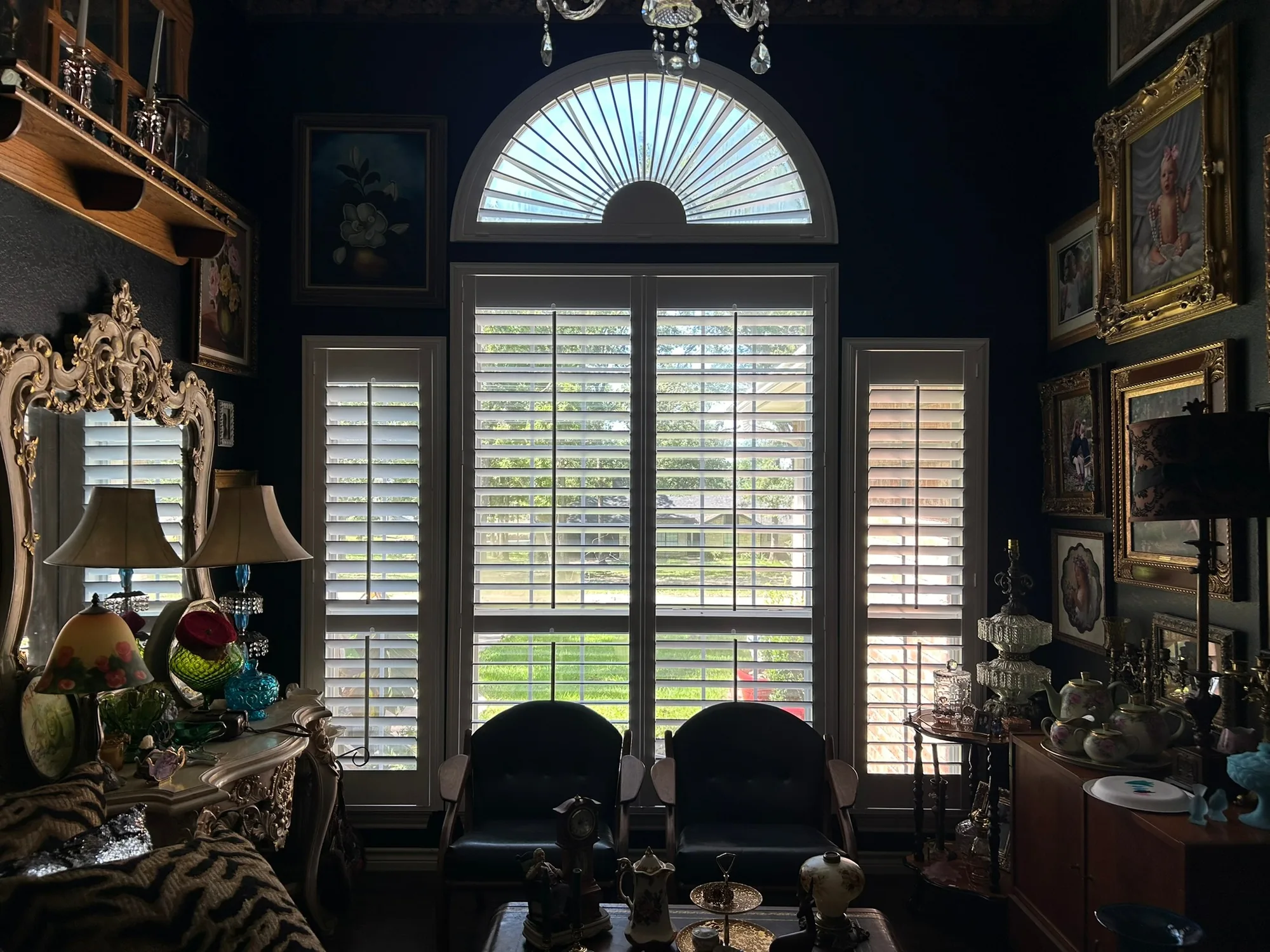
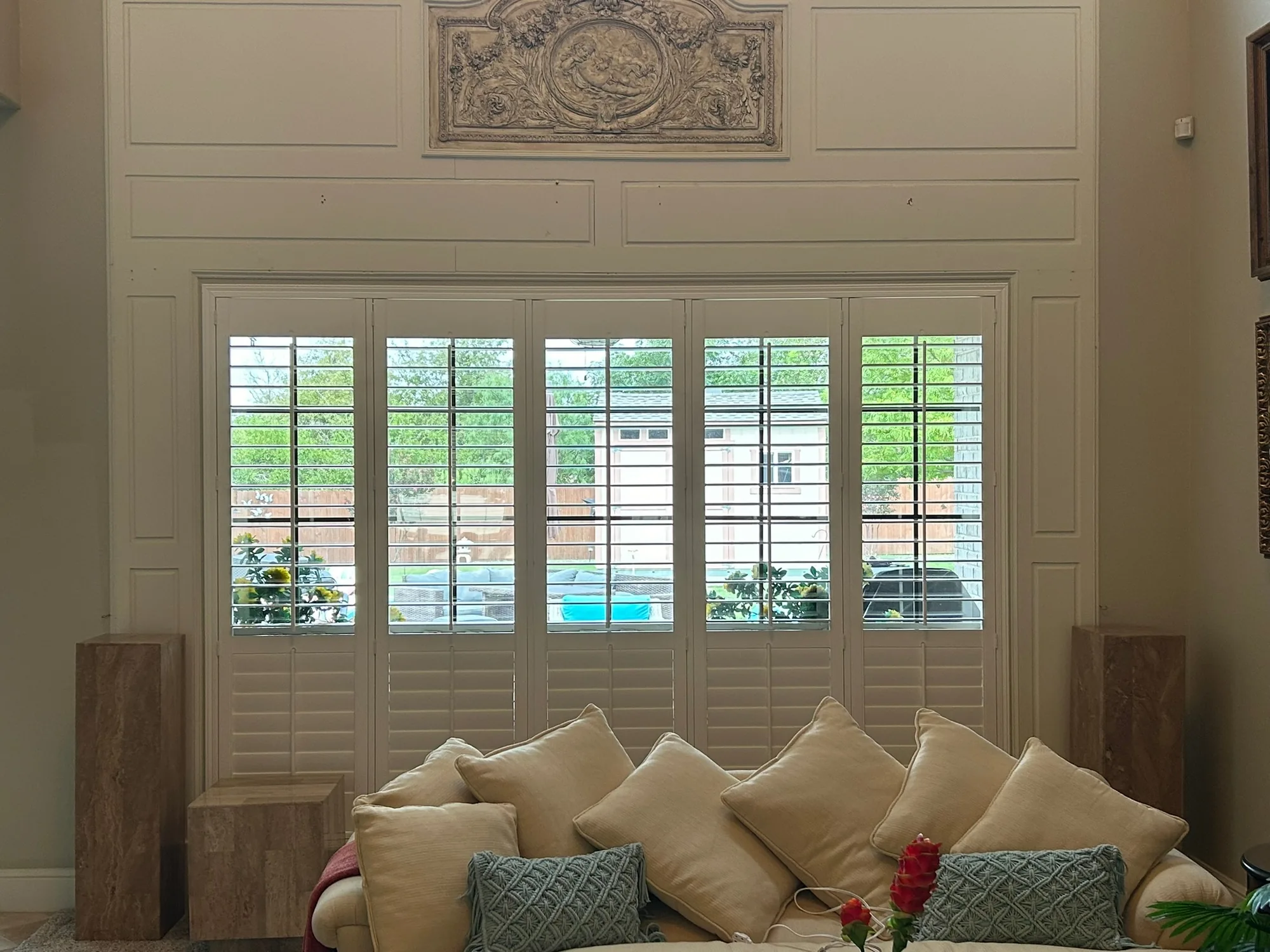
Short answer: the three common plantation shutter louver sizes are 2.5, 3.5 and 4.5 inches. Larger louvers mean fewer lines across the window and a wider view when they are open, and they suit large windows and most modern rooms. Smaller louvers suit small windows, shallow window frames and traditional rooms. Many homes use one size throughout for a consistent look, unless window depth forces a smaller louver somewhere.
What louver size measures
Louver size is the width of each louver across its face, edge to edge. You will also see in-between sizes such as 3 inch from some shutter makers. A 4.5 inch louver is nearly twice as wide as a 2.5 inch one, so the same window needs far fewer of them. That changes three things at once: how much you see through the shutter when it is open, how busy the window looks, and how much depth the shutter needs to tilt.
The three sizes compared
2.5 inch louvers
The traditional look. More louvers per panel means more horizontal lines, which reads as classic and detailed. They need the least depth to rotate, so they fit shallow window frames and windows with cranks or handles close to the glass. On a small window they keep the proportions right, where a wide louver can look oversized. The tradeoff is more slats to dust and a narrower view between them when open.
3.5 inch louvers
The middle option, and the safe choice for a house with a mix of window sizes. It looks current without reading as oversized on a bedroom or bathroom window, and it fits more window depths than 4.5 inch louvers.
4.5 inch louvers
A clean, modern look for living rooms and large windows. Fewer louvers mean fewer lines across the glass and the widest view when they are open. Because each louver is wider, it needs more depth to tilt, and it projects further into the room or toward the glass when open, so it needs the most clearance.
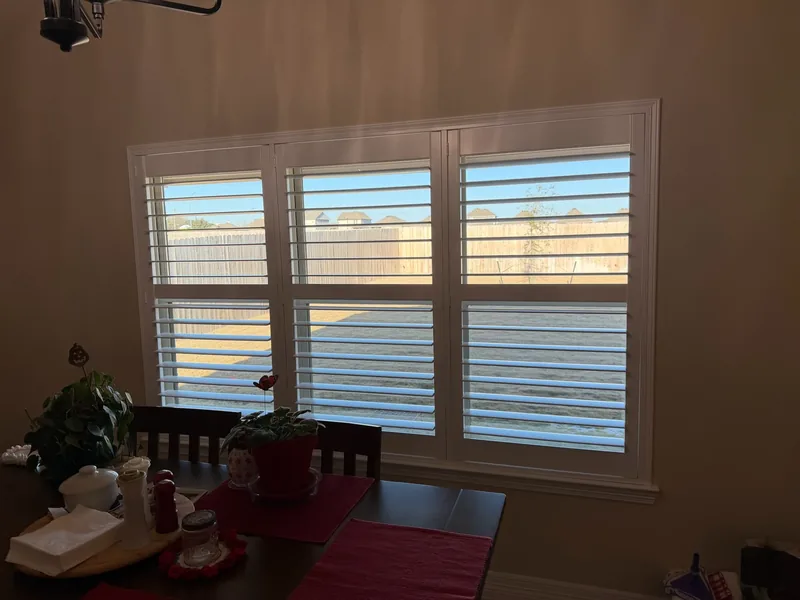
Window depth decides more than taste
Every louver has to rotate inside the opening without hitting the glass, a window crank, a lock or a handle. On an inside mount, the shutter sits within the window frame, so the frame depth limits which louver sizes can turn freely. A wide louver in a shallow opening can hit the glass, a crank or a handle as it tilts open. Each shutter maker publishes the minimum depth for each louver size, and that chart, measured against your windows, settles the question.
This is why louver size is confirmed at the measure, window by window. If one window cannot take the size you want, shutter makers handle it with a deeper frame that sets the shutter forward, or with a smaller louver on that window only. Our guide on measuring for plantation shutters shows what we check.
Light, view and privacy
Closed, every louver size blocks light about the same way, because the louvers overlap. The difference shows when they are open. Wider louvers leave wider gaps, so more light and more of the view come through. Smaller louvers break the view into narrower strips, which some people prefer in bedrooms and street-facing rooms.
For daytime privacy, tilt the louvers so the room-side edge points up. Someone outside at ground level sees mostly ceiling, while daylight still bounces in. At night, close them fully.
From the street, larger louvers read as bolder, simpler lines and smaller louvers as a finer texture, which is one more reason to keep the front of the house consistent.
Hidden tilt or a front tilt rod
The tilt rod is the vertical bar that moves all the louvers in a panel together. A traditional front tilt rod sits on the face of the louvers. It is easy to grab and it is part of the classic shutter look. A hidden tilt system moves the louvers from the back or the side, so the front of the shutter is uninterrupted. With wide louvers, hidden tilt makes the view through an open shutter even cleaner.
Both work well. Front rods suit traditional rooms. Hidden tilt suits modern rooms and anyone who wants the window to read as glass and light. Hidden tilt is available if you want the cleanest face.
Divider rails
A divider rail is a horizontal bar across a tall panel. It splits the louvers into an upper and a lower section that tilt separately: lower louvers closed for privacy, upper ones open for light. Tall panels often need one for strength as well. Where the window has its own horizontal rail, the divider rail can be placed to line up with it, so the shutter and the window read as one design from inside and from the street.
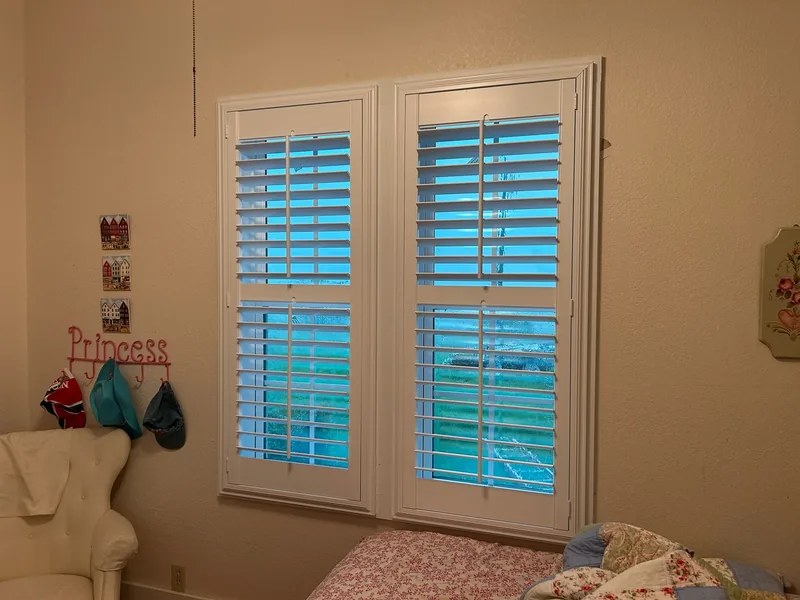
Matching louvers across the house
From the street, shutters are part of the house's face. Mixed louver sizes on the front windows show from the curb, so keep one size on every street-facing window even when a back bedroom could take something different. Inside, keep one size per room for the same reason.
Special shapes follow the same louver as the rest of the room where possible. Arched and angled tops can be built with a frame that follows the shape of the opening; see arched and specialty windows.
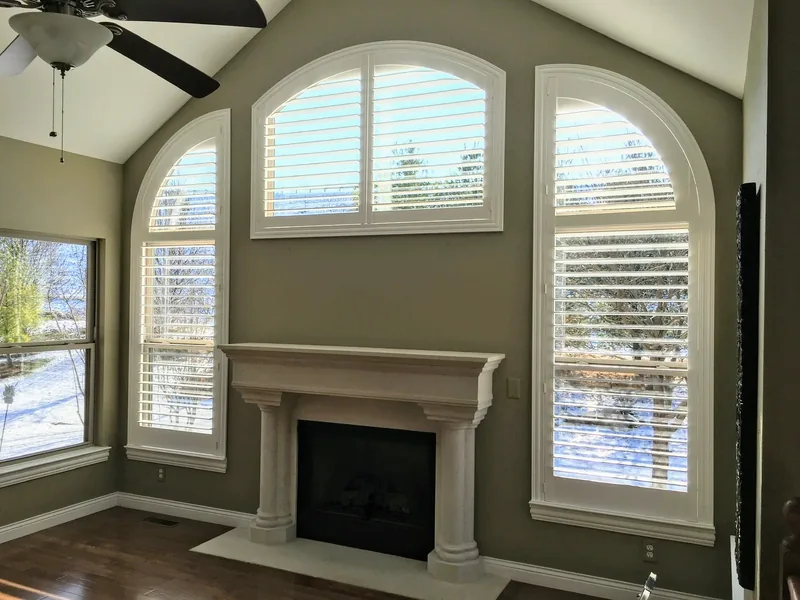
How to choose in one pass
- Large windows, modern rooms, big views: 4.5 inch, if the depth allows.
- A house with mixed window sizes: 3.5 inch throughout.
- Small windows, shallow frames, traditional rooms: 2.5 inch.
- Any window with a crank, lock or handle near the glass: confirm clearance at the measure.
- Want the cleanest view: pair larger louvers with hidden tilt.
The fastest way to decide is to hold real louver samples up to your own windows, in your own light. That is what the consultation is for. The consultation is free, and the team that measures is the team that installs. You get a written quote with installation included, anything that does not fit the approved measurements is remade at no cost, and every install carries the manufacturer's limited lifetime warranty plus our four-year service guarantee. Find your local team on the service areas page.