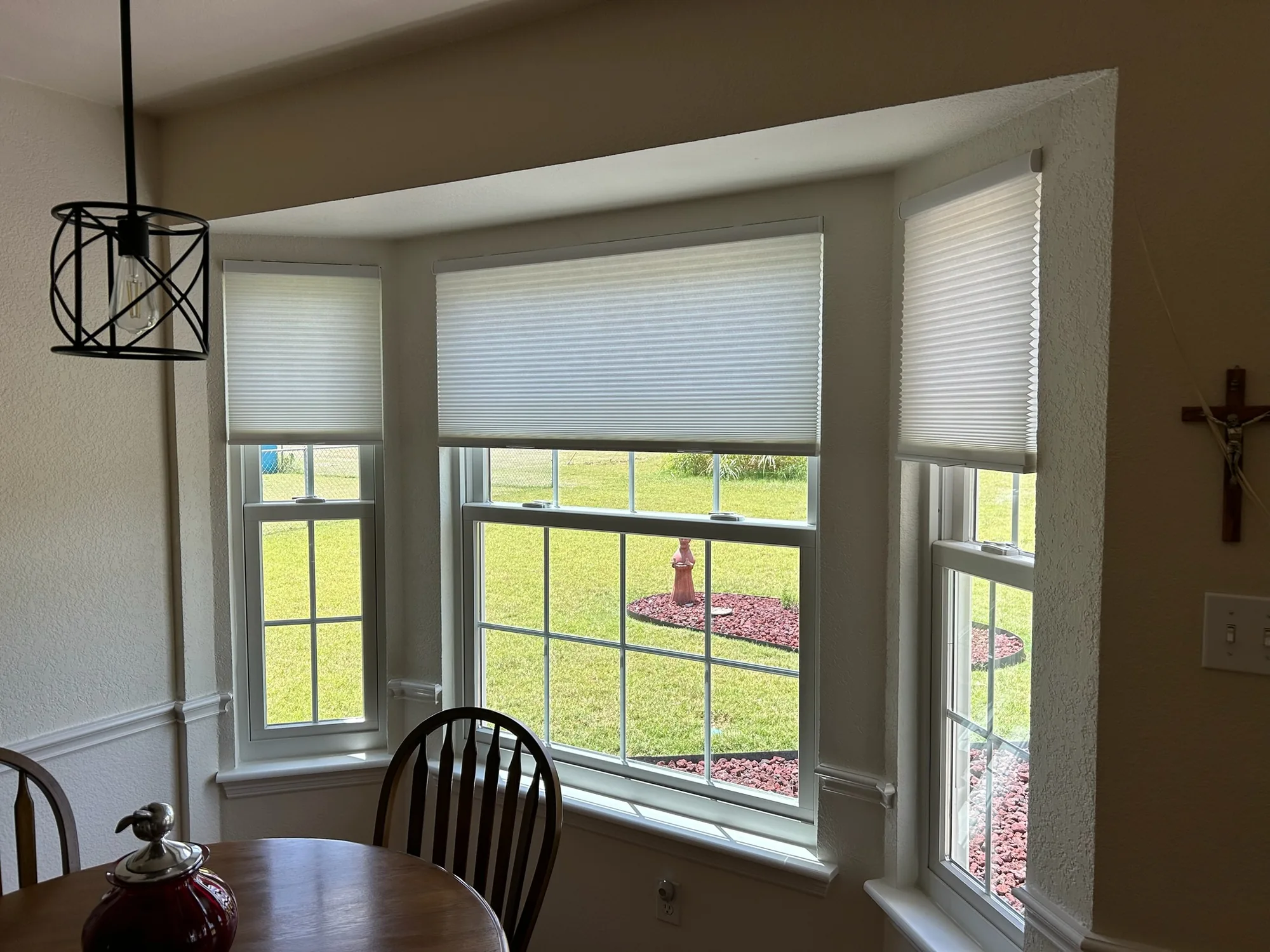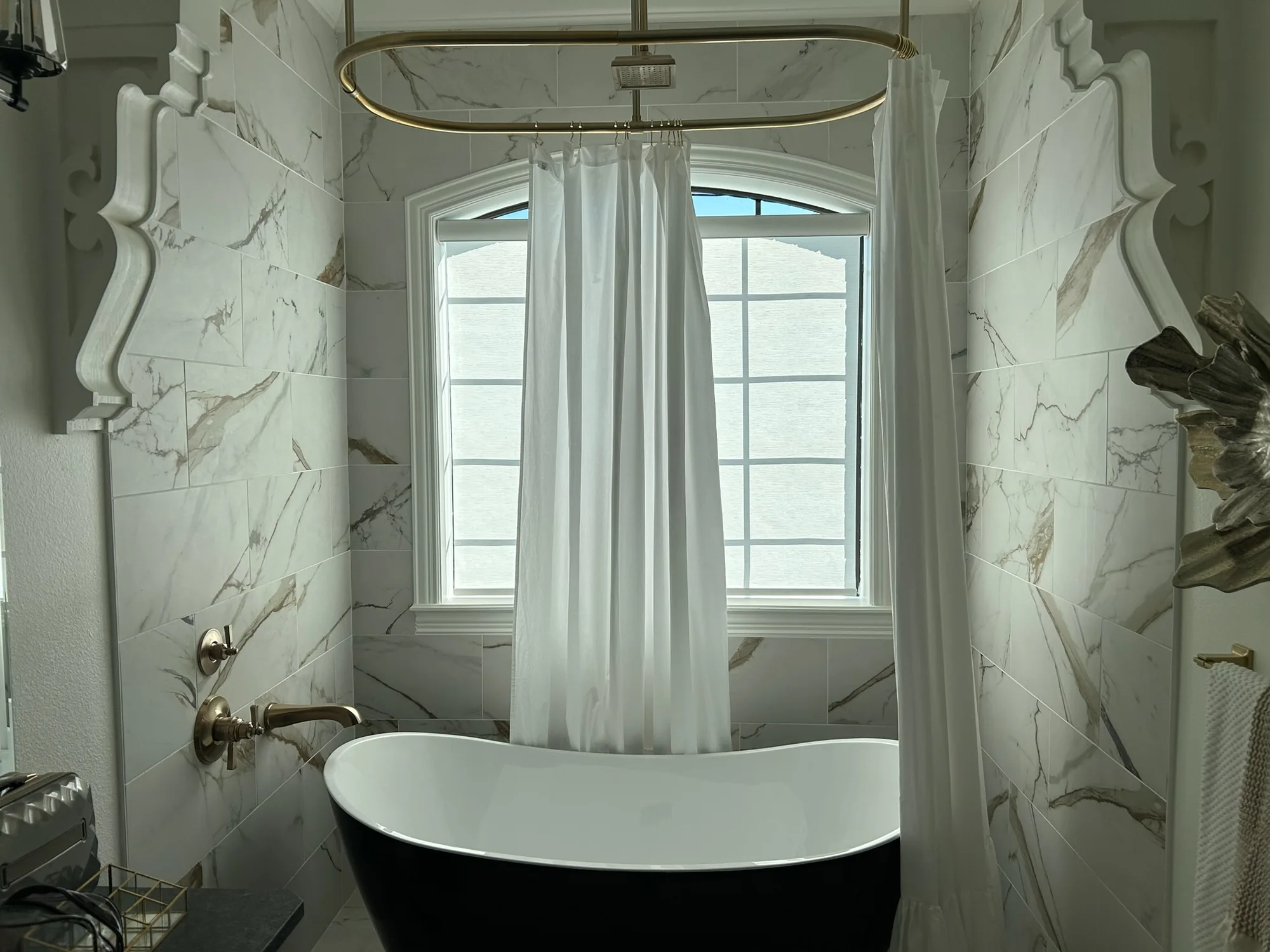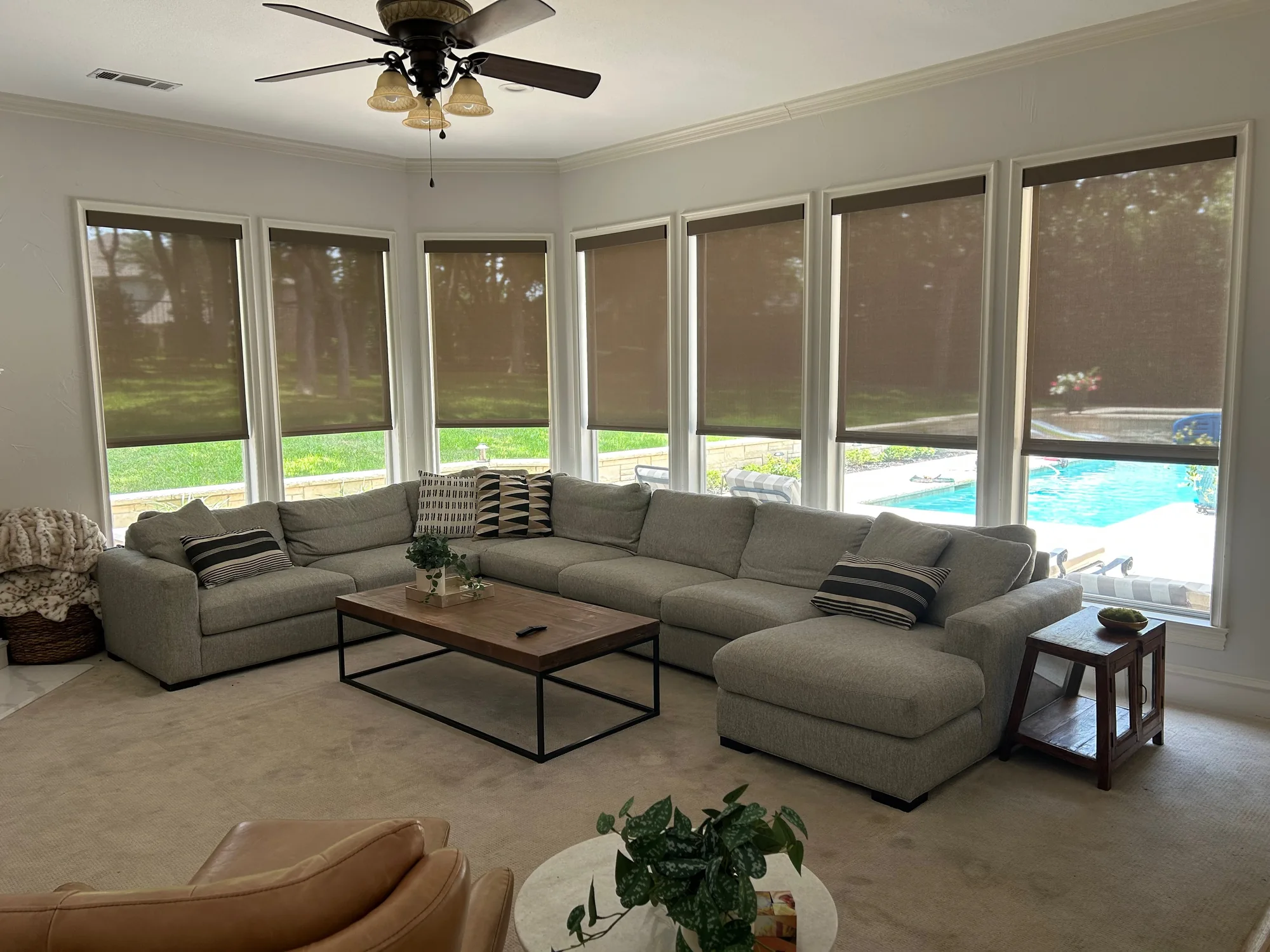
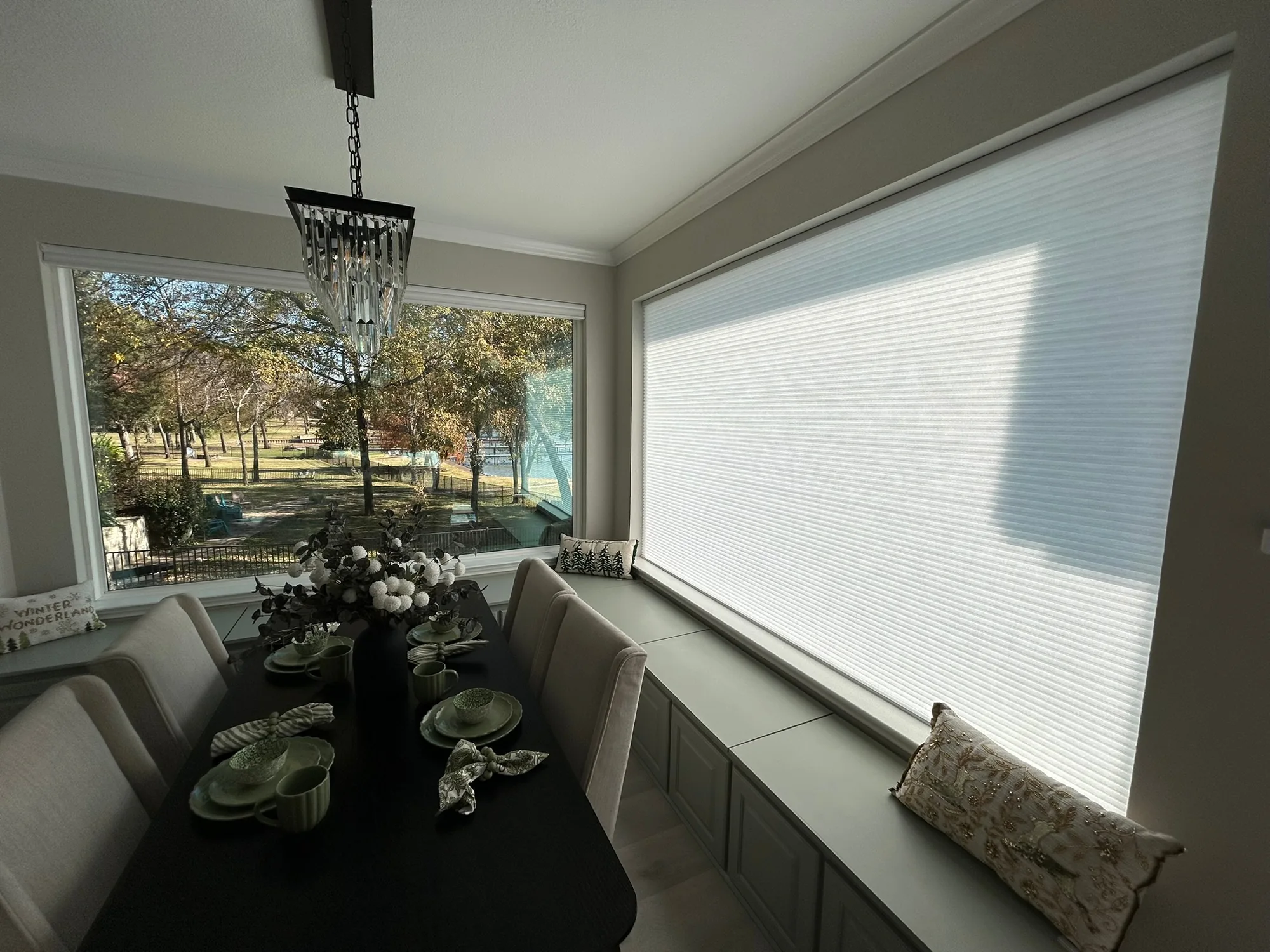
Short answer: double cell shades insulate better than single cell because they trap two layers of air instead of one, and they cost more. The second cell earns its cost on large windows, west and south glass, older single-pane windows and bedrooms where you want the most darkness and quiet. On double-pane windows in a newer home, or on windows that get little direct sun, single cell usually does the job.
How cellular shades work
A cellular shade, also called a honeycomb shade, is folded fabric that forms hollow cells when you look at it from the side. Each cell holds a pocket of air between the window and the room. Still air slows heat moving through, so the shade slows summer heat coming in and winter warmth going out. Our honeycomb vs cellular explainer covers the naming.
Single cell vs double cell: the difference
A single cell shade has one row of cells. It is lighter, a little slimmer when raised, and costs less.
A double cell shade has two rows of cells, one behind the other, so there are two air pockets between the glass and the room. It insulates more, blocks a little more sound, and diffuses light more evenly. It stacks slightly deeper when raised and costs more.
In the same color and pleat size, the two look very similar from the room. The difference is in how they perform. Some makers also offer triple-cell or cell-in-cell constructions for even more insulation.
Where the second cell earns its cost
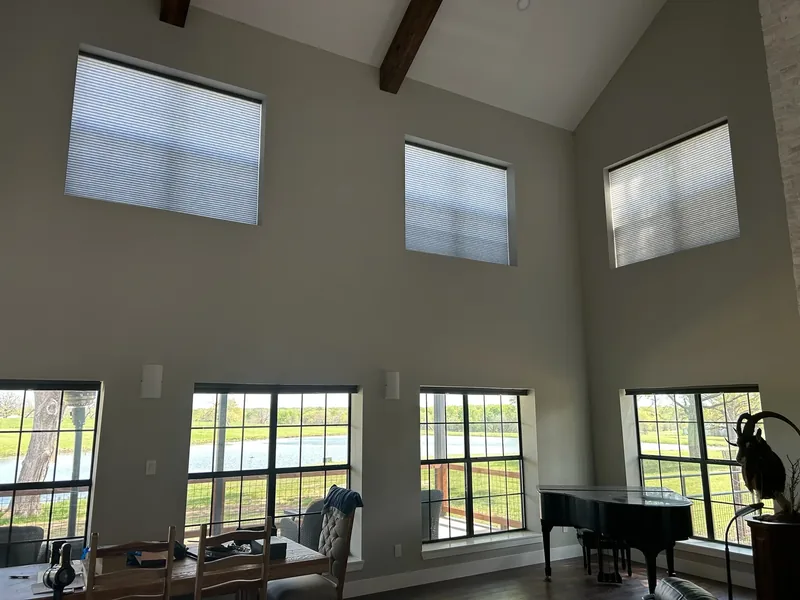
- West and south windows. The glass that takes the hardest afternoon sun in a Texas summer gains the most from the extra layer.
- Large windows and walls of glass. The bigger the glass, the more heat moves through it, so better insulation adds up.
- Older single-pane windows. The window does little insulating on its own, so the shade does more of the work.
- Bedrooms and nurseries. With a blackout fabric, a double cell shade makes a dark room and softens a little more sound than single cell.
- Rooms that are always too hot or too cold. A bonus room over the garage, or a room at the end of a long duct run.
Where single cell is enough
- Double-pane or low-E windows in a newer build, especially on north and east walls
- Small windows, where the extra cost buys little measurable difference
- Rooms where you mostly want soft light and privacy, like a kitchen or a hall
- Windows with shallow frames, where the slimmer stack helps an inside mount fit
Many homes end up with both: double cell on the big west-facing glass and the bedrooms, single cell everywhere else. Choosing the same color keeps the windows consistent; ask to see both constructions side by side.
Cell size
Cells also come in different widths, measured as the height of each pleat on the face of the shade. Smaller cells look tailored on small and medium windows and stack tighter when raised. Larger cells look in scale on tall windows and big glass. Cell size is mainly a look and stack decision. Larger cells hold slightly more air, but a second cell or an insulating fabric changes performance more.
Light filtering, room darkening and blackout
Cell count and opacity are separate choices. Single and double cell shades both come in fabrics from sheer through light filtering to blackout, and how much light a shade blocks depends far more on that fabric than on the number of cells. A blackout cellular shade has a lining inside the cells that stops light through the fabric itself.
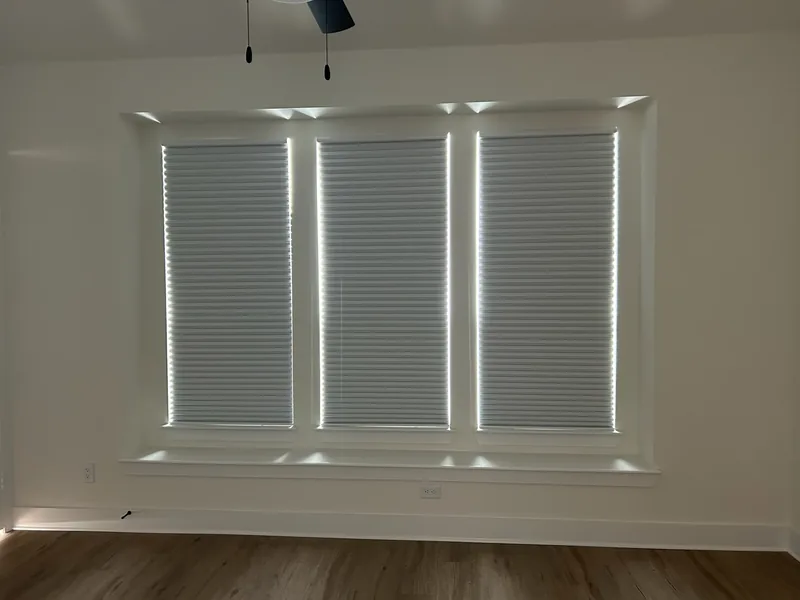
Even a blackout fabric can let light in around the edges. On an inside mount, there is a small gap between the shade and the window frame on each side, and in a dark room that gap shows as a thin line of light. An outside mount that overlaps the frame closes most of it. Our room darkening vs blackout guide goes deeper.
Top-down bottom-up and motorization
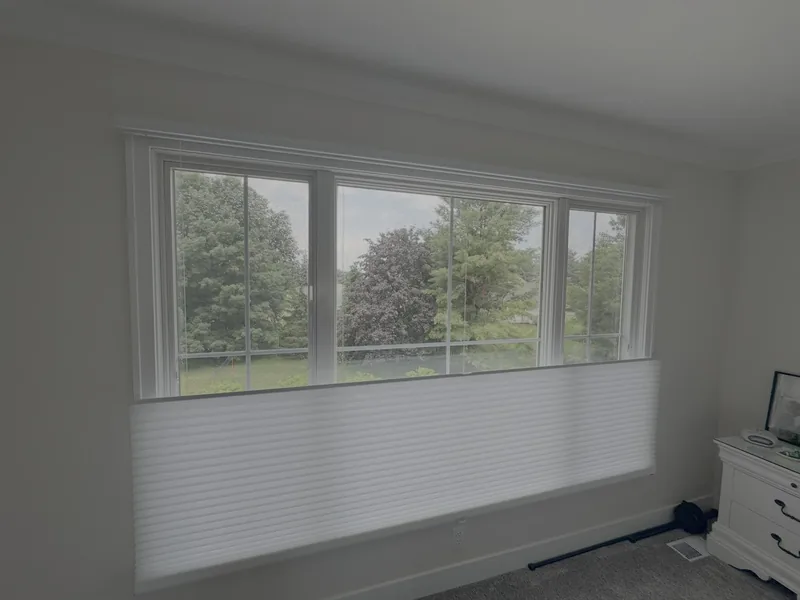
Top-down bottom-up operation is available, which lets you lower the shade from the top for daylight while the bottom stays closed for privacy. Cordless is standard, and honeycomb shades can be motorized. See top-down bottom-up shades explained.
Noise
Air pockets soften sound as well as heat, and a double cell shade softens a little more than single cell. It will not soundproof a room, but in a bedroom on a busy street or under a flight path the difference is noticeable. Pair it with full drapery for the most effect; see window treatments for noise reduction.
Cellular vs other shades
If you are still deciding whether cellular is the right shade at all, compare it with roller shades in cellular vs roller shades. Cellular insulates better. Roller shades have a cleaner profile and offer see-through solar fabrics.
Deciding window by window
The right answer often differs from one side of the house to the other. At the consultation we look at which way each window faces, the window type and how you use the room, and spec single or double cell window by window. The consultation is free, and the team that measures is the team that installs. You get a written quote with installation included, anything that does not fit the approved measurements is remade at no cost, and every install carries the manufacturer's limited lifetime warranty plus our four-year service guarantee. Find your local team on the service areas page.