Short answer: black window frames look best with treatments that either match them or step out of their way. Matching means charcoal or black shades and hardware that blend with the frames. Stepping out of the way means light shades, white shutters or drapery mounted so the black frames show whenever the treatment is open. Most black frames are a feature you want to show, so cover them only when you need to.
Start with the frames, then the light
Black windows are a design feature, often the most striking line in the room. Two questions decide the treatment: should the treatment blend in or contrast, and what does the window need to do? A west-facing wall of black-framed glass needs sun control in a Texas summer. A bedroom needs darkness. A front window needs privacy from the street. Pick the product for the job, then the color and mount for the frames.
Option one: match the frames
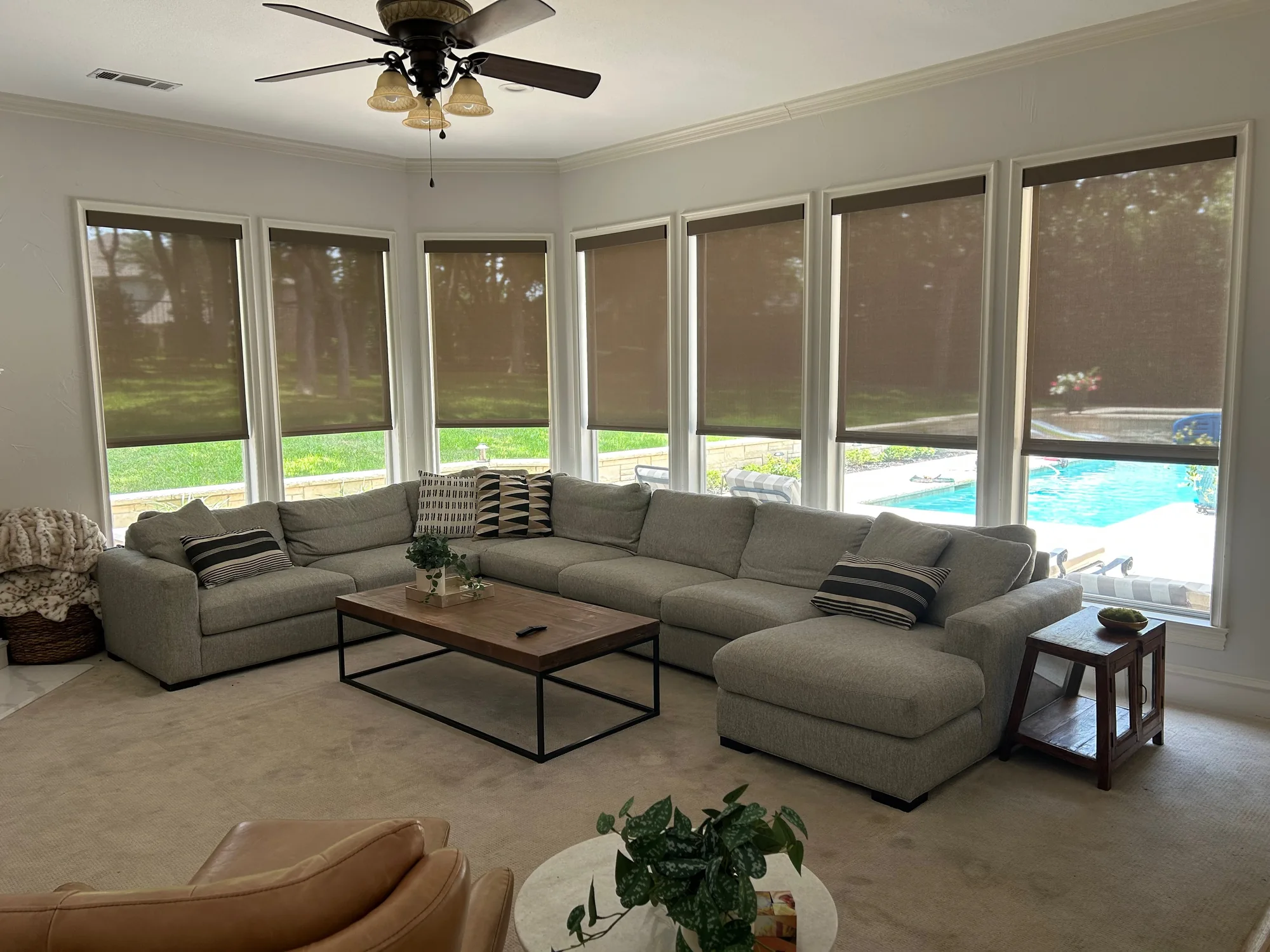
Charcoal and black shades blend with black frames. Raised, a dark roller shade reads as part of the window header. Lowered, a dark fabric keeps the window reading as one dark shape.
Dark fabrics have a practical advantage too. From inside, a dark solar screen is easier to see through than a light one, because it bounces less light back toward your eyes. On big windows with a view, that matters. The tradeoff is heat: a dark fabric absorbs more sun and passes some of it into the room, so on hot west glass a lighter fabric may be the better choice. We cover how fabric color affects the view in what color blinds should I get.
Check the street side too. Many shades show a white or light back to the street, which keeps the house uniform from outside whatever color faces the room.
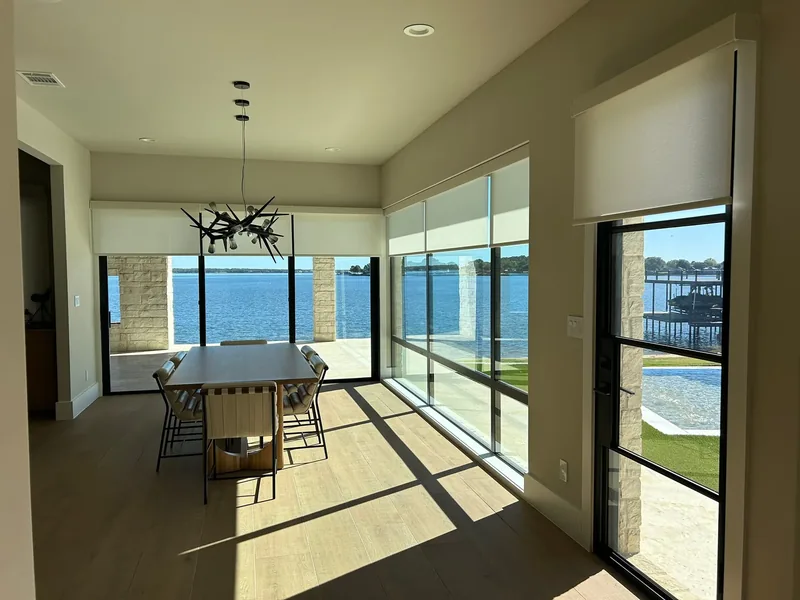
Option two: contrast the frames
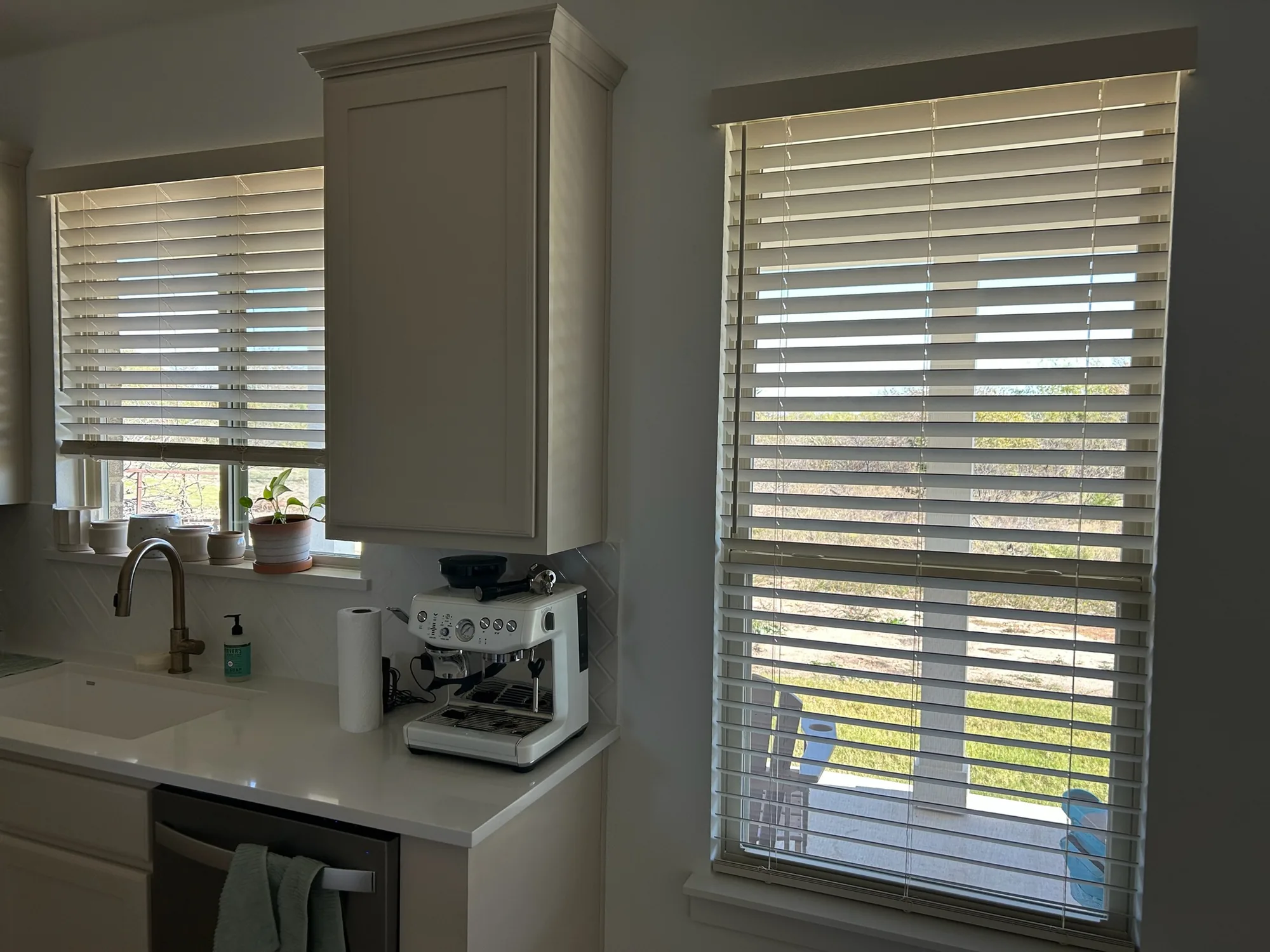
White and light treatments against black frames give the crisp, high-contrast look common in modern farmhouse homes. White plantation shutters are the classic version. Light linen or cream shades are the softer one.
Closed, shutter panels and lowered shades cover the black frame, so contrast shows most when the treatment is open: shutter louvers tilted or panels swung back, shades raised. It also works well when nearby windows or doors stay uncovered, so the black reads clearly in the room.
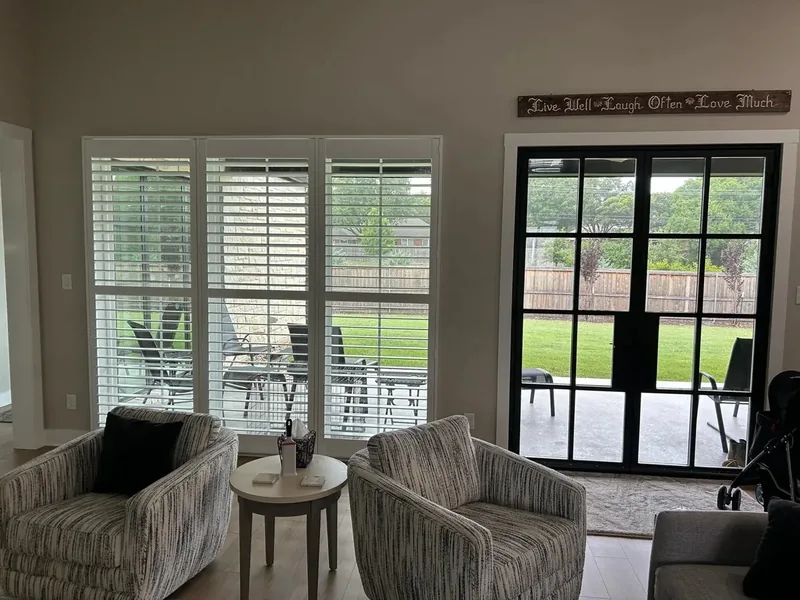
Mounting so the frames stay visible
Any lowered shade covers the black frame and its grids. Mount position decides what you see around it and what you see when it is raised.
An inside mount fits the treatment within the window opening. Lowered, it leaves the casing and jambs around the opening in view, which keeps a black outline only if that trim is painted black. Raised, the roll sits inside the top of the opening and covers a strip of the frame.
An outside mount sits on the wall above and overlaps the opening. Mounted high and wide enough, a raised shade clears the glass and the frame completely, so in the daytime the window looks untreated. Lowered, it covers the frame.
To show the frames as much as possible, raise the shade fully, and consider mounting it high above the opening so the raised roll clears the glass. Frame depth decides what is possible, which is one reason we measure every window on site. More in inside mount vs outside mount.
Grids and divided lites
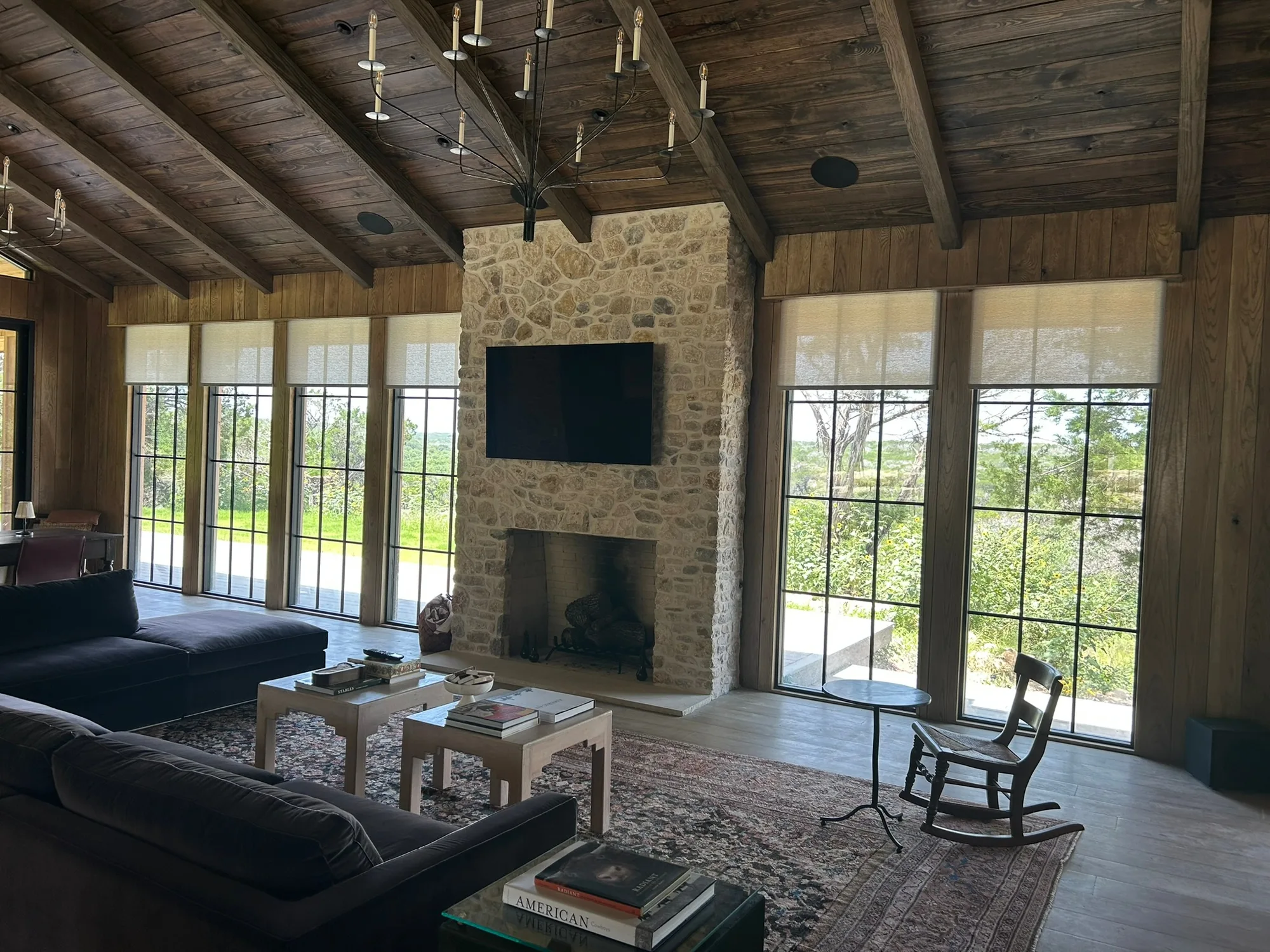
Many black windows have grids that divide the glass into panes. Horizontal blind slats add another set of lines across those grids, and the two can look busy together. Roller shades and flat roman shades let the grid pattern stay the main pattern. Shutters work well too when their divider rails line up with the window's own horizontal bars.
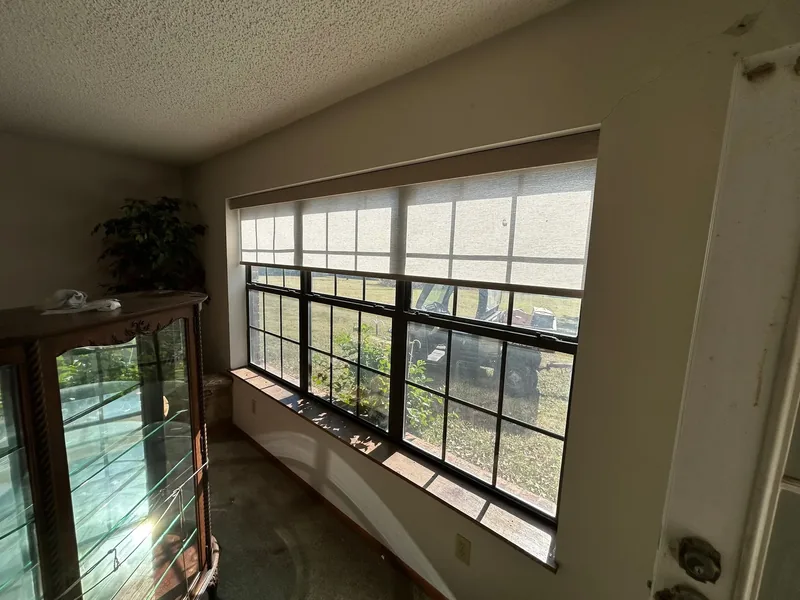
Which treatments work best
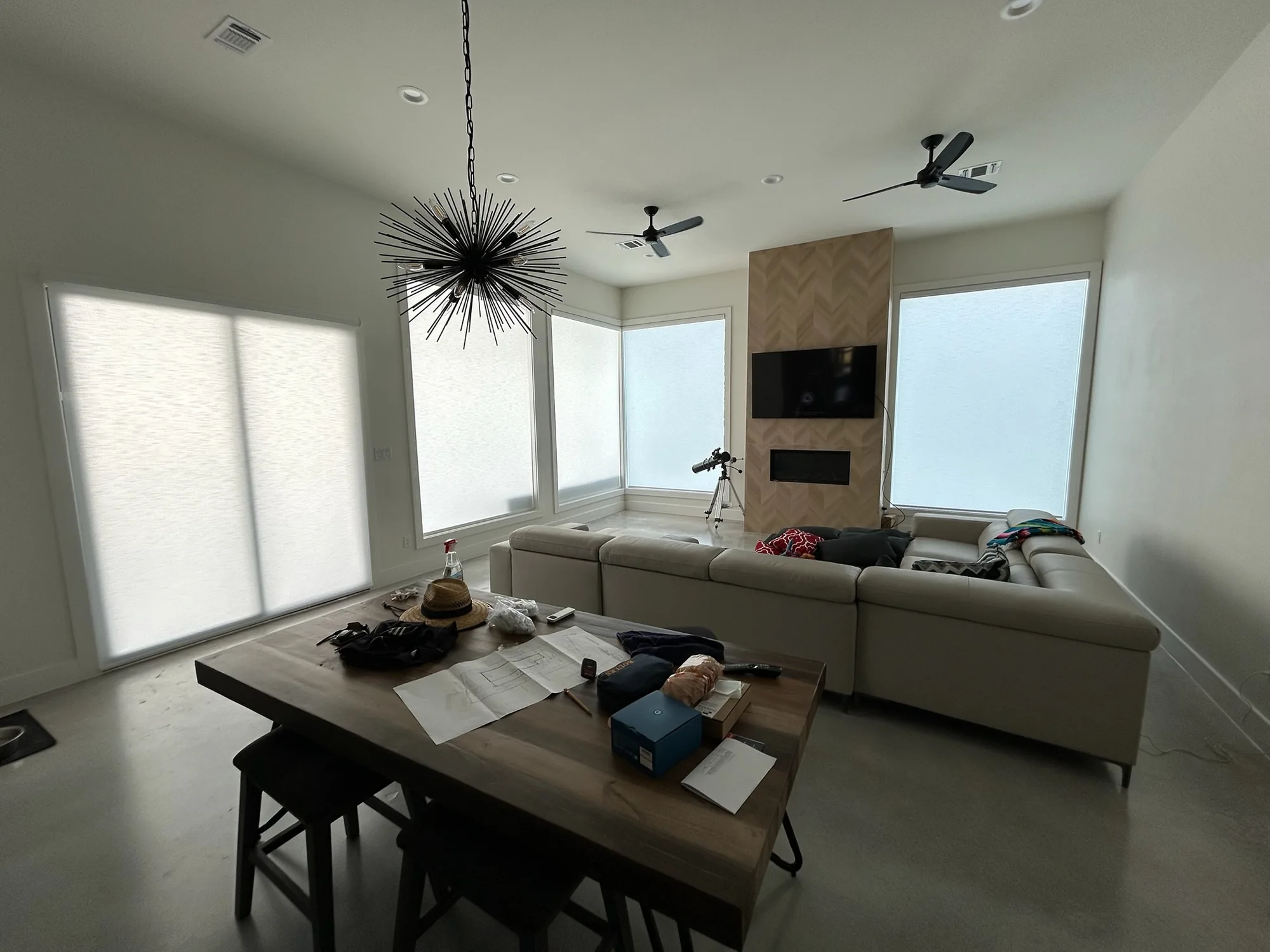
- Roller and solar shades: the cleanest option, in charcoal to blend or white to contrast. The best choice for walls of black-framed glass.
- Plantation shutters: white shutters against black frames are a high-contrast classic. Closed, the panels cover the frame; swing them open or tilt the louvers to show it. Ask about hidden tilt for a cleaner face.
- Roman shades: soft fabric and texture to warm up a room full of hard black lines.
- Cellular shades: insulation for sunny or older windows. Ask which colors are available; the street side is often white.
- Woven wood shades: natural texture that softens black frames and warms a modern room; see woven wood pros and cons.
- Drapery: mounted wide and high, panels hang beside the black windows and frame them. Black rods and hardware tie the drapery to the frames.
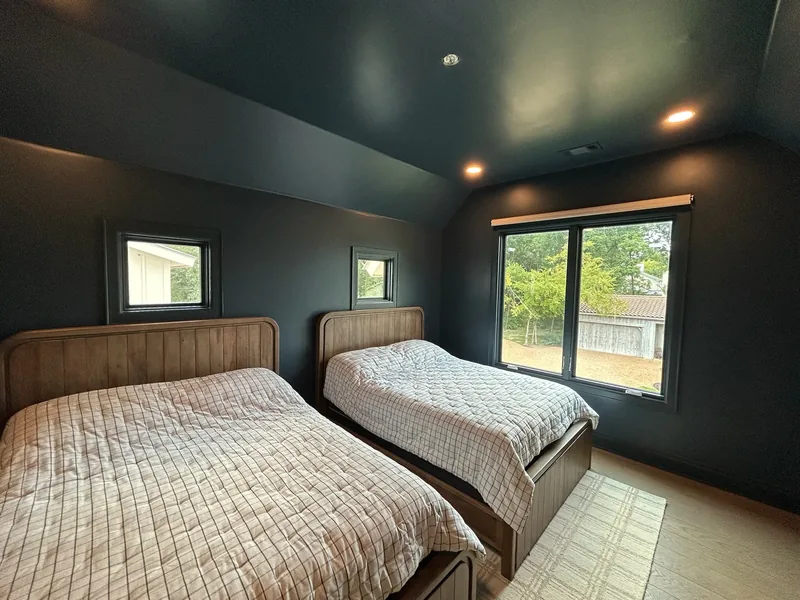
Hardware details
Small parts show against black frames. Ask which headrail and bottom-bar finishes are available, match them to the frames or the fabric, and keep that choice consistent across the room. Motorized shades remove cords and wands from view, which keeps the window lines clean. See are motorized blinds worth it.
Mixed white and black windows
Some homes have black frames in the living areas and white frames in bedrooms, or black outside and white inside. Choose one treatment family for the house and change only color by room: charcoal shades where frames are black, white where they are white. From the street, keep the front windows uniform.
See samples against your frames
Black frames vary from true black to bronze and dark gray, and samples look different against each. Holding fabric and shutter samples against your actual windows is the quickest way to choose. The consultation is free, and the team that measures is the team that installs. You get a written quote with installation included. Find your local team on the service areas page.